This blog interprets the Catholic bible readings for each day.
Isaiah 25: 6-10
On this mountain, for all peoples, the Lord of hosts is preparing a banquet of rich food, a banquet of fine wines, of succulent food, of well-strained wines.
7 On this mountain, he has destroyed the veil which used to veil all peoples, the pall enveloping all nations; 8 he has destroyed death for ever. The Lord God has wiped away the tears from every cheek; he has taken his people’s shame away everywhere on earth, for the Lord has spoken.
9 And on that day, it will be said, ‘Look, this is our God, in him we put our hope that he should save us, this is the Lord, we put our hope in him. Let us exult and rejoice since he has saved us.’
10 For the Lord’s hand will rest on this mountain, and Moab will be trodden under his feet as straw is trodden into the dung-heap.
Gospel, Matthew 15:29-37
29 Jesus went on from there and reached the shores of the Lake of Galilee, and he went up onto the mountain. He took his seat, 30 and large crowds came to him bringing the lame, the crippled, the blind, the dumb and many others; these they put down at his feet, and he cured them.
31 The crowds were astonished to see the dumb speaking, the cripples whole again, the lame walking and the blind with their sight, and they praised the God of Israel.
32 But Jesus called his disciples to him and said, ‘I feel sorry for all these people; they have been with me for three days now and have nothing to eat. I do not want to send them off hungry, or they might collapse on the way.’ 33 The disciples said to him, ‘Where in a deserted place could we get sufficient bread for such a large crowd to have enough to eat?’ 34 Jesus said to them, ‘How many loaves have you?’ They said, ‘Seven, and a few small fish.’
35 Then he instructed the crowd to sit down on the ground, 36 and he took the seven loaves and the fish, and after giving thanks he broke them and began handing them to the disciples, who gave them to the crowds. 37 They all ate as much as they wanted, and they collected what was left of the scraps, seven baskets full.
For those who are not used to the Christian scriptures it may be helpful to note some of the complexities of understanding these passages. 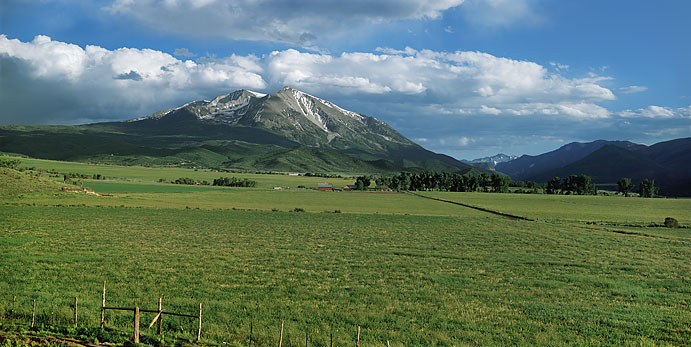
- The passages are put together in the advent lectionary because they are connected by the motif of a mountain. In the Isaiah passage this is Mount Zion the holy hill on which Jerusalem stands; in Matthew it’s the unnamed mountain where Jesus feeds 4000 people, having already fed 5000 people on another mountain. Christians may sometimes have seen the second passage as a fulfilment of the first.
- The Isaiah passage is part of a section of apocalyptic prophecy which almost certainly does not come from the Isaiah who lived in the 8th century BCE. Whenever it was written, its message is unusually gentle. God gives a banquet to celebrate his victory over the cosmic powers that trouble the earth, including death. All tears will be wiped away, all peoples are invited to the feast.
- The reference to Moab (a neighbouring country) being wasted, is inappropriate to this universalistic prophecy, and was probably added by a genocidal idiot at a later stage.
- The veil and the pall are probably metaphors for death.
- Jesus “taking his seat” is meant to remind us of Moses the lawgiver. Rather than give commands, however, Jesus heals people.
- The feeding of the 4000 is meant as a feeding of gentiles, the seven fish and seven baskets reminding the reader of the traditional number of gentile nations. Seven is also the number of perfection.
- In Mark’s gospel, which was probably used by Matthew, Jesus teaches the people, and the inexhaustible food is a symbol of his gospel; in Matthew he heals and the food is a symbol of his overflowing compassion.
- Eating in a deserted place is a reminder of the story of manna in the wilderness, when the people were sustained by miraculous food.
- In Matthew’s Gospel, Jesus’ eating with people is always a sign of his friendship with all sorts and conditions of people, especially social and religious outcasts.
Summing up? The advent (arrival) of God in the world always gives hope of a final gathering of all people, the abolition of disease and death, and the celebration of shared life.
 Emmock's Blog