People who use sacred texts have often found ways of selecting passages appropriate to their needs. Disciples of Confucius used a complex system of hexagrams, chosen by lot, to find images and comments suitable to their time, place and situation. In classical and medieval times, the writings of Virgil and Homer were used in a similar way. Sometimes the Bible was accessed by lot or dice or random procedures. The Church responded to the need to select appropriate wisdom from the Bible, by the daily lectionary, a selection of readings for every day in the year, which was originally used in monasteries, but has for some time been used in daily mass in the Catholic Church, and for private devotion in others. Obviously the choice of passages reflects a theology and the Christian calendar, but it also has an arbitrary element. It asks the reader, “Can this wisdom be applied to your soul, your community, your place, today?” This blog follows the daily readings and hopes to uncover some wisdom.
Reading 1, 1 Kings 8:22-23, 27-30
22 Then, in the presence of the whole assembly of Israel, Solomon stood facing the altar of the Lord and, stretching out his hands towards heaven,
23 said, ‘Lord, God of Israel, there is no god like you in heaven above or on earth beneath, as loyal to the covenant and faithful in love to your servants as long as they walk wholeheartedly in your way.
27 Yet will God really live with human beings on earth? Why, the heavens, the highest of the heavens, cannot contain you. How much less this temple built by me!
28 Even so, listen favourably to the prayer and entreaty of your servant, Lord my God; listen to the cry and to the prayer which your servant makes to you today:
29 day and night may your eyes watch over this temple, over this place of which you have said, “My name will be there.” Listen to the prayer which your servant offers in this place.
30 ‘Listen to the entreaty of your servant and of your people Israel; whenever they pray in this place, listen from heaven your dwelling place; and when you hear, forgive.
Gospel, Mk 7:1-13
1 The Pharisees and some of the scribes who had come from Jerusalem gathered round him, 2 and they noticed that some of his disciples were eating with unclean hands, that is, without washing them.
3 For the Pharisees, and all the Jews, keep the tradition of the elders and never eat without washing their arms as far as the elbow;
4 and on returning from the market place they never eat without first sprinkling themselves. There are also many other observances which have been handed down to them to keep, concerning the washing of cups and pots and bronze dishes.
5 So the Pharisees and scribes asked him, ‘Why do your disciples not respect the tradition of the elders but eat their food with unclean hands?’
6 He answered, ‘How rightly Isaiah prophesied about you hypocrites in the passage of scripture: This people honours me only with lip-service, while their hearts are far from me. 7 Their reverence of me is worthless; the lessons they teach are nothing but human commandments. 8 You put aside the commandment of God to observe human traditions.’
9 And he said to them, ‘How ingeniously you get round the commandment of God in order to preserve your own tradition!
10 For Moses said: Honour your father and your mother, and, Anyone who curses father or mother must be put to death.
11 But you say, “If a man says to his father or mother: Anything I have that I might have used to help you is Korban (that is, dedicated to God),” 12 then he is forbidden from that moment to do anything for his father or mother. 13 In this way you make God’s word ineffective for the sake of your tradition which you have handed down. And you do many other things like this.’

"honour your father and your mother"
What a beautiful prayer the author of Kings gives to Solomon! It shows a profound faith in the God who is greater than any dwelling place in the universe, but who may nevertheless note a peoples’ faithfulness, and hear their prayer with forgiveness. We could make the last sentence of our own at any time, as we live our worldly lives, “Listen from heaven your dwelling place, and when you hear, forgive.” The clean simplicity of the prayer is a mark of true religion. Everything overdone, fussy or complicated is a mark of false religion.
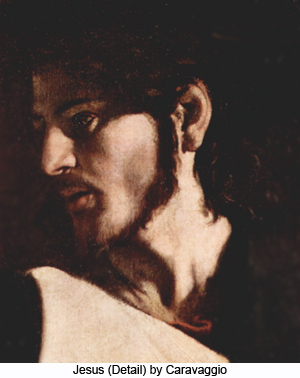
Jesus advocated the straightforwardness of the Mosaic commandment to honour parents against the fussiness of the Pharisaic tradition of Korban, which allowed wealth dedicated to God to be refused to parents, without fault. Doubtless the Pharisees meant well in this, allowing people to show devotion to God without incurring guilt; but this religious “foutering about” (Scots=ineffective fussing) did not please Jesus who saw it as a move away from a direct commandment requiring obedience.
We probably find Jesus’ disrespect for washing before meals, a little harder to understand. Doubtless if Jesus had known about germs, he would have advised washing for reasons of health. The Pharisaic washing however was purely ritual, an application of the law of holiness, meant for priests, to every person and family. Again the motive was probably good-ordinary people should to be able honour God with their purity-but Jesus saw it as unnecessary fussiness which could divert attention from the command of God to a real purity, issuing in kindness and justice.
Jesus points to ever-present danger of the community of God’s people putting its own needs and customs before the ways of God.
 Emmock's Blog