People who use sacred texts have often found ways of selecting passages appropriate to their needs. Disciples of Confucius used a complex system of hexagrams, chosen by lot, to find images and comments suitable to their time, place and situation. In classical and medieval times, the writings of Virgil and Homer were used in a similar way. Sometimes the Bible was accessed by lot or dice or random procedures. The Church responded to the need to select appropriate wisdom from the Bible, by the daily lectionary, a selection of readings for every day in the year, which was originally used in monasteries, but has for some time been used in daily mass in the Catholic Church, and for private devotion in others. Obviously the choice of passages reflects a theology and the Christian calendar, but it also has an arbitrary element. It asks the reader, “Can this wisdom be applied to your soul, your community, your place, today?” This blog follows the daily readings and hopes to uncover some wisdom.
Reading 1, 1 Kings 11:29-32; 12:19
29 One day when Jeroboam had gone out of Jerusalem, the prophet Ahijah of Shiloh accosted him on the road. Ahijah was wearing a new cloak; the two of them were in the open country by themselves.
30 Ahijah took the new cloak which he was wearing and tore it into twelve strips,
31 saying to Jeroboam: ‘Take ten strips for yourself, for Yahweh, God of Israel, says this, “I am going to tear the kingdom from Solomon’s hand and give ten tribes to you.
32 He will keep one tribe for the sake of my servant David and for the sake of Jerusalem, the city which I have chosen out of all the tribes of Israel;
19 And Israel has remained in rebellion against the House of David from that day to this.
Gospel, Mark 7:31-37
31 Returning from the territory of Tyre, he went by way of Sidon towards the Lake of Galilee, right through the Decapolis territory. 32 And they brought him a deaf man who had an impediment in his speech; and they asked him to lay his hand on him.
33 He took him aside to be by themselves, away from the crowd, put his fingers into the man’s ears and touched his tongue with spittle. 34 Then looking up to heaven he sighed; and he said to him, ‘Ephphatha,’ that is, ‘Be opened.’
35 And his ears were opened, and at once the impediment of his tongue was loosened and he spoke clearly. 36 And Jesus ordered them to tell no one about it, but the more he insisted, the more widely they proclaimed it. 37 Their admiration was unbounded, and they said, ‘Everything he does is good, he makes the deaf hear and the dumb speak.’
The political teaching of the Book of Kings includes the assertion that kings are chosen by God through his prophets and must also be accepted by the people. If a king rebels against God, the prophet may encourage the people to get rid of him. In this case the prophet Ahijah commits treason, by giving a sign that the ten tribes of Israel will not accept Solomon’s son as king, but will accept Jeroboam. As far as the prophets were concerned, any departure from true worship by the king, meant that regime change was on God’s agenda. We have become more attentive to the rights of governments, over the centuries, and less attentive to prophets. This may not be an unmixed blessing.
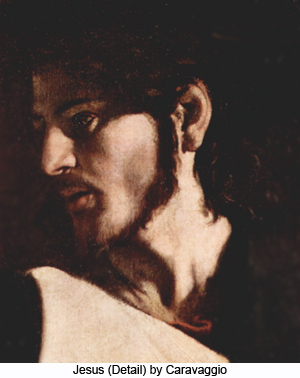
Mark tells us that Jesus used the traditional signs of healing, at least on this occasion when his patient could not hear his words. Isaiah had prophesied about the lame man leaping and the tongue of the dumb being loosed. Jesus recognised that the man’s inability to speak came from his deafness. His Aramaic word “Ephphatha!” commands a complete opening to God’s spirit. Such openness remains an important psychological component of any cure. A medical friend says, “The doctor tackles the illness; nature heals.”
At another level of interpretation I know that my frequent inability to say a helpful word comes from a refusal to open myself, and to hear what other people, or God, may be saying. Churches too can become closed and deaf, as for example, those who refuse to hear the faithful voices of their own gay members. They should heed Jesus’ command to open up.

"I can't hear you!"
 Emmock's Blog