People who use sacred texts have often found ways of selecting passages appropriate to their needs. Disciples of Confucius used a complex system of hexagrams, chosen by lot, to find images and comments suitable to their time, place and situation. In classical and medieval times, the writings of Virgil and Homer were used in a similar way. Sometimes the Bible was accessed by lot or dice or random procedures. The Church responded to the need to select appropriate wisdom from the Bible, by the daily lectionary, a selection of readings for every day in the year, which was originally used in monasteries, but has for some time been used in daily mass in the Catholic Church, and for private devotion in others. Obviously the choice of passages reflects a theology and the Christian calendar, but it also has an arbitrary element. It asks the reader, “Can this wisdom be applied to your soul, your community, your place, today?” This blog follows the daily readings and hopes to uncover some wisdom.
Reading 1, Isaiah 1:10, 16-20
10 Hear what Yahweh says, you rulers of Sodom; listen to what our God teaches, you people of Gomorrah.
16 wash, make yourselves clean. Take your wrong-doing out of my sight. Cease doing evil.
17 Learn to do good, search for justice, discipline the violent, be just to the orphan, plead for the widow.
18 ‘Come, let us talk this over,’ says Yahweh. ‘Though your sins are like scarlet, they shall be white as snow; though they are red as crimson, they shall be like wool.
19 If you are willing to obey, you shall eat the good things of the earth.
20 But if you refuse and rebel, the sword shall eat you instead — for Yahweh’s mouth has spoken.’
Gospel, Matthew 23:1-12
1 Then addressing the crowds and his disciples Jesus said,
2 ‘The scribes and the Pharisees occupy the chair of Moses.
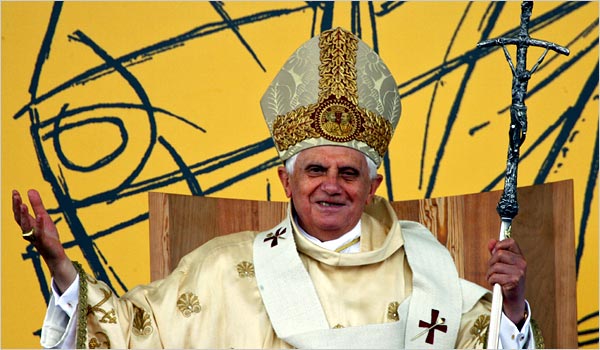
You must call no one on earth your papa......
3 You must therefore do and observe what they tell you; but do not be guided by what they do, since they do not practise what they preach.
4 They tie up heavy burdens and lay them on people’s shoulders, but will they lift a finger to move them? Not they!
5 Everything they do is done to attract attention, like wearing broader headbands and longer tassels,
6 like wanting to take the place of honour at banquets and the front seats in the synagogues,
7 being greeted respectfully in the market squares and having people call them Rabbi.
8 ‘You, however, must not allow yourselves to be called Rabbi, since you have only one Master, and you are all brothers.
9 You must call no one on earth your father, since you have only one Father, and he is in heaven.
10 Nor must you allow yourselves to be called teachers, for you have only one Teacher, the Christ.
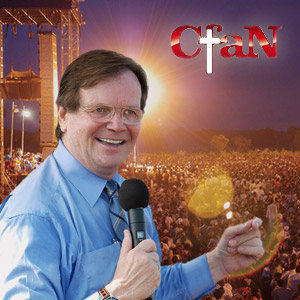
Nor must you allow anyone to call you teacher.....
11 The greatest among you must be your servant.
12 Anyone who raises himself up will be humbled, and anyone who humbles himself will be raised up.
The first Isaiah, whose oracles are collected in Isaiah chapters 1-39, lived in the 8th century BC, and was one of the great religious teachers in history. His language is always vivid, pointed and eloquent. Here he makes a list of those acions which should be at the heart of religious practice:
Cease to do evil
Learn to do good
Search for justice
Discipline the violent
Be just to the orphan
Plead for the widow
If you ask religious people round the world what their religion entails you will be unlikely to get such a list. Much more likely will be a list of specific obligations like prayer, worship, sexual behaviour, and so on. Isaiah’s list which starts with moral conversion, balances the search for true justice with the immediate need to curb violence, and places the marginalised at the centre of attention, remains coherent today. If religious people were known for such commitment we’d be less popular and more respected.
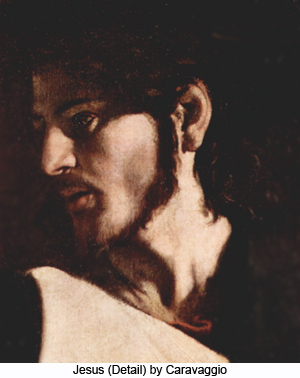
Jesus too had radical insights about religion. He upheld the value of a good tradition (sitting in Moses’ chair), but he mocked the self-importance of the religious leaders of his people. Special clothing, competitive religiosity, desire for public recognition, honorific titles, and, above all, arrogance, were condemned by him.
Oh, what harm can there be in a nice blue cassock and a vivid stole?
Can you imagine Jesus wearing them?
High church clergy have to answer for being called “father”; medium church clergy for robes and social honours; low church clergy for arrogant authority and manipulative charisma. According to Jesus, these are all ways of stealing the devotion owed to God alone.
Jesus, like Isaiah, is concerned that religious practice should be genuine, and keep its eye on the ball, which is the service of our brothers and sisters.
 Emmock's Blog