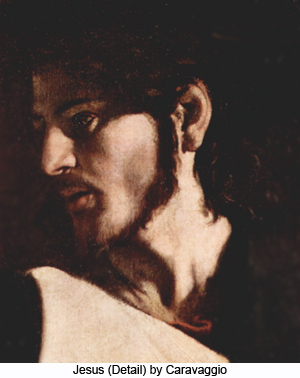
Can a Christian believer today still find value in the ancient texts of the Bible? In this blog I try to find wisdom in the daily Bible readings of the Catholic Church
Reading 1, Genesis 37:3-4, 12-13a, 17b-28a
3 Jacob loved Joseph more than all his other sons, for he was the son of his old age, and he had a decorated tunic made for him.
4 But his brothers, seeing how much more his father loved him than all his other sons, came to hate him so much that they could not say a civil word to him.
12 His brothers went to pasture their father’s flock at Shechem.
13 Then Israel said to Joseph, ‘Your brothers are with the flock at Shechem, aren’t they? Come, I am going to send you to them.’ ‘I am ready,’ he replied.
17 The man answered, ‘They have moved on from here; indeed I heard them say, “Let us go to Dothan.” ‘ So Joseph went after his brothers and found them at Dothan.
18 They saw him in the distance, and before he reached them they made a plot to kill him.
19 ‘Here comes that dreamer,’ they said to one another.
20 ‘Come on, let us kill him now and throw him down one of the storage-wells; we can say that some wild animal has devoured him. Then we shall see what becomes of his dreams.’
21 But Reuben heard, and he saved him from their clutches. ‘We must not take his life,’ he said.
22 ‘Shed no blood,’ said Reuben to them, ‘throw him down that well out in the desert, but do not kill him yourselves’ — intending to save him from them and to restore him to his father.
23 So, when Joseph reached his brothers, they pulled off his tunic, the decorated tunic which he was wearing,
24 and catching hold of him, threw him into the well. The well was empty, with no water in it.
25 They then sat down to eat. Looking up, they saw a group of Ishmaelites who were coming from Gilead, their camels laden with gum tragacanth, balsam and resin, which they were taking to Egypt.
26 Then Judah said to his brothers, ‘What do we gain by killing our brother and covering up his blood?
27 Come, let us sell him to the Ishmaelites, then we shall not have laid hands on him ourselves. After all, he is our brother, and our own flesh.’ His brothers agreed.
28 Now some Midianite merchants were passing, and they pulled Joseph out of the well. They sold Joseph to the Ishmaelites for twenty shekels of silver, and these men took Joseph to Egypt.
One of my favourite books is “Joseph and his brothers” by Thomas Mann, a wonderfully detailed retelling of the story of Joseph, which has always been popular with Bible readers. It is wonderful for its calm assertion of a morality which is deeper than convention, allowing Joseph to be both arrogant and attractive, and his brothers needy as well as brutal. This morality is the purpose of God, which sees beyond immediate concerns to the future survival of his beloved Israel. Joseph, like Jesus, has God-given ability, consciousness of his own difference, experience of rejection by his own people, and consequent suffering. He, like Jesus, is presumed dead. He is also a stone rejected by the builders, which becomes the cornerstone; in Joseph’s case, the viceroy of all Egypt. This parallelism between Joseph and Jesus is the reason the lectionary has put the passages together: we are reminded that the Christ-like person is rarely popular, and may indeed be indignantly rejected by decent people.
Gospel, Matthew 21:33-43, 45-46
33 ‘Listen to another parable. There was a man, a landowner, who planted a vineyard; he fenced it round, dug a winepress in it and built a tower; then he leased it to tenants and went abroad.
34 When vintage time drew near he sent his servants to the tenants to collect his produce.
35 But the tenants seized his servants, thrashed one, killed another and stoned a third.
36 Next he sent some more servants, this time a larger number, and they dealt with them in the same way.
37 Finally he sent his son to them thinking, “They will respect my son.”
38 But when the tenants saw the son, they said to each other, “This is the heir. Come on, let us kill him and take over his inheritance.”
39 So they seized him and threw him out of the vineyard and killed him.
40 Now when the owner of the vineyard comes, what will he do to those tenants?’
41 They answered, ‘He will bring those wretches to a wretched end and lease the vineyard to other tenants who will deliver the produce to him at the proper time.’
42 Jesus said to them, ‘Have you never read in the scriptures: The stone which the builders rejected has become the cornerstone; this is the Lord’s doing and we marvel at it?
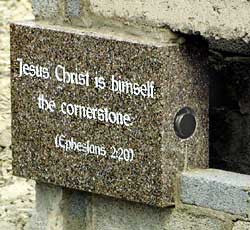
The cornerstone of a modern church
43 ‘I tell you, then, that the kingdom of God will be taken from you and given to a people who will produce its fruit.’
45 When they heard his parables, the chief priests and the scribes realised he was speaking about them,
46 but though they would have liked to arrest him they were afraid of the crowds, who looked on him as a prophet.
The vineyard is an ancient image of Israel, planted a protected by God. Here it is not Israel, but God’s kingdom which is only rented to Israel, who will pay a proportion of their produce as rent. In this bitter parable the tenants decide to evict the landlord. The implication is that Israel tries to take over the kingdom of God. Even the coming of the Messiah, the true king, will not deflect them from this purpose, so the “son” must be murdered. It is not clear whether the “cornerstone” is the murdered son, or the new people (the gentiles?) to whom the kingdom will now be given. God’s calm and overriding purpose of making a people who will be fruitful for him, overrules the opposition and elevates those who have been rejected.
Bible scholars are not at all sure if this parable comes from Jesus. In my opinion, it is powerfully prophetic, diagnosing the brutal arrogance of any culture that thinks it enjoys unconditional divine favour. The statecraft of 19th century Britain, mid 20th century USA, and even today, Israel, are witnesses to its accuracy. The parable can also be applied to individual persons who gain power and will abide no criticism.
The kingdom of God, that is, the rule of God in the world, never “belongs” to anyone: it is only given for people to tend on God’s behalf. A person who does not fit the pyramid of power, may be the cornerstone of God’s house.
 Emmock's Blog