
This blog follows the daily bible readings of the Catholic Church
Reading 1, Acts 8:1b-8
1 Saul approved of the killing. That day a bitter persecution started against the church in Jerusalem, and everyone except the apostles scattered to the country districts of Judaea and Samaria. 2 There were some devout people, however, who buried Stephen and made great mourning for him. 3 Saul then began doing great harm to the church; he went from house to house arresting both men and women and sending them to prison. 4 Once they had scattered, they went from place to place preaching the good news.
5 And Philip went to a Samaritan town and proclaimed the Christ to them. 6 The people unanimously welcomed the message Philip preached, because they had heard of the miracles he worked and because they saw them for themselves. 7 For unclean spirits came shrieking out of many who were possessed, and several paralytics and cripples were cured. 8 As a result there was great rejoicing in that town.
Luke is vague about the source of Saul’s authority for his persecution of the church. We are left to assume that it was the Sanhedrin. Nor is it clear what charges were laid against Christians at this time. Luke wants to emphasise that Saul approved of the killing of Stephen and instigated the arrests of believers. The scattering of believers however leads to a scattering of the good news. Philip preaches to the despised Samaritans, ministers in the manner of Jesus to their bodily and spiritual ailments, and brings joy. Luke is telling his readers that an apparent set-back leads to an advance of the gospel from its homeland, into new territory. In narrative form he gives a theology of the church, in which its sharing of the cross of Jesus is integral to its mission.
Gospel, John 6:35-40
35 Jesus answered them: I am the bread of life. No one who comes to me will ever hunger; no one who believes in me will ever thirst. 36 But, as I have told you, you can see me and still you do not believe. 37 Everyone whom the Father gives me will come to me; I will certainly not reject anyone who comes to me, 38 because I have come from heaven, not to do my own will, but to do the will of him who sent me. 39 Now the will of him who sent me is that I should lose nothing of all that he has given to me, but that I should raise it up on the last day. 40 It is my Father’s will that whoever sees the Son and believes in him should have eternal life, and that I should raise that person up on the last day.
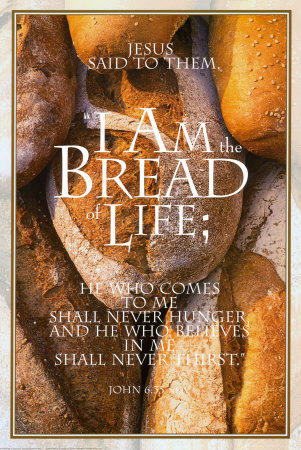
Jesus life and way are nourishing for people
John gives Jesus a style of speaking in which repetition is central: each time a concept is repeated there is also a little more added to it.
Jesus (his personal life) is nourishing for people. Those who share his life will be satisfied. His fellow Jews can see him, but do not trust in him, but those who do come to him, as the father wishes, will never be rejected, because Jesus does what the father wishes, namely, to make sure that none of those entrusted to Jesus by the father should perish, but have the life of the age to come, and be raised up to God at the turning of the ages.
It is vital that abstract terms like “eternal life” or “life of the age to come” or even “raise up” are referred back to their origin, the personal life of Jesus. All these other terms are ways of talking about Jesus’ life as nourishment for human beings. This nourishment only requires trust in Jesus and his way (belief in him).
 Emmock's Blog