
This blog follows the daily bible readings of the Catholic Church
Reading 1, 1 Kings 21:17-29
17 Then the word of the Lord came to Elijah the Tishbite, 18 ‘Up! Go down to meet Ahab king of Israel, in Samaria. You will find him in Naboth’s vineyard; he has gone down to take possession of it. 19 You are to say this to him, “Yahweh says this: You have committed murder and now you usurp as well. For this — and the Lord says this — in the place where the dogs licked the blood of Naboth, the dogs will lick your blood too.” ‘
20 Ahab said to Elijah, ‘So you have caught me, O my enemy!’ Elijah answered, ‘I have caught you! For your double dealing, and since you have done what is displeasing to God, 21 I shall now bring disaster down on you; I shall sweep away your descendants and wipe out every manjack of the House of Ahab, fettered or free in Israel.22 I shall treat your House as I treated the house of Jeroboam son of Nebat and of Baasha son of Ahijah, for provoking my anger and leading Israel into sin. 23 (Against Jezebel too the Lord spoke these words, “The dogs will eat Jezebel in the Field of Jezreel.”) 24 Those of Ahab’s family who die in the city, the dogs will eat; and those who die in the open country, the birds of the air will eat.’
25 And indeed there never was anyone like Ahab for double dealing and for doing what is displeasing to God, urged on by Jezebel his wife. 26 He behaved in the most abominable way, adhering to idols, just as the Amorites had, whom the Lord had dispossessed for the Israelites.
27 When Ahab heard these words, he tore his garments and put sackcloth next to his skin and fasted; he slept in the sackcloth; he walked with slow steps. 28 Then the word of the Lord came to Elijah the Tishbite, 29 ‘Have you seen how Ahab has humbled himself before me? Since he has humbled himself before me, I shall not bring the disaster in his days; I shall bring the disaster down on his House in his son’s days.’
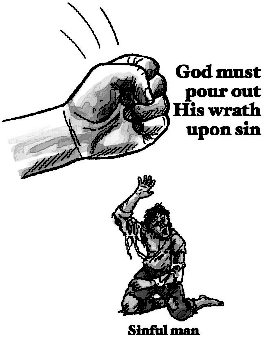
some churches adore a vengeful God
I guess the delay of punishment is supposed to be the mercy of God, but if Elijah had offered a choice of disaster in his own days, or in his son’s days, he might have taken it upon himself….and anyway, the prophecy about the dogs will still be fulfilled. This is a very human God who gets angry and then modifies his anger. I’m happy with this portrayal in that it takes seriously that humans are images of God; and that we are therefore justified in attributing human qualities and emotions to God. But there is still the issue of God’s character: what sort of human being is He like? The prophet Hosea pictures the anger of God but then says in God’s name, “I am God and not man. I am the Holy One in your midst, and have not come to destroy.” His answer is that God is different from any human being in his commitment to life.
Elijah articulates God’s love of justice, and his hatred of injustice- especially if it comes from the King. We can see the value of this faith to those who suffer injustice. It satisfies our sense of fairness that powerful wicked people will “get theirs.” The trouble is that although sometimes they do, in time, get their comeuppance, often they don’t and die happy in their beds, while their victims still suffer. Perhaps that’s why the Old Testament view of God the Smiter ultimately fails: He doesn’t smite often enough or accurately enough to convince us.
Gospel, Matthew 5:43-48
43 ‘You have heard how it was said, You will love your neighbour and hate your enemy.
44 But I say this to you, love your enemies and pray for those who persecute you;
45 so that you may be children of your Father in heaven, for he causes his sun to rise on the bad as well as the good, and sends down rain to fall on the upright and the wicked alike.
46 For if you love those who love you, what reward will you get? Do not even the tax collectors do as much?
47 And if you save your greetings for your brothers, are you doing anything exceptional?
48 Do not even the gentiles do as much? You must therefore be perfect, just as your heavenly Father is perfect.’
Ah, here’s a different vision of God, who treats bad and good with the same care. Jesus’ beautiful words depict what the Dalai Lama has called the “equanimity of God”, that is, his equal regard for all people.
That sounds wonderful.
But there’s teensy- weensy snag: we’re expected to be true children of our Father in heaven, loving our enemies and praying for those who persecute us! Now wait a minute…
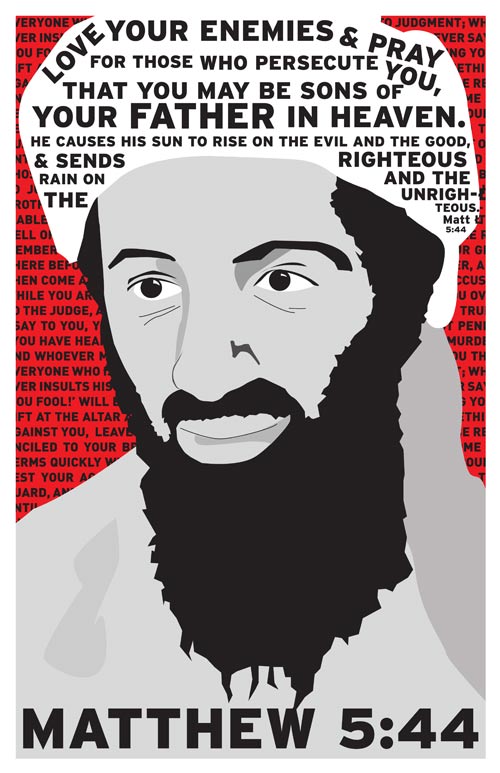
mmmnn....
Almost immediately we want to get back at God. “It’s all right for you, pal,” we say, “sitting outside all the mess and suffering of the world. Nobody’s spitting on you, or torturing you, or threatening you with violence. Just you come down here and try it….”
But our voice trails away when we remember, He did.
Can we live with the God who came in Jesus? If I’m honest, I have to say, “Only some of the time, as yet.”
 Emmock's Blog