
This blog follows the daily bible readings of the catholic Church.
Reading 1, Isaiah 6:1-8

a burning coal
1 In the year of King Uzziah’s death I saw the Lord seated on a high and lofty throne; his train filled the sanctuary.
2 Above him stood seraphs, each one with six wings: two to cover its face, two to cover its feet and two for flying;
3 and they were shouting these words to each other: Holy, holy, holy is Yahweh Sabaoth. His glory fills the whole earth.
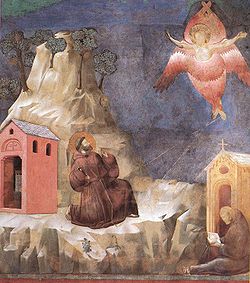
Then one of the seraphs flew to me
4 The door-posts shook at the sound of their shouting, and the Temple was full of smoke.
5 Then I said: ‘Woe is me! I am lost, for I am a man of unclean lips and I live among a people of unclean lips, and my eyes have seen the King, Yahweh Sabaoth.’
6 Then one of the seraphs flew to me, holding in its hand a live coal which it had taken from the altar with a pair of tongs. 7 With this it touched my mouth and said: ‘Look, this has touched your lips, your guilt has been removed and your sin forgiven.’
8 I then heard the voice of the Lord saying: ‘Whom shall I send? Who will go for us?’ And I said, ‘Here am I, send me.’
This is a powerful vision, yet it’s the ordinary experience of many who believe themselves called to serve God. It begins with a conviction that God is real and holy, that the universe has a ruler. It continues with the painful recognition of personal and communal sin which especially affects our language: our lips are too dirty to praise God as the angels do. But then our lives are cleansed by being touched by the fire of offering, in our case, the self-offering of Jesus Christ. Finally we are ready to here God’s call to service and to respond to it.
Of course, when I say it’s the experience of many, I mean an experience repeated throughout our lives, over the years.
Gospel, Mt 10:24-33
24 ‘Disciple is not superior to teacher, nor slave to master.25 It is enough for disciple to grow to be like teacher, and slave like master. If they have called the master of the house “Beelzebul”, how much more the members of his household? 26 ‘So do not be afraid of them. Everything now covered up will be uncovered, and everything now hidden will be made clear. 27 What I say to you in the dark, tell in the daylight; what you hear in whispers, proclaim from the housetops. 28 ‘Do not be afraid of those who kill the body but cannot kill the soul; fear him rather who can destroy both body and soul in hell. 29 Can you not buy two sparrows for a penny? And yet not one falls to the ground without your Father knowing. 30 Why, every hair on your head has been counted. 31 So there is no need to be afraid; you are worth more than many sparrows.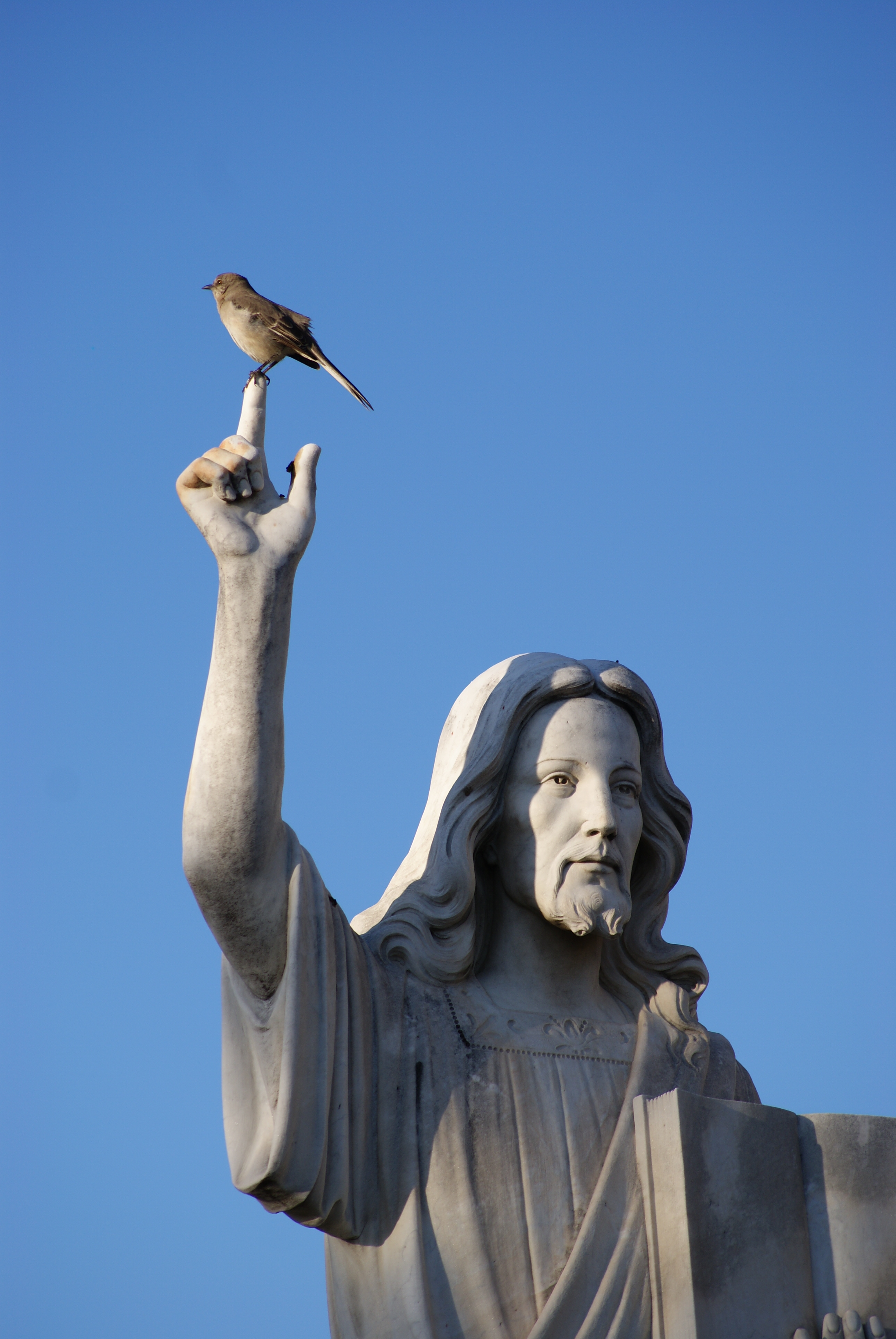
32 ‘So if anyone declares himself for me in the presence of human beings, I will declare myself for him in the presence of my Father in heaven. 33 But the one who disowns me in the presence of human beings, I will disown in the presence of my Father in heaven.
Doubtless this discourse on discipleship goes back to Jesus, but in its present form it is the composition of Matthew. It is marked by an atmosphere of crisis which may reflect the opposition to Jesus’ ministry as well as the later opposition to the Christian churches. Disciples are reminded of Jesus’ fate: they are not to expect better. There will come a time when all will be revealed, both bad and good. At present disciples should fear the Devil and his wiles, rather than human opposition, however threatening. God watches over his own little ones with love.
Verses 32,33 are wonderfully translated here: “if anyone declares himself for me…I will declare myself for him.” To declare oneself is not the action of a moment but the offering of a life, including its hesitations and denials. And Jesus has already declared himself for the world in the offering of his life.
 Emmock's Blog