
This blog follows the daily bible readings of the Catholic Church
Reading 1, 1 Corinthians 3:1-9
1 And so, brothers, I was not able to talk to you as spiritual people; I had to talk to you as people still living by your natural inclinations, still infants in Christ; 2 I fed you with milk and not solid food, for you were not yet able to take it — and even now, you are still not able to, 3 for you are still living by your natural inclinations. As long as there are jealousy and rivalry among you, that surely means that you are still living by your natural inclinations and by merely human principles
4 While there is one that says, ‘I belong to Paul’ and another that says, ‘I belong to Apollos’ are you not being only too human? 5 For what is Apollos and what is Paul? The servants through whom you came to believe, and each has only what the Lord has given him. 6 I did the planting, Apollos did the watering, but God gave growth. 7 In this, neither the planter nor the waterer counts for anything; only God, who gives growth. 8 It is all one who does the planting and who does the watering, and each will have the proper pay for the work that he has done. 9 After all, we do share in God’s work; you are God’s farm, God’s building.
We have seen that Paul interprets the gift of the Spirit as the expulsion of worldly idols and the rediscovery of God’s presence in the individual heart and the shared life of God’s children on earth. Those who are un-spiritual are childish, imagining the church as a kind of club, controlled by the group preferences of its members. These natural inclinations are the sort of thing that must be expelled by the gospel, so that the new partnership may rest on something supernatural: God’s love for all his children. Of course, churches are not created by magic. There must be planting and there must be watering, but there must also be the humility to believe that it is God who gives growth.
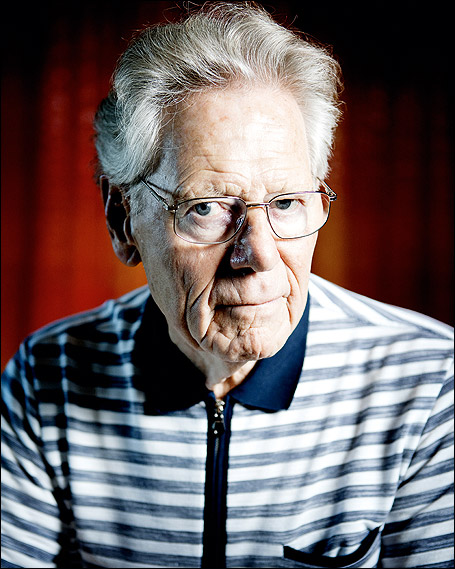
"There will be no peace amonst nations until there is peace amongst religions"-Hans Kung
So many terrible events in the life of churches could have been prevented if Paul’s teaching had been followed. It is childish to believe that there is only one true church on earth, just as it is childish to hate the Pope. It is childish to imagine that all the world’s troubles come from Islam, just as it is childish to keep on calling God “Allah” as if this is the name of a Muslim God, rather than the same God who is worshipped by all true believers. The behaviour of arrogant Ayatollas is as sadly comic as that of powerful tele-evangelists or pompous prelates. It is only God who gives growth.
Gospel, Luke 4: 38-44
38 Leaving the synagogue he went to Simon’s house. Now Simon’s mother-in-law was in the grip of a high fever and they asked him to do something for her. 39 Standing over her he rebuked the fever and it left her. And she immediately got up and began to serve them. 40 At sunset all those who had friends suffering from diseases of one kind or another brought them to him, and laying his hands on each he cured them. 41 Devils too came out of many people, shouting, ‘You are the Son of God.’ But he warned them and would not allow them to speak because they knew that he was the Christ.
42 When daylight came he left the house and made his way to a lonely place. The crowds went to look for him, and when they had caught up with him they wanted to prevent him leaving them, 43 but he answered, ‘I must proclaim the good news of the kingdom of God to the other towns too, because that is what I was sent to do.44 And he continued his proclamation in the synagogues of Judaea.
The good news is simple: a fever and other illnesses can be cured. The demons, that is, the psycho-social forces that made disease into forms of exclusion, creating fear and isolation, can be expelled. Faced with determined goodness, they no longer have power over people.
The same is true of the demons of our own time. From the pathetic consumerism of the rich, to the sad conviction of the poor that their lives are worth nothing much, they can all be expelled by the same determined goodness.

The pathetic consumerism of the rich
The good news is simple: it includes words, but only as part of the single movement of goodness from one human being to another. Anything less is playing games. Jesus didn’t tell his followers, “I’ve done the hard bit, now go and talk about it forever.” He did say, “You will do greater things than me.”
The source of goodness is only referred to obliquely, “he made his way to a lonely place.”
 Emmock's Blog