This blog follows the daily bible readings of the Catholic Church
Galatians 2: 7-14
And when Cephas came to Antioch,
I opposed him to his face because he clearly was wrong.
For, until some people came from James,
he used to eat with the Gentiles;
but when they came, he began to draw back and separated himself,
because he was afraid of the circumcised.
And the rest of the Jews acted hypocritically along with him,
with the result that even Barnabas
was carried away by their hypocrisy.
But when I saw that they were not on the right road
in line with the truth of the Gospel,
I said to Cephas in front of all,
“If you, though a Jew,
are living like a Gentile and not like a Jew,
how can you compel the Gentiles to live like Jews?”
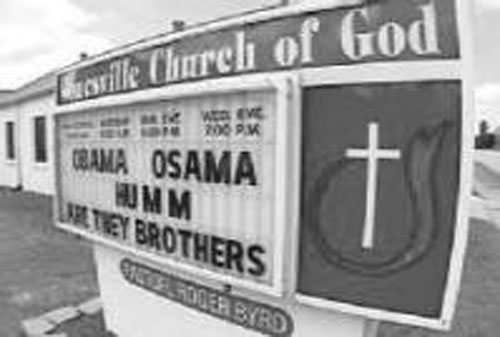
Yeah, who's family?
The issue, as so often in human conflict, is: who’s family and who’s not? James thinks that God may have mercy on Gentiles, may even want hem to be part of the Church, but they’re not family unless they become as Jews, observing Torah. Paul has bet his life on them being family. Peter is trying to sit on the fence, which as we know, can do terrible things to your anatomy. The gospel of the crucified Messiah, rejected by his own people, is all- inclusive because it is proclaimed in the name of the Outcast. The gospel puts us all at the one table where we share the generosity of Christ. It is a gospel that should shame racists and bigots everywhere, especially those who claim the name of Jesus.
Responsorial Psalm
R. Go out to all the world, and tell the Good News.
Praise the LORD, all you nations,
glorify him, all you peoples!
R. Go out to all the world, and tell the Good News.
For steadfast is his kindness toward us,
and the fidelity of the LORD endures forever.
R. Go out to all the world, and tell the Good News.
The responsorial psalm sums up joyfully the mission of the Christian Church.
Gospel
Jesus was praying in a certain place, and when he had finished,
one of his disciples said to him,
“Lord, teach us to pray just as John taught his disciples.”
He said to them, “When you pray, say:
Father, hallowed be your name,
your Kingdom come.
Give us each day our daily bread
and forgive us our sins
for we ourselves forgive everyone in debt to us,
and do not subject us to the final test.”
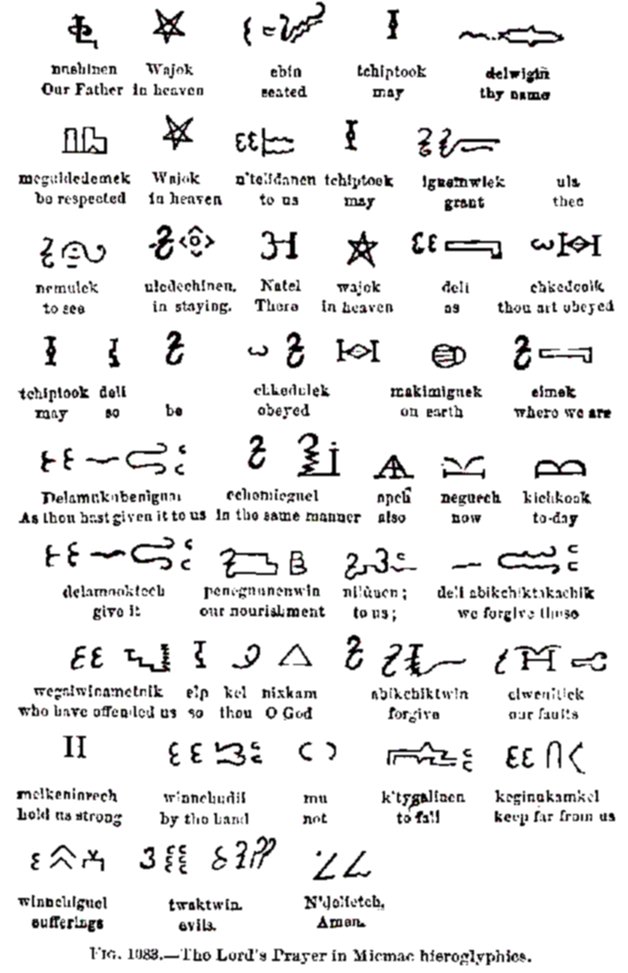
Lord's Prayer in Mi'ktmaq
In Jesus we become family and can approach God with the sober intimacy of Jesus. In Luke’s version of the Lord’s Prayer, there are no wasted words or phrases, nothing that expresses emotionalism or piety.
We pray this prayer with Jesus; he prays it with us.
He addresses God as “father” whose name (nature/character) should be kept holy by all people. Why then pray to God for something we should do? God will not compel his children to keep his name holy, but he will be eternally faithful to himself by:
1. persuading his children to accept his way (kingdom)
2. providing enough for the daily needs of the whole family (one day at a time, sweet Jesus)
3. cancelling his children’s debts because generosity is the family business
4. recognising the children’s weakness in the world
The prayer asks God to be what He is, so that we can become what we are: his children.
(The feminist argument about the Lord’s Prayer is self-defeating, I think. If “Our Mother”is not really different from “Our Father” why the fuss? But if it is significantly different, who gives anyone the right to make significant changes to what Jesus gave us? Let me be clear: I’m delighted to pray to God as mother, but not to pretend that Jesus taught us to do so.)
 Emmock's Blog