
This blog follows the daily bible readings of the Catholic Church
Reading 1, Titus1-9

Titus-a civilised bishop
1 From Paul, servant of God, an apostle of Jesus Christ to bring those whom God has chosen to faith and to the knowledge of the truth that leads to true religion, 2 and to give them the hope of the eternal life that was promised so long ago by God. He does not lie 3 and so, in due time, he made known his message by a proclamation which was entrusted to me by the command of God our Saviour.
4 To Titus, true child of mine in the faith that we share. Grace and peace from God the Father and from Christ Jesus our Saviour.
5 The reason I left you behind in Crete was for you to organise everything that still had to be done and appoint elders in every town, in the way that I told you, 6 that is, each of them must be a man of irreproachable character, husband of one wife, and his children must be believers and not liable to be charged with disorderly conduct or insubordination. 7 The presiding elder has to be irreproachable since he is God’s representative: never arrogant or hot-tempered, nor a heavy drinker or violent, nor avaricious; 8 but hospitable and a lover of goodness; sensible, upright, devout and self-controlled; 9 and he must have a firm grasp of the unchanging message of the tradition, so that he can be counted on both for giving encouragement in sound doctrine and for refuting those who argue against it.
This letter is written in Paul’s name by someone wanting to use his authority for a much safer church than Paul brought into being. It should be clear to the reader that this comes from a time of retrenchment in which the church is settling down as an institution rather than a partnership of the spirit. There’s nothing wrong with that: most ministers today are engaged in an institutional church. But we can see from this passage how easily the church might become no more than a decent part of civil society, keeping its nose clean at all times (no drinkers or women in the ministry!).
Contributing to the decency of civil society is not an unworthy aim, especially when that society can turn ugly and persecute you, as Roman society did with the church. Still we miss the note of unbound hopefulness which is characteristic of the real Paul.
Gospel, Luke 17: 1-6
1 He said to his disciples, ‘Causes of falling are sure to come, but alas for the one through whom they occur! It would be better for such a person to be thrown into the sea with a millstone round the neck than to be the downfall of a single one of these little ones.
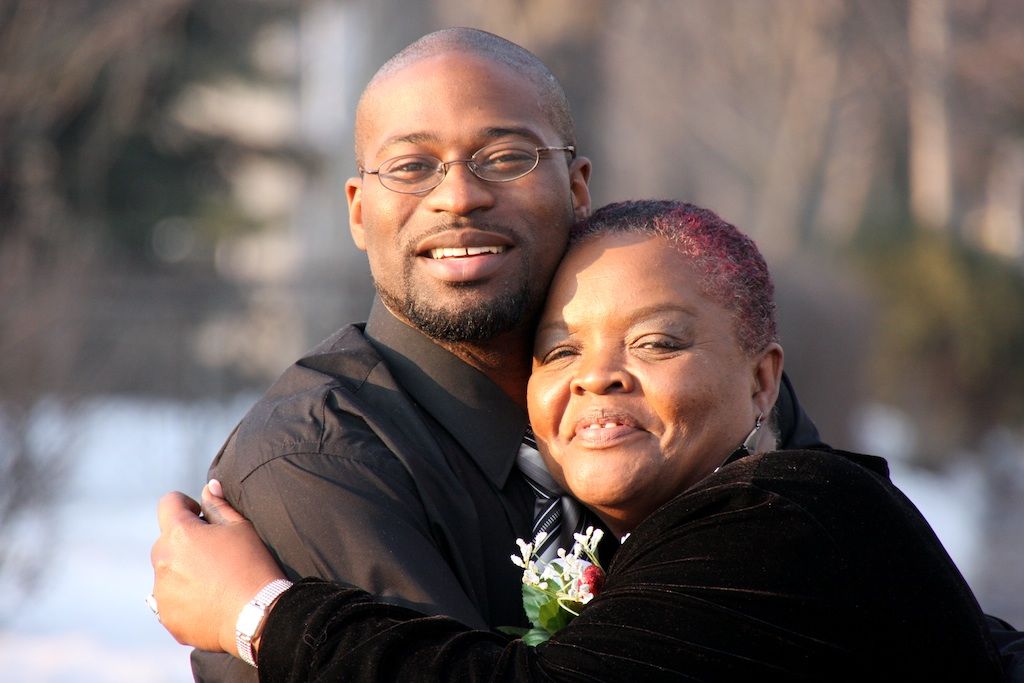
Mary hugs the murderer of her son
3 Keep watch on yourselves! ‘If your brother does something wrong, rebuke him and, if he is sorry, forgive him. 4 And if he wrongs you seven times a day and seven times comes back to you and says, “I am sorry,” you must forgive him.’
5 The apostles said to the Lord, ‘Increase our faith.’
6 The Lord replied, ‘If you had faith like a mustard seed you could say to this mulberry tree, “Be uprooted and planted in the sea,” and it would obey you.
The word translated “causes of falling” is skandalon, the Greek word for the Hebrew “stumbling block”. It came to mean something that caused serious offense. Jesus blessed those who did not find him offensive! In this case we have a saying of Jesus which may apply to children or to disciples both of whom are called “little ones” by Jesus. It seems more likely here that Luke is thinking of disciples who may be offended by each other. Bad behaviour is not to be excused but confronted and forgiven. This should be a useful teaching for many churches in which members and sometimes leaders get off with damaging and hurtful behaviour. Nothing is ever improved by pretending that bad behaviour is not happening. On the other hand, repeated forgiveness must be offered to those who express contrition.
Luke puts the disciples’ plea for increased faith in the context of community discipline. Perhaps they felt the demand for forgiveness was beyond them. Jesus’ reply is scornful. A tiny bit of real faith would produce miracles, he told them. Their expectations of themselves have to be greater. When churches get cautious and negative, they should ask themselves if they any longer have faith.
 Emmock's Blog