
This blog follows the daily bible readings of the Catholic Church
Reading 1, Is 29:17-24
17 Is it not true that in a very short time the Lebanon will become productive ground, so productive you might take it for a forest? 18 That day the deaf will hear the words of the book and, delivered from shadow and darkness, the eyes of the blind will see. 19 The lowly will find ever more joy in the Lord and the poorest of people will delight in the Holy One of Israel; 20 for the tyrant will be no more, the scoffer has vanished and all those on the look-out for evil have been destroyed: 21 those who incriminate others by their words, those who lay traps for the arbitrator at the gate and groundlessly deprive the upright of fair judgement. 22 That is why the Lord, God of the House of Jacob, Abraham’s redeemer, says this, ‘No longer shall Jacob be disappointed, no more shall his face grow pale, 23 for when he sees his children, my creatures, home again with him, he will acknowledge my name as holy, he will acknowledge the Holy One of Jacob to be holy and will hold the God of Israel in awe. 24 Erring spirits will learn to understand and murmurers accept instruction.’
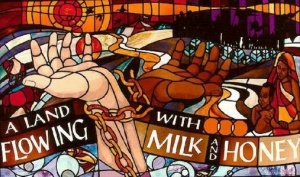
God's justice-The dream of the poor
Tyrants, liars, scoffers, fixers-all who pervert justice-are as well known amongst us as they were in Israel, yet the hope of the upright, the needy, the poorest is always for justice, and for a God who is on the side of justice. Have the churches helped to keep that hope alive or have they become much more mealy-mouthed than Isaiah about God’s justice?
There’s a biter parable from Nasruddin, the heretic joker of Islam. Two boys asked him to divide twelve marbles they’d found between them. He asked, “Do you want me to do it my way or Allah’s way?” “Allah’s way,” they answered. So Nasruddin gave nine to one of them and three to the other…..
If we identify the status quo with God’s will we make injustice sacred. If we identify God’s will with justice we hope and work for change.
Gospel, Matthew 9:27-31
27 As Jesus went on his way two blind men followed him shouting, ‘Take pity on us, son of David.’ 28 And when Jesus reached the house the blind men came up to him and he said to them, ‘Do you believe I can do this?’ They said, ‘Lord, we do.’29 Then he touched their eyes saying, ‘According to your faith, let it be done to you.’
30 And their sight returned. Then Jesus sternly warned them, ‘Take care that no one learns about this.’31 But when they had gone away, they talked about him all over the countryside.

like sheep without a shepherd
35 Jesus made a tour through all the towns and villages, teaching in their synagogues, proclaiming the good news of the kingdom and curing all kinds of disease and all kinds of illness. 36 And when he saw the crowds he felt sorry for them because they were harassed and dejected, like sheep without a shepherd. 37 Then he said to his disciples, ‘The harvest is rich but the labourers are few, so ask the Lord of the harvest to send out labourers to his harvest.’ 1 He summoned his twelve disciples and gave them authority over unclean spirits with power to drive them out and to cure all kinds of disease and all kinds of illness.
I believe that Jesus has given us power over evil spirits and disease. Only let’s not look for spooky demons and b-movie evil. There are real evil spirits amongst us-greed, materialism, arrogance, nationalism, racialism, degraded sexuality (to name but a few)-which we are asked to drive out in Jesus’ name; while we make sure that the resources we possess in abundance to care for the bodies of men, women and children are used for the benefit of all. This can happen when Jesus is our shepherd, that is, our ruler.
In Matthew’s ironical stories, it’s the blind who can see that Jesus is Messiah (son of David) and the poor who take him as their shepherd (king).
 Emmock's Blog