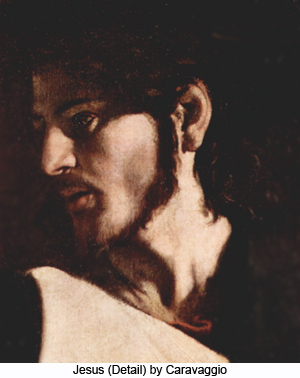
EHUD BARAK TO QUIT ISRAELI LABOUR PARTY

stalled peace talks
This blog provides a meditation on the Revised Common Lectionary readings along with a headline from world news
Ephesians 4:1-16
Unity in the Body of Christ
4I therefore, the prisoner in the Lord, beg you to lead a life worthy of the calling to which you have been called, 2with all humility and gentleness, with patience, bearing with one another in love, 3making every effort to maintain the unity of the Spirit in the bond of peace. 4There is one body and one Spirit, just as you were called to the one hope of your calling, 5one Lord, one faith, one baptism, 6one God and Father of all, who is above all and through all and in all.
7 But each of us was given grace according to the measure of Christ’s gift. 8Therefore it is said,
‘When he ascended on high he made captivity itself a captive;
he gave gifts to his people.’
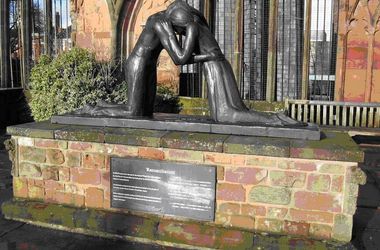
The truth in love. Reconciliation monument in Coventry
9(When it says, ‘He ascended’, what does it mean but that he had also descended into the lower parts of the earth? 10He who descended is the same one who ascended far above all the heavens, so that he might fill all things.) 11The gifts he gave were that some would be apostles, some prophets, some evangelists, some pastors and teachers, 12to equip the saints for the work of ministry, for building up the body of Christ, 13until all of us come to the unity of the faith and of the knowledge of the Son of God, to maturity, to the measure of the full stature of Christ. 14We must no longer be children, tossed to and fro and blown about by every wind of doctrine, by people’s trickery, by their craftiness in deceitful scheming. 15But speaking the truth in love, we must grow up in every way into him who is the head, into Christ, 16from whom the whole body, joined and knitted together by every ligament with which it is equipped, as each part is working properly, promotes the body’s growth in building itself up in love.
Mark 3:7-19
7 Jesus departed with his disciples to the lake, and a great multitude from Galilee followed him; 8hearing all that he was doing, they came to him in great numbers from Judea, Jerusalem, Idumea, beyond the Jordan, and the region around Tyre and Sidon. 9He told his disciples to have a boat ready for him because of the crowd, so that they would not crush him; 10for he had cured many, so that all who had diseases pressed upon him to touch him. 11Whenever the unclean spirits saw him, they fell down before him and shouted, ‘You are the Son of God!’ 12But he sternly ordered them not to make him known.
13 He went up the mountain and called to him those whom he wanted, and they came to him. 14And he appointed twelve, whom he also named apostles, to be with him, and to be sent out to proclaim the message, 15and to have authority to cast out demons. 16So he appointed the twelve: Simon (to whom he gave the name Peter); 17James son of Zebedee and John the brother of James (to whom he gave the name Boanerges, that is, Sons of Thunder); 18and Andrew, and Philip, and Bartholomew, and Matthew, and Thomas, and James son of Alphaeus, and Thaddaeus, and Simon the Cananaean, 19and Judas Iscariot, who betrayed him.
The initial reaction to Jesus depicted by Mark is one of mass excitement, not just from his own area, Galilee, but from heartland of Judea. The reader senses the dust, heat and noise of these gatherings and a very un-British ecstasy of response to his healings. Jesus is shown moving out of that environment, to a mountain to which, like God, he calls those whom he has chosen as the symbolic core of his new people. These are “apostles”, messengers of God’s Rule in the world, an image of the “twelve tribes” of the new Israel. Crowd support and even recognition by demons are available but Jesus takes a longer view, choosing those whose presence by his side will furnish them with the deeper recognition of his identity which will be their message. The “by-names” which survive in the list of apostles are interesting. They may have gone through a long history in the Christian tradition, involving competing views of seniority amongst the Twelve. Or they may after all go back to Jesus whose humour could be seen in calling a blustering Simon, rock; the self-righteous Bar- Zebedees, sons of thunder; and a romanophobe Simon, zealot (not Cananaean, but can’ana, the Aramaic for zealot, religious extremist). The impression remains that although these men form a symbolic group, they are also individuals with their own strengths and weaknesses. “Ah, but they were all MEN” some major Christian denominations say. “Ah, yes indeed,” I say, “and they were also all JEWISH!”
The writer of Ephesians is also talking about the foundation of the new community of God’s people. For him (or her!) every local church community must show the virtues and structures which fit it to be the local incarnation of the new world community of Christ. The virtues of gentleness, forbearance and so on are necessary to preserve the “unity of the Spirit in the bond of peace”. This is no sectarian group but a world community in miniature, in which people, with their different abilities are the “gifts” offered to the community by its universal Lord, who is the head of a body in which every person finds an identity and a function. Love is no mere emotion but is the structured mutuality of the new community.
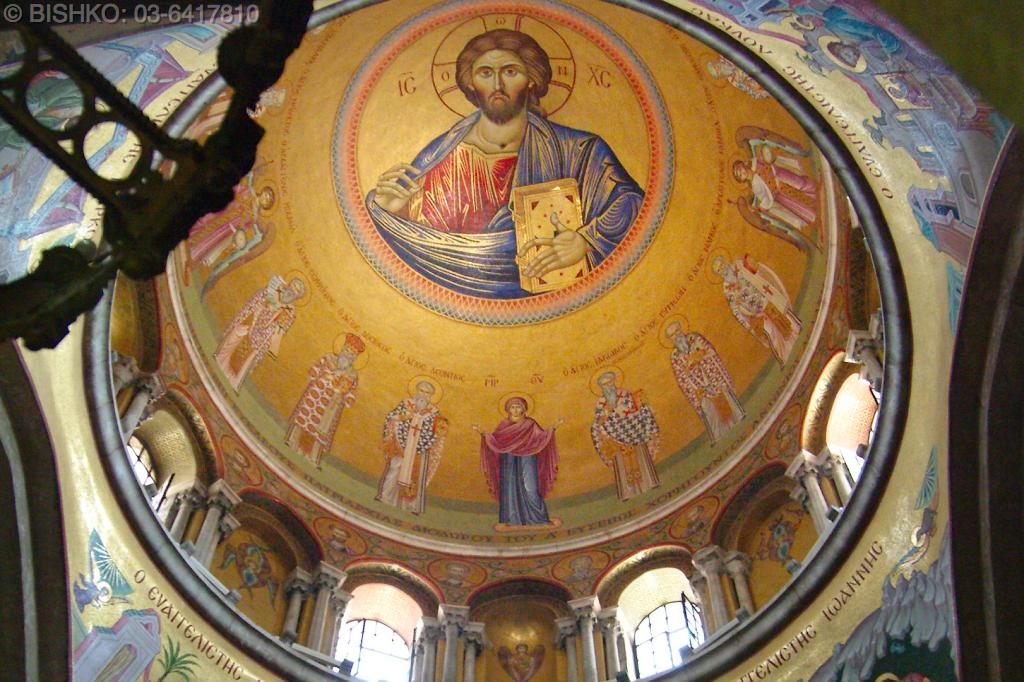
Jesus and the twelve: Church of Holy Sepulchre, Jerusalem
Ehud Barak’s resignation from his party is a response to its dissatisfaction with him; and with his government’s intransigence towards its Palestinian partners in the stalled peace talks. Recognition of the other, and the other’s needs, is fundamental to peace. The other members of the Israeli Labour Party know this.
 Emmock's Blog