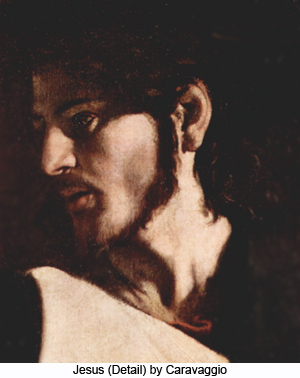
This blog provides a meditation on the Episcopal daily readings along with a headline from world news:
IRAN’S SUPREME LEADER ACCUSED OF ABDUCTING OPPONENTS

what would Mohammed do?
Hebrews 1:1-14
1Long ago God spoke to our ancestors in many and various ways by the prophets, 2but in these last days he has spoken to us by a Son, whom he appointed heir of all things, through whom he also created the worlds. 3He is the reflection of God’s glory and the exact imprint of God’s very being, and he sustains all things by his powerful word. When he had made purification for sins, he sat down at the right hand of the Majesty on high, 4having become as much superior to angels as the name he has inherited is more excellent than theirs.
……………………………….
This is the first of two creative statements in today’s Lectionary about the meaning of Jesus’ life, death and resurrection. Jesus of Nazareth, a human being, is described as Son of God, reflection of God’s glory, image of his being, and sustainer of the universe. This identifies him with the character of Wisdom in the book of Proverbs in the Old Testament, who is depicted a sharing the task of creation with God. The novelty of identifying a historical person with the Eternal Wisdom of God is very striking. The instruction that was to be found in the Torah and the prophets is now to be found in Jesus Christ. The purpose of Jesus’ ministry is however found in the bald statement that he made purification for sin. Instead of the whole apparatus of a sacrificial system of purification God has given us the life, death and resurrection of his son.
The church has done its best over the centuries to turn that back into a sacrificial system, but its best thinkers have resisted this: the church cannot offer sacrifice for sin, it has already been offered once and for all by Jesus. There is simple truth here: sinners as we are, if we are in Jesus we are already forgiven and are being purified. Let no one trade on our need for salvation: the job is done.
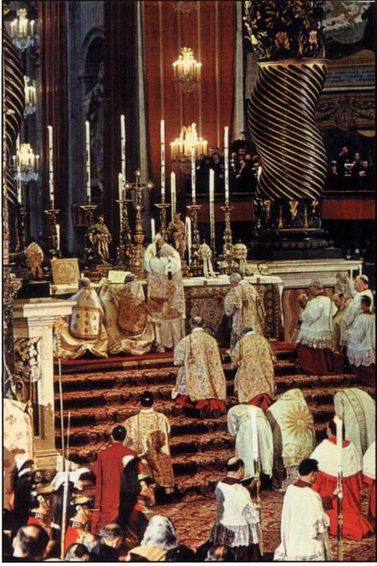
apparatus of a sacrificial system
John 1:1-18
The Gospel According to John
1In the beginning was the Word, and the Word was with God, and the Word was God. 2He was in the beginning with God. 3All things came into being through him, and without him not one thing came into being. What has come into being 4in him was life, and the life was the light of all people. 5The light shines in the darkness, and the darkness did not overcome it.
6 There was a man sent from God, whose name was John. 7He came as a witness to testify to the light, so that all might believe through him. 8He himself was not the light, but he came to testify to the light. 9The true light, which enlightens everyone, was coming into the world.10 He was in the world, and the world came into being through him; yet the world did not know him. 11He came to what was his own, and his own people did not accept him. 12But to all who received him, who believed in his name, he gave power to become children of God, 13who were born, not of blood or of the will of the flesh or of the will of man, but of God.14 And the Word became flesh and lived among us, and we have seen his glory, the glory as of a father’s only son, full of grace and truth. 15 John testified to him and cried out, ‘This was he of whom I said, “He who comes after me ranks ahead of me because he was before me.” 16From his fullness we have all received, grace upon grace. 17The law indeed was given through Moses; grace and truth came through Jesus Christ. 18No one has ever seen God. It is God the only Son, who is close to the Father’s heart, who has made him known.
…………………………
Acres of scholarship have been written on this passage. I first heard it in church, in the KJV when I was eight years old, and I felt I understood it perfectly well. It proclaims the meaning of Jesus Christ in plain language: Jesus is what God wants to say. Those who want to tell me that something else is what God wants to say-the Bible, the Eucharist, the Catholic Tradition, the ecstatic speech of the Spirit, fly in the face of this scripture which points clearly and unambiguously to Jesus: it is God the only Son, who is in the Father’s bosom (much better than close to his heart!) who has made him known. That doesn’t mean that all the rest-Bible, Eucharist, Spirit- are irrelevant, but like the Father, they can only be identified through Jesus. This is the scandal of Christianity, that the eternal one is known through history, the creator is known in flesh and blood.
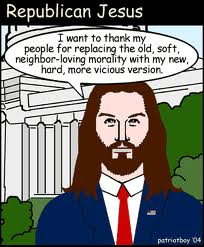 WWJD (what would Jesus do) is not very great theology but it’s much better than the theologies of those who minimise Jesus and maximise their own concerns whether these be the future of a powerful denomination (yes you, brother Ratzinger) or the triumph of brutal self-interest ( take a bow, sister Palin). I guess faithfulness to the founding revelation might be important in Islam. “What would Mohammed do?” might be a reasonable question for the supreme leader of Iran and all like him.
 Emmock's Blog
Meaning no offense, but I don’t think we want people asking what M might do, and then following his example. He was a pretty straight-forward militant, if memory serves.
Thanks Jeff, good to hear from you. I think we don’t neeed the word militant with its modern connotations. Mohammed was a warrior after the fashion of Joshua (although he didn’t do ethnic cleaning as J did) or King David. He was not a legalistic homicidal tyrant like Khamenei, who might be expected to follow his example more than he has done.
But no, I don’t want to follow the example of Mohammed and I’d prefer all people to follow the example of Jesus.