
This blog provides a meditation on the Episcopal daily readings along with a headline from world news:
DALAI LAMA STEPS DOWN FROM POLITICAL LEADERSHIP

forced into a defensive response
Deuteronomy 7:17-26
17 If you say to yourself, ‘These nations are more numerous than I; how can I dispossess them?’ 18do not be afraid of them. Just remember what the Lord your God did to Pharaoh and to all Egypt, 19the great trials that your eyes saw, the signs and wonders, the mighty hand and the outstretched arm by which the Lord your God brought you out. The Lord your God will do the same to all the peoples of whom you are afraid. 20Moreover, the Lord your God will send the pestilence against them, until even the survivors and the fugitives are destroyed. 21Have no dread of them, for the Lord your God, who is present with you, is a great and awesome God. 22The Lord your God will clear away these nations before you little by little; you will not be able to make a quick end of them, otherwise the wild animals would become too numerous for you. 23But the Lord your God will give them over to you, and throw them into great panic, until they are destroyed. 24He will hand their kings over to you and you shall blot out their name from under heaven; no one will be able to stand against you, until you have destroyed them. 25The images of their gods you shall burn with fire. Do not covet the silver or the gold that is on them and take it for yourself, because you could be ensnared by it; for it is abhorrent to the Lord your God. 26Do not bring an abhorrent thing into your house, or you will be set apart for destruction like it. You must utterly detest and abhor it, for it is set apart for destruction.
The settlement of the “Holy Land” by “Israel” is a contested historical issue. Without doubt in the 5th century BC, those who worshipped Jahweh, the One and Only God, regarded those who didn’t, or didn’t do so in the strict enough way, as “foreigners”. The whole story of “Israel” as a formerly captive people freed by Jahweh to conquer Canaan; and subsequently exiled in Babylon because of their apostasy, is a story told by those 5th century believers. How much of it is historically factual we do not know, but we shouldn’t assume that it is. In this passage “Moses” is speaking not to a people on the march from Egypt to the Promised Land but to a sect of passionate believers living in a multi-cultural Palestine who needed guidance about their relationship with non-believers, especially perhaps with those who belonged to conquering nations like the Greeks. Deuteronomy counsels a) the foreigners will be wiped out, powerful as they are, by God’s action, and b) believers should make no compromise with them or their Gods.

"our" land only
For believers who live in the midst of non-believers and have chosen or been forced, (as Tibetan Buddhists have been) into a defensive response, this may still be good advice: trust in God’s justice and keep yourselves clean. But for Christian people living in democratic, pluralist societies it looks unnecessarily negative. The first duty of Christians is to believe and spread the good news of God’s love in Christ. There are Christian sects who have chosen the Deuteronomic strategy of separation for the sake of purity (Amish, Shakers), but to my ear they always sound just a tad hysterical.
John 1:43-51
43 The next day Jesus decided to go to Galilee. He found Philip and said to him, ‘Follow me.’ 44Now Philip was from Bethsaida, the city of Andrew and Peter. 45Philip found Nathanael and said to him, ‘We have found him about whom Moses in the law and also the prophets wrote, Jesus son of Joseph from Nazareth.’ 46Nathanael said to him, ‘Can anything good come out of Nazareth?’ Philip said to him, ‘Come and see.’ 47When Jesus saw Nathanael coming towards him, he said of him, ‘Here is truly an Israelite in whom there is no deceit!’ 48Nathanael asked him, ‘Where did you come to know me?’ Jesus answered, ‘I saw you under the fig tree before Philip called you.’ 49Nathanael replied, ‘Rabbi, you are the Son of God! You are the King of Israel!’ 50Jesus answered, ‘Do you believe because I told you that I saw you under the fig tree? You will see greater things than these.’ 51And he said to him, ‘Very truly, I tell you, you will see heaven opened and the angels of God ascending and descending upon the Son of Man.’
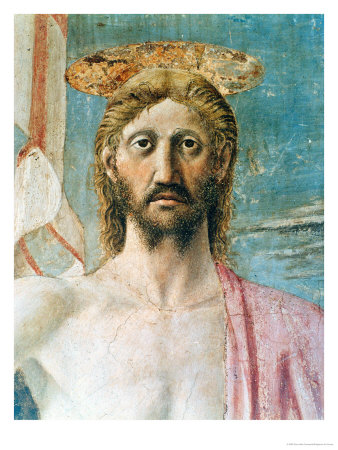
The mystery of Christ
Behind this story lurks the figure of Jacob, who was known as a trickster, a man who lived by “deceit”. He saw angels ascending and descending at Bethel, the gate of heaven. His new name was Israel. Nathaniel is presented both as an Israelite without deceit and as one who will see Jesus as the gate of heaven. The dialogue between them is beautifully ambiguous: Nathaniel asks “Where did you see me…” (which reminds the reader of the disciples’ question to Jesus “Where do you live” that is, who are you really?), and Jesus replies, “I saw you before Philip called you” (which reminds the reader of the call of God to Jeremiah, “before I fashioned you in the womb I knew you.”) In effect, Nathaniel asks if Jesus comes from God, and Jesus tells him he does. Throughout its narrative, the Gospel of John exploits the strangeness of a human person physically present who dwells/ has come from/ has been sent from/ somewhere else. This is John’s way of presenting the paradox, evident in the other Gospels, of the Kingdom of God made real in Galilee. The mystery of Jesus of Nazareth, Son Of God is an aspect of the Gospel’s witness I should not ignore.
 Emmock's Blog