
This blog provides a meditation on the Episcopal daily readings along with a headline from world news
MOB AVENGE QU’RAN BURNING BY MASSACRE AT U.N. 
JEREMIAH 13: 1-11
Thus said the Lord to me, ‘Go and buy yourself a linen loincloth, and put it on your loins, but do not dip it in water.’ 2So I bought a loincloth according to the word of the Lord, and put it on my loins. 3And the word of the Lord came to me a second time, saying, 4‘Take the loincloth that you bought and are wearing, and go now to the Euphrates, and hide it there in a cleft of the rock.’ 5So I went, and hid it by the Euphrates, as the Lord commanded me. 6And after many days the Lord said to me, ‘Go now to the Euphrates, and take from there the loincloth that I commanded you to hide there.’ 7Then I went to the Euphrates, and dug, and I took the loincloth from the place where I had hidden it. But now the loincloth was ruined; it was good for nothing.
8 Then the word of the Lord came to me: 9Thus says the Lord: Just so I will ruin the pride of Judah and the great pride of Jerusalem. 10This evil people, who refuse to hear my words, who stubbornly follow their own will and have gone after other gods to serve them and worship them, shall be like this loincloth, which is good for nothing. 11For as the loincloth clings to one’s loins, so I made the whole house of Israel and the whole house of Judah cling to me, says the Lord, in order that they might be for me a people, a name, a praise, and a glory. But they would not listen.
This is a strange and possibly disturbing prophetic sign. Israel is compared to a loin-cloth which will be hidden away and spoiled on the bank of the Euphrates, that is, in Babylon. The warning is clear enough –Israel will be exiled-but the metaphor is odd. The people are the Lord’s loin-cloth, they cling to him as his “name and glory”. Some implication of the Lord’s masculinity cannot be ruled out. Possibly the prophet intends only the intimacy of his relationship with the people to be emphasised but there is something shocking about the Lord’s vulnerability. Without his people, will the Lord be naked?
I push the point in order to display the daring and possibly scandalous nature of prophetic signs and metaphors, which are indicators of the passionate engagement of prophet and Lord. The drama of Israel’s relationship with God-engagement, marriage, unfaithfulness, divorce-is played out in the experience of the prophets. The prophet is both friend-of-the bridegroom and friend-of-the-bride and his ability to find words and signs to represent his truth is stretched to the uttermost. That’s what makes the writings so valuable.
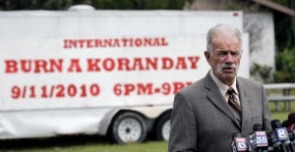
Will he take it to Afghanistan? (will he hell)
(There is a world of difference between a true prophetic sign and the childishness of “putting the Quran on trial” and burning a copy. That is mere self-indulgence and cosseted irresponsibility which risks the lives of others. If Quran burners want to show their prophetic commitment let them burn it in Afghanistan or Saudi Arabia. These remarks in no way excuse the murderous and equally childish frenzy of those purporting to defend the Quran. Pretending that they can punish any foreigner for another person’s crime is a pathetic indication that they haven’t grown up.)
John 8:47-59
47Whoever is from God hears the words of God. The reason you do not hear them is that you are not from God.’
48 The Jews answered him, ‘Are we not right in saying that you are a Samaritan and have a demon?’ 49Jesus answered, ‘I do not have a demon; but I honour my Father, and you dishonour me. 50Yet I do not seek my own glory; there is one who seeks it and he is the judge. 51Very truly, I tell you, whoever keeps my word will never see death.’ 52The Jews said to him, ‘Now we know that you have a demon. Abraham died, and so did the prophets; yet you say, “Whoever keeps my word will never taste death.” 53Are you greater than our father Abraham, who died? The prophets also died. Who do you claim to be?’ 54Jesus answered, ‘If I glorify myself, my glory is nothing. It is my Father who glorifies me, he of whom you say, “He is our God”, 55though you do not know him. But I know him; if I were to say that I do not know him, I would be a liar like you. But I do know him and I keep his word. 56Your ancestor Abraham rejoiced that he would see my day; he saw it and was glad.’ 57Then the Jews said to him, ‘You are not yet fifty years old, and have you seen Abraham?’ 58Jesus said to them, ‘Very truly, I tell you, before Abraham was, I am.’ 59So they picked up stones to throw at him, but Jesus hid himself and went out of the temple.
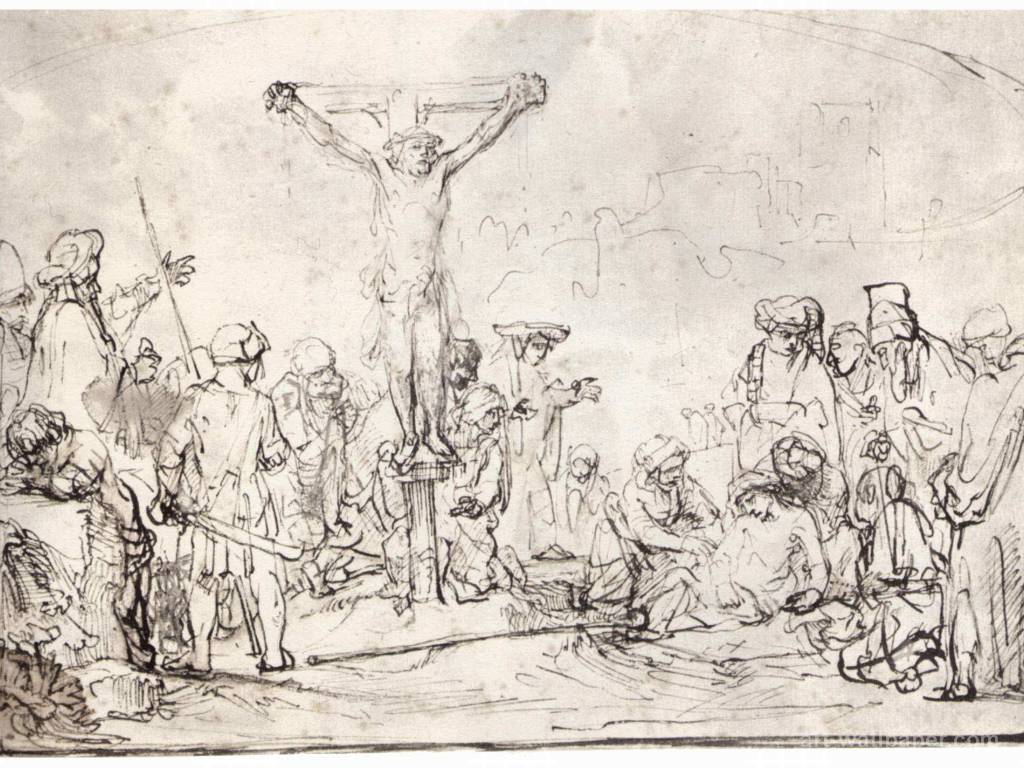
before Abraham was, IAM
The Word of God is a matter of contention in this story, in which an offensive remark leads to murderous violence.
Jesus insists that only those “born from above” can hear God’s word. His opponents defend their tradition against what they see as an unsupported one-man attack. They refer to their scriptures. Jesus asserts his intimacy with God. He says their (!) founding father Abraham is happy to see his appearance in the world. When the opposition mocks this claim-how can he know what Abraham thinks- Jesus teases them with a riddle, “Before Abraham was, I AM” Is he claiming, blasphemously, to be God? He is certainly claiming to share the I AM of God, but as he has explained, he shares it as the son who is totally obedient to the father. The opposition turns violent. The reaction of childish people who don’t like what they hear is to kill the speaker.
Christian people must demonstrate that their birth is from above by their knowledge that squabbling about doctrines and holy books is childish. God is spirit and those who worship him must do so in spirit and in truth. They must understand compassionately but never excuse the rage of those who have degraded the symbols of divinity into partisan banners and turned the love of God into a means of oppression. They must be especially unyielding in their opposition to Christians who do so.
 Emmock's Blog