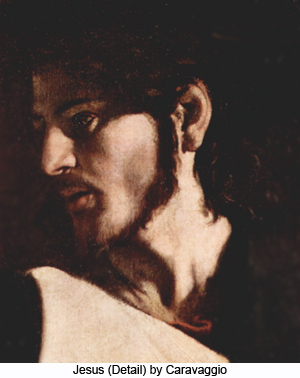
This blog provides a meditation on the Episcopal daily readings along with a headline from world news:
IVORY COAST GBAGBO PLAYS FOR TIME
Jeremiah 22:13-23

"The burial of a donkey?"
13 Woe to him who builds his house by unrighteousness,
and his upper rooms by injustice;
who makes his neighbours work for nothing,
and does not give them their wages;
14 who says, ‘I will build myself a spacious house
with large upper rooms’,
and who cuts out windows for it,
panelling it with cedar,
and painting it with vermilion.

Footballer's mansion
15 Are you a king
because you compete in cedar?
Did not your father eat and drink
and do justice and righteousness?
Then it was well with him.
16 He judged the cause of the poor and needy;
then it was well.
Is not this to know me?
says the Lord.
17 But your eyes and heart
are only on your dishonest gain,
for shedding innocent blood,
and for practising oppression and violence.
18 Therefore thus says the Lord concerning King Jehoiakim son of Josiah of Judah:
They shall not lament for him, saying,
‘Alas, my brother!’ or ‘Alas, sister!’
They shall not lament for him, saying,
‘Alas, lord!’ or ‘Alas, his majesty!’
19 With the burial of a donkey he shall be buried—
dragged off and thrown out beyond the gates of Jerusalem.
This characterisation of the powerful rich people of his society is very bold, extending as far as the king himself. The frank speaking is part of the prophetic tradition-Amos notoriously called rich and idle women, “The Cows of Bashan” (I don’t think I’d get off with this language from the pulpit today)- but Jeremiah makes his accusations specific:
- The rich nobility have prospered on the unpaid or badly paid labour of other citizens.
- The equate a luxurious lifestyle with true nobility
- They have forgotten that the creation of a justice for the vulnerable is the mark of true nobility
- It is also knowledge of God.
The favourite way in which rich and powerful people wipe out the evil they’ve done is to ensure a good funeral. Jeremiah prophesies that even this will be denied the present king.
In all of this Jeremiah’s language and analysis are still challenging. I’m reading a very good book by the late Tony Judt, who died of motor-neuron disease recently. It’s called “Ill fares the Land” and is an analysis of the lack of moral guidelines for just society especially in the USA and UK (NB Jeff: he’s gentler about Canada).
John 6:41-51
41 Then the Jews began to complain about him because he said, ‘I am the bread that came down from heaven.’ 42They were saying, ‘Is not this Jesus, the son of Joseph, whose father and mother we know? How can he now say, “I have come down from heaven”?’ 43Jesus answered them, ‘Do not complain among yourselves. 44No one can come to me unless drawn by the Father who sent me; and I will raise that person up on the last day. 45It is written in the prophets, “And they shall all be taught by God.” Everyone who has heard and learned from the Father comes to me. 46Not that anyone has seen the Father except the one who is from God; he has seen the Father. 47Very truly, I tell you, whoever believes has eternal life. 48I am the bread of life. 49Your ancestors ate the manna in the wilderness, and they died. 50This is the bread that comes down from heaven, so that one may eat of it and not die. 51I am the living bread that came down from heaven. Whoever eats of this bread will live for ever; and the bread that I will give for the life of the world is my flesh.’
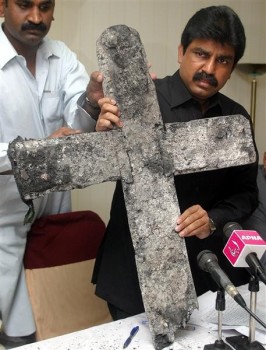
Eating a different bread-the late Shahzad Bhatti (martyr)
John told the reader at the beginning of his gospel that God’s Word became flesh and lived among us-that is the identity of Jesus. “Flesh” is the fragile creature that feels pain and hunger and will die. It is all that human beings share with the animal creation. It is also the vitality and reproductive capacity of creatures. Lovers cherish each other’s flesh but it does not abide: “all flesh is grass and its goodliness is like flower of the field”. Jesus pledges that he will give his creaturely life for the life of the world. This pouring out of his own life will bring human beings into contact with the eternal life of God which never fades or dies. Although the observance of the Lord’s Supper lies behind John’s phrasing here, the primary force of the metaphor of “living bread” is in the almost offensive image of eating it. To eat the bread of life is to live basically and intimately out of obedient trust in Jesus. This will be the best thing that believers can do for the life of their society, as it will provide an antidote to the utter worldliness and triviality of what is offered to citizens as “daily bread” by the most powerful determiners of value.
 Emmock's Blog
Sounds like a good book. I’ve no doubt that he is “gentler about Canada.” We are generally gentler here (we like to be “nice.”) But if you look below the surface, on our record with regard to the First Nations peoples, Asians trying to come into the country, etc., we also have a lot to answer for. Maybe just compared to other nations, we are not so bad.
Tony Judt “Ill Fares the Land” Penguin
By the same author, “The memory Chalet” which you can get on Kindle
Both these books were written when he was suffering from ALS a motor-neuron disease.