
This blog provides a meditation on the Episcopal daily readings along with a headline from world news:
RELIGIOUS LEADERS: CAUTIOUS RESPONSE TO BIN LADEN KILLING 
1 John 2:1-11
2My little children, I am writing these things to you so that you may not sin. But if anyone does sin, we have an advocate with the Father, Jesus Christ the righteous; 2and he is the atoning sacrifice for our sins, and not for ours only but also for the sins of the whole world.
3 Now by this we may be sure that we know him, if we obey his commandments. 4Whoever says, ‘I have come to know him’, but does not obey his commandments, is a liar, and in such a person the truth does not exist; 5but whoever obeys his word, truly in this person the love of God has reached perfection. By this we may be sure that we are in him: 6whoever says, ‘I abide in him’, ought to walk just as he walked.
7 Beloved, I am writing you no new commandment, but an old commandment that you have had from the beginning; the old commandment is the word that you have heard. 8Yet I am writing you a new commandment that is true in him and in you, because the darkness is passing away and the true light is already shining. 9Whoever says, ‘I am in the light’, while hating a brother or sister, is still in the darkness. 10Whoever loves a brother or sister lives in the light, and in such a person there is no cause for stumbling. 11But whoever hates another believer is in the darkness, walks in the darkness, and does not know the way to go, because the darkness has brought on blindness.

the light is already shining
The believer belongs to Jesus and shares by proxy in his perfect offering of his life to God. The believer cannot make this perfect offering but identifies with Jesus in faith and hope and love. When the writer calls Jesus’ death a sacrifice he means that by identification with it, the believer’s relationship with God is restored. It’s good that the writer emphasises that this sacrifice is for the whole world, as for the rest of the passage he concentrates on the community of believers.
No one knows Jesus (shares his life) without obeying his commandments, especially the commandment of love to brothers and sisters, which is as old as the Torah but new in the dawning of God’s kingdom. Hatred of a fellow believer leaves a person in the darkness. If sometimes it seems that John forgets Jesus’ command to love the neighbour in favour of the command to love the fellow believer, it remains true that the community of believers is open to all. I love my neighbour by being part of a community of love which invites my neighbour to join it. This is a challenging interpretation of Jesus life and teaching which I’m glad is supplemented by other interpretations in the New Testament. Probably Osama bin Laden loved his fellow believer.
John 17:12-19
12While I was with them, I protected them in your name that you have given me. I guarded them, and not one of them was lost except the one destined to be lost, so that the scripture might be fulfilled. 13But now I am coming to you, and I speak these things in the world so that they may have my joy made complete in themselves. 14I have given them your word, and the world has hated them because they do not belong to the world, just as I do not belong to the world. 15I am not asking you to take them out of the world, but I ask you to protect them from the evil one. 16They do not belong to the world, just as I do not belong to the world. 17Sanctify them in the truth; your word is truth. 18As you have sent me into the world, so I have sent them into the world. 19And for their sakes I sanctify myself, so that they also may be sanctified in truth.
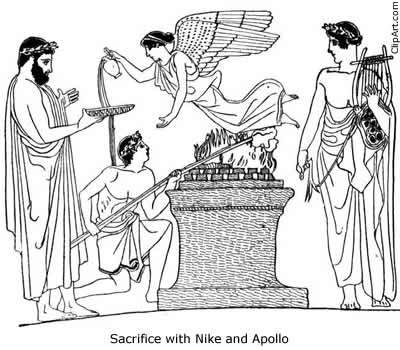
holy sacrifice
Jesus sanctifies himself by his death on the cross as he goes into the presence of the Father. He allows himself to be “made holy” as a sacrificed animal is made holy in the flames. This of course only continues the long sacrifice, the offering up, of his whole life to God, for the world. Those who are sanctified by unity with him in his death are sent out into the world with God’s word, which is his un-veiling in Jesus his son. John’s use of the Greek for world, kosmos, deserves a note:
- Kosmos is God’s creation
- God loves it
- It has become alienated from God through lies and hate
- God intends to rescue it by sending his son into the world to show his truth and love
- Those who trust in his son are still “in” the world but are not “of” it: they are born from above
- They continue God’s mission to the world.
If believers act politically they must not use methods which are “of” the world. This probably means not wasting your enemies.
 Emmock's Blog