This blog provides a meditation on the Episcopal daily readings along with a headline from world news:
Mrs Mubarak returns millions to the people 
Colossians 1:15-23
15 He is the image of the invisible God, the firstborn of all creation; 16for in him all things in heaven and on earth were created, things visible and invisible, whether thrones or dominions or rulers or powers—all things have been created through him and for him. 17He himself is before all things, and in him all things hold together. 18He is the head of the body, the church; he is the beginning, the firstborn from the dead, so that he might come to have first place in everything. 19For in him all the fullness of God was pleased to dwell, 20and through him God was pleased to reconcile to himself all things, whether on earth or in heaven, by making peace through the blood of his cross.
21 And you who were once estranged and hostile in mind, doing evil deeds, 22he has now reconciled in his fleshly body through death, so as to present you holy and blameless and irreproachable before him— 23provided that you continue securely established and steadfast in the faith, without shifting from the hope promised by the gospel that you heard, which has been proclaimed to every creature under heaven. I, Paul, became a servant of this gospel.
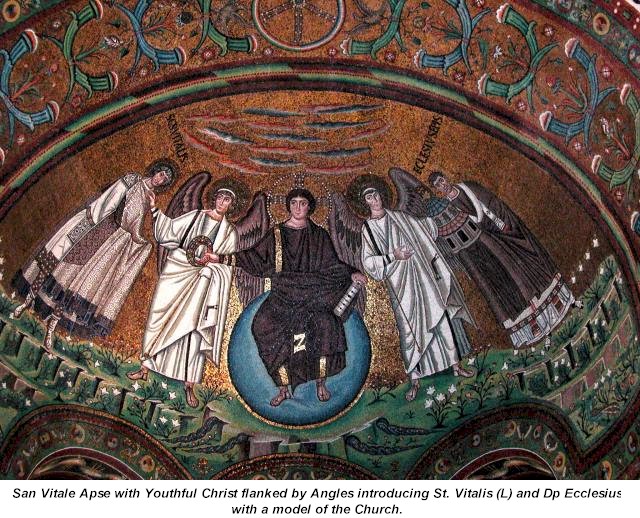
first-born of creation. San Vitale
It’s astonishing that a historical person who lived only 30 years before the writing of this letter should be described in terms which Jewish faith had only used of the Torah or Wisdom of God. Those with a doctrinal interest may want to note that in spite of the unique status given to Jesus this is not a doctrine of the Trinity. Indeed Jesus is called the prototokos, first-born, of creation which means the writer thought of him as part of creation even if he has a privileged place within it. The use of the Greek word “pleroma” in verse 19 is also interesting. It is a term of speculative theology, meaning “fullness of godhead” although there is no word for “God” in the Greek text. My own guess is that the writer who is either Paul or has been close to Paul, is according the greatest possible status to Jesus Christ without abandoning Jewish monotheism. The crucial teaching here is that Jesus Christ is at the heart of God’s eternal act of creation and reconciliation by which all beings are offered a share in Christ’s sacrificial death, so that raised with him they may stand before God unblemished. The flesh and blood of this sacrifice are emphasised so that the suffering humanity of Christ is seen as part of God’s act. In view of bad theology we should note clearly that it is human beings who are reconciled to God by the cross, not God who is reconciled to them. We should marvel at the effort of the first Christians, not just the leaders whose names we know, but the small churches scattered round the Mediterranean, who followed the way of Jesus so creatively that they fashioned the theology of the New Testament. I look for that faithfulness and creativity from the Christian church today.
Luke 6:17-26
17 He came down with them and stood on a level place, with a great crowd of his disciples and a great multitude of people from all Judea, Jerusalem, and the coast of Tyre and Sidon. 18They had come to hear him and to be healed of their diseases; and those who were troubled with unclean spirits were cured. 19And all in the crowd were trying to touch him, for power came out from him and healed all of them.
20 Then he looked up at his disciples and said:
‘Blessed are you who are poor,
for yours is the kingdom of God.
21 ‘Blessed are you who are hungry now,
for you will be filled.
‘Blessed are you who weep now,
for you will laugh.
22 ‘Blessed are you when people hate you, and when they exclude you, revile you, and defame you on account of the Son of Man. 23Rejoice on that day and leap for joy, for surely your reward is great in heaven; for that is what their ancestors did to the prophets.
24 ‘But woe to you who are rich,
for you have received your consolation.
25 ‘Woe to you who are full now,
for you will be hungry.
‘Woe to you who are laughing now,
for you will mourn and weep.
26 ‘Woe to you when all speak well of you, for that is what their ancestors did to the false prophets.
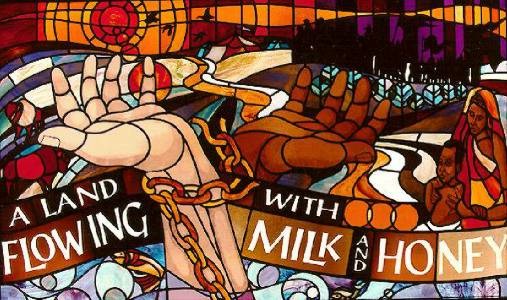
happiness to the poor!
Luke begins with the great words, “He came down with them and stood on a level place….” This lawgiver, rather than taking Moses position on the mountain mimes both the rule of God and its effect on human hierarchy, by standing in a level place. God has come to rule his people and the consequences are spelt out in the “sermon.”
The first consequence is happiness. The congratulatory effect of the Greek (with Jesus’ Aramaic behind it) could well be translated, “Happiness to the poor! God’s rule is theirs” As soon as “kingdom” is seen as activity rather than a place the revolutionary nature of the blessing becomes clear: God’s rule is the rule of the poor who will have power, food and laughter, whereas the rich will have disempowerment, hunger and sorrow.
Jesus adds a special happiness for those who are reviled because they belong to him and his mission (The Son of Man) and a special misery for those who are lauded by society now.
That’s what the passage says, and has said for 20 centuries. When has the church ever taken it seriously? Some will say, “Of course that’s not the gospel!” No? Luke seems to have thought it was, else why would he have given it such prominence? “But it’s not the whole gospel!” Indeed, there’s much more, but it’s a central part of Jesus’ gospel which has been downgraded and ignored in the search for a marketable form of salvation.
 Emmock's Blog