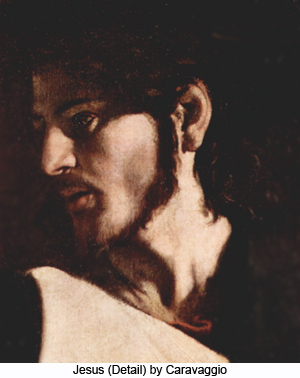
MURDOCH NEWS KEEPS REAL ATROCITY OFF FRONT PAGES

Mumbai blast
This blog provides a meditation on the Episcopal daily readings along with a headline from world news:
1 Samuel 20:24-42
24 So David hid himself in the field. When the new moon came, the king sat at the feast to eat. 25The king sat upon his seat, as at other times, upon the seat by the wall. Jonathan stood, while Abner sat by Saul’s side; but David’s place was empty.
26 Saul did not say anything that day; for he thought, ‘Something has befallen him; he is not clean, surely he is not clean.’ 27But on the second day, the day after the new moon, David’s place was empty. And Saul said to his son Jonathan, ‘Why has the son of Jesse not come to the feast, either yesterday or today?’ 28Jonathan answered Saul, ‘David earnestly asked leave of me to go to Bethlehem; 29he said, “Let me go; for our family is holding a sacrifice in the city, and my brother has commanded me to be there. So now, if I have found favour in your sight, let me get away, and see my brothers.” For this reason he has not come to the king’s table.’
30 Then Saul’s anger was kindled against Jonathan. He said to him, ‘You son of a perverse, rebellious woman! Do I not know that you have chosen the son of Jesse to your own shame, and to the shame of your mother’s nakedness? 31For as long as the son of Jesse lives upon the earth, neither you nor your kingdom shall be established. Now send and bring him to me, for he shall surely die.’ 32Then Jonathan answered his father Saul, ‘Why should he be put to death? What has he done?’ 33But Saul threw his spear at him to strike him; so Jonathan knew that it was the decision of his father to put David to death. 34Jonathan rose from the table in fierce anger and ate no food on the second day of the month, for he was grieved for David, and because his father had disgraced him.
35 In the morning Jonathan went out into the field to the appointment with David, and with him was a little boy. 36He said to the boy, ‘Run and find the arrows that I shoot.’ As the boy ran, he shot an arrow beyond him. 37When the boy came to the place where Jonathan’s arrow had fallen, Jonathan called after the boy and said, ‘Is the arrow not beyond you?’ 38Jonathan called after the boy, ‘Hurry, be quick, do not linger.’ So Jonathan’s boy gathered up the arrows and came to his master. 39But the boy knew nothing; only Jonathan and David knew the arrangement. 40Jonathan gave his weapons to the boy and said to him, ‘Go and carry them to the city.’ 41As soon as the boy had gone, David rose from beside the stone heap and prostrated himself with his face to the ground. He bowed three times, and they kissed each other, and wept with each other; David wept the more. 42Then Jonathan said to David, ‘Go in peace, since both of us have sworn in the name of the Lord, saying, “The Lord shall be between me and you, and between my descendants and your descendants, for ever.” ’ He got up and left; and Jonathan went into the city.
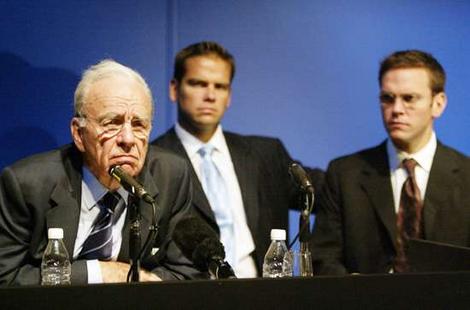
hate sees the enemy's weakness but not its own
Saul is powerful and able to threaten David, but David –with Jonathan’s love and support- will prosper nevertheless because that’s God’s plan. Saul’s rage is partly fuelled by his own intuition that God has rejected him and chosen David. The story is beautifully told by an anonymous narrator who respects all his characters and allows their motives to be revealed in action, over time.
Because of his love for David, Jonathan understands and accepts that he will not succeed his father; indeed he has intimations of his own death. His love gives him insight. Because of his hatred for David, Saul understands but does not accept that his son will not succeed him. His hate gives him insight into David’s actions but not his own. David has been given a visible sign of his future-he has been anointed-but his faith in that sign grants him a controlled ambition against which Saul is helpless. Nor will David abandon his ambition for the sake the friend he loves. In and through all of this, the author wants the reader to perceive the hand of God. It is his/her conviction that God has guided David to the throne but s/he presents the legends of his rise to power without glamour or excuse. If God works in human affairs, THIS is how he works. The reader can only admire the mature realism of this theology.
Mark 2:23-3:6
23 One sabbath he was going through the cornfields; and as they made their way his disciples began to pluck heads of grain. 24The Pharisees said to him, ‘Look, why are they doing what is not lawful on the sabbath?’ 25And he said to them, ‘Have you never read what David did when he and his companions were hungry and in need of food? 26He entered the house of God, when Abiathar was high priest, and ate the bread of the Presence, which it is not lawful for any but the priests to eat, and he gave some to his companions.’ 27Then he said to them, ‘The sabbath was made for humankind, and not humankind for the sabbath; 28so the Son of Man is lord even of the sabbath.’
3Again he entered the synagogue, and a man was there who had a withered hand. 2They watched him to see whether he would cure him on the sabbath, so that they might accuse him. 3And he said to the man who had the withered hand, ‘Come forward.’ 4Then he said to them, ‘Is it lawful to do good or to do harm on the sabbath, to save life or to kill?’ But they were silent. 5He looked around at them with anger; he was grieved at their hardness of heart and said to the man, ‘Stretch out your hand.’ He stretched it out, and his hand was restored. 6The Pharisees went out and immediately conspired with the Herodians against him, how to destroy him.
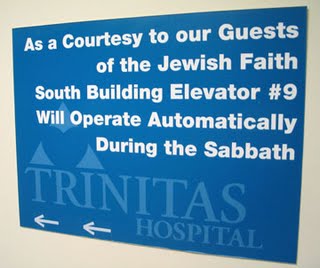 “Son of man” is capitalised here, because the translators think that it is the biblical title taken from the book of Daniel, meaning “the saints of the Most High”. But there are no capitals in the Greek and son of man may mean no more than “human being.” In effect, it may not matter much because Jesus’ logic establishes firstly, that God’s law is made for humans, not humans for the law. The people come first and are served by the law, THEREFORE, the “son of man” is Lord of the Sabbath. This is an immediately surprising but on second thoughts, compelling interpretation of God’s Law.
The story that follows illustrates Jesus’ logic. The Sabbath is made for this man with the withered hand. The obligation to do good outweighs all other obligations. Jesus acts as the one-with –life-giving-power while at the same time putting himself in mortal danger. Jesus’ power is not supernatural: it is the power to do good to people. Religion becomes dangerous when it forgets that it only exists to serve the goodness of God.
 Emmock's Blog