
drug trader
ANTI PSYCHOTIC DRUG EPIDEMIC IN USA
This blog provides a meditation on the Episcopal daily readings along with a headline from world news.
1 Samuel 21:1-15
21David came to Nob to the priest Ahimelech. Ahimelech came trembling to meet David, and said to him, ‘Why are you alone, and no one with you?’ 2David said to the priest Ahimelech, ‘The king has charged me with a matter, and said to me, “No one must know anything of the matter about which I send you, and with which I have charged you.” I have made an appointment with the young men for such and such a place. 3Now then, what have you at hand? Give me five loaves of bread, or whatever is here.’ 4The priest answered David, ‘I have no ordinary bread at hand, only holy bread—provided that the young men have kept themselves from women.’ 5David answered the priest, ‘Indeed, women have been kept from us as always when I go on an expedition; the vessels of the young men are holy even when it is a common journey; how much more today will their vessels be holy?’ 6So the priest gave him the holy bread; for there was no bread there except the bread of the Presence, which is removed from before the Lord to be replaced by hot bread on the day it is taken away.
7 Now a certain man of the servants of Saul was there that day, detained before the Lord; his name was Doeg the Edomite, the chief of Saul’s shepherds.
8 David said to Ahimelech, ‘Is there no spear or sword here with you? I did not bring my sword or my weapons with me, because the king’s business required haste.’ 9The priest said, ‘The sword of Goliath the Philistine, whom you killed in the valley of Elah, is here wrapped in a cloth behind the ephod; if you will take that, take it, for there is none here except that one.’ David said, ‘There is none like it; give it to me.’
10 David rose and fled that day from Saul; he went to King Achish of Gath. 11The servants of Achish said to him, ‘Is this not David the king of the land? Did they not sing to one another of him in dances,
“Saul has killed his thousands,
and David his tens of thousands”?’
12David took these words to heart and was very much afraid of King Achish of Gath. 13So he changed his behaviour before them; he pretended to be mad when in their presence. He scratched marks on the doors of the gate, and let his spittle run down his beard. 14Achish said to his servants, ‘Look, you see the man is mad; why then have you brought him to me? 15Do I lack madmen, that you have brought this fellow to play the madman in my presence? Shall this fellow come into my house?’

Anansi-Afraican trickster spirit
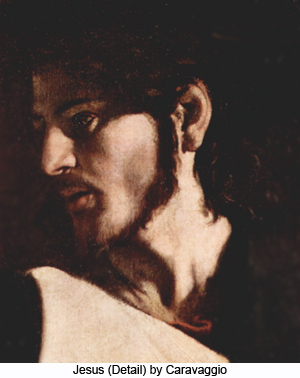
The author uses elements from the folktale repertoire of the “Trickster” to display David’s presence of mind in the midst of danger. David is a combination of Robin Hood and Richard the Lion-heart or Al Capone and President Roosevelt. Ultimately the Lord is seen as the inspiration of his intelligent manoeuvres as well as of his faith and magnanimity. Our modern rather tepid notions of divine inspiration can be refreshed by this narrative which suggests that God inspires the whole person, warts and all; and that conversely, the creativity of human beings even in the least holy of matters, delights God. The passage is famous because Jesus quoted David’s use of holy bread as a pre-text for his own re-interpretation of the law. Are there perhaps elements of the trickster in the character of Jesus?
Mark 3:19-35
Then he went home; 20and the crowd came together again, so that they could not even eat. 21When his family heard it, they went out to restrain him, for people were saying, ‘He has gone out of his mind.’ 22And the scribes who came down from Jerusalem said, ‘He has Beelzebul, and by the ruler of the demons he casts out demons.’ 23And he called them to him, and spoke to them in parables, ‘How can Satan cast out Satan? 24If a kingdom is divided against itself, that kingdom cannot stand. 25And if a house is divided against itself, that house will not be able to stand. 26And if Satan has risen up against himself and is divided, he cannot stand, but his end has come. 27But no one can enter a strong man’s house and plunder his property without first tying up the strong man; then indeed the house can be plundered.
28 ‘Truly I tell you, people will be forgiven for their sins and whatever blasphemies they utter; 29but whoever blasphemes against the Holy Spirit can never have forgiveness, but is guilty of an eternal sin’— 30for they had said, ‘He has an unclean spirit.’
31 Then his mother and his brothers came; and standing outside, they sent to him and called him. 32A crowd was sitting around him; and they said to him, ‘Your mother and your brothers and sisters are outside, asking for you.’ 33And he replied, ‘Who are my mother and my brothers?’ 34And looking at those who sat around him, he said, ‘Here are my mother and my brothers! 35Whoever does the will of God is my brother and sister and mother.’
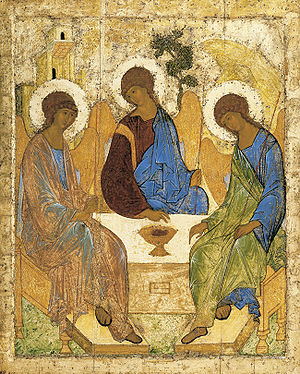
The Holy Trinity-already a household
This is a crucial passage for understanding Mark’s theology of the “house of God”. Jesus is depicted as establishing houses or households of God by evicting evil spirits by the power of God’s spirit. In that same Spirit he is given strength to enter the Satan’s house and bind him, so that his captives may be set free. These “houses” are individual persons, groups of people, or sometimes, spiritual fiefdoms ruled either by the Holy Spirit or the Spirit of Evil. Jesus accepts that his own ways may cause dissent but when people describe the Holy Spirit as the Evil Spirit they are cutting themselves off from the source of forgiveness.
The establishment of God’s household is the aim of Jesus’ ministry and this means that the dividing walls of the ordinary human household must be broken down, as Jesus does with his own mother, brothers and sisters. The household of God, that is, of those who do the will of God, takes precedence over all other human ties.
(It’s worth noting that the issue of “God’s house/hold” is present also in the story of David, who wants to build a temple, a house, for God. The prophet Nathan tells him that God doesn’t want of need a house, but that He will, build a house (royal household) for David, through which God will exercise his rule over Israel.)
The issue of exorcism, that is, of the expelling of evil spirits from human persons and groups is obviously raised by this passage. There is no doubt that much addictive behaviour is akin to possession; but there are less obvious “possessions” –take consumerism for example- which control people’s minds and lives. Without striving to imitate the religious posers who trumpet their ability as exorcists, the true churches should give this issue more attention than it has so far received.
 Emmock's Blog