“U.K RULED BY FERAL ELITE” INTELLECTUALS CLAIM
This blog provides a meditation on the Episcopal daily readings along with a headline from world news
2 Samuel 7:1-17
7Now when the king was settled in his house, and the Lord had given him rest from all his enemies around him, 2the king said to the prophet Nathan, ‘See now, I am living in a house of cedar, but the ark of God stays in a tent.’ 3Nathan said to the king, ‘Go, do all that you have in mind; for the Lord is with you.’
4 But that same night the word of the Lord came to Nathan: 5Go and tell my servant David: Thus says the Lord: Are you the one to build me a house to live in? 6I have not lived in a house since the day I brought up the people of Israel from Egypt to this day, but I have been moving about in a tent and a tabernacle. 7Wherever I have moved about among all the people of Israel, did I ever speak a word with any of the tribal leaders of Israel, whom I commanded to shepherd my people Israel, saying, ‘Why have you not built me a house of cedar?’ 8Now therefore thus you shall say to my servant David: Thus says the Lord of hosts: I took you from the pasture, from following the sheep to be prince over my people Israel; 9and I have been with you wherever you went, and have cut off all your enemies from before you; and I will make for you a great name, like the name of the great ones of the earth. 10And I will appoint a place for my people Israel and will plant them, so that they may live in their own place, and be disturbed no more; and evildoers shall afflict them no more, as formerly, 11from the time that I appointed judges over my people Israel; and I will give you rest from all your enemies. Moreover, the Lord declares to you that the Lord will make you a house. 12When your days are fulfilled and you lie down with your ancestors, I will raise up your offspring after you, who shall come forth from your body, and I will establish his kingdom. 13He shall build a house for my name, and I will establish the throne of his kingdom for ever. 14I will be a father to him, and he shall be a son to me. When he commits iniquity, I will punish him with a rod such as mortals use, with blows inflicted by human beings. 15But I will not take my steadfast love from him, as I took it from Saul, whom I put away from before you. 16Your house and your kingdom shall be made sure for ever before me; your throne shall be established for ever. 17In accordance with all these words and with all this vision, Nathan spoke to David.
NOT GOD'S ADDRESS
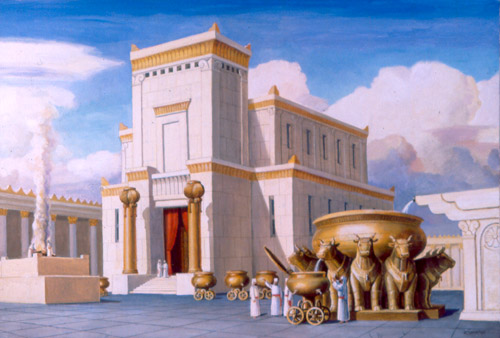
The Lord declines to live in a Temple, because he is a travelling God who accompanies his people. But He will make a house (dynasty) for David through which he will exercise His rule in Israel. Scholars pick out this prophecy as a key moment in Israel’s theology but disagree about its date, estimates of which vary from the 9th to the 2nd centuries BC! This makes it difficult for ordinary readers to assess its importance. It could be the foundation stone of the Davidic dynasty, or perhaps an encouragement when the dynasty was trying to revive itself, say in the time of Hezekiah, or indeed an attempt by the Herodians to give religious importance to the monarchy rather than the temple. It all depends on the history of the text we call second Samuel. This is a general problem in biblical studies and those who say that their faith solves it with certainty are charlatans. Yes, we can take from the text the marvellous notion of a travelling God who refuses to be safely corralled in a holy place; who works through the administration of justice rather than the manipulation of mystery, but we cannot assign it to any historical context, other than the one offered in the text. As it stands it is both a rebuke to David (God will not be domesticated by the ambitious king) and a promise (God will favour his descendants with fatherly love forever.)
Mark 8:11-21
11 The Pharisees came and began to argue with him, asking him for a sign from heaven, to test him. 12And he sighed deeply in his spirit and said, ‘Why does this generation ask for a sign? Truly I tell you, no sign will be given to this generation.’ 13And he left them, and getting into the boat again, he went across to the other side.
14 Now the disciples had forgotten to bring any bread; and they had only one loaf with them in the boat. 15And he cautioned them, saying, ‘Watch out—beware of the yeast of the Pharisees and the yeast of Herod.’ 16They said to one another, ‘It is because we have no bread.’ 17And becoming aware of it, Jesus said to them, ‘Why are you talking about having no bread? Do you still not perceive or understand? Are your hearts hardened? 18Do you have eyes, and fail to see? Do you have ears, and fail to hear? And do you not remember? 19When I broke the five loaves for the five thousand, how many baskets full of broken pieces did you collect?’ They said to him, ‘Twelve.’ 20‘And the seven for the four thousand, how many baskets full of broken pieces did you collect?’ And they said to him, ‘Seven.’ 21Then he said to them, ‘Do you not yet understand?’

Self-serving religion and corrupt politics in Iran
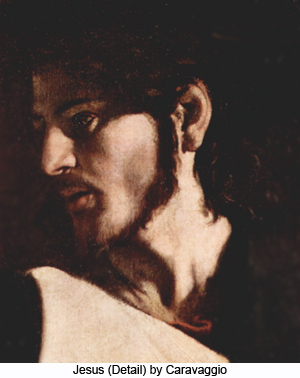
“Crossing to the other side” is narrative code for “being on kingdom business”; in this case Jesus is trying to enlighten his dull disciples. The gist of his teaching is that the two “feedings” of 5000 and 4000 people have revealed Jesus as the true shepherd king of his people and of the gentiles. He offers the true (unleavened?) bread. But the rule of the Pharisees or of the Herod dynasty is like evil yeast which can spread amongst the people. In Mark’s gospel the enemies of Jesus are self-serving religion and corrupt politics. He’s a shrewd fellow.
 Emmock's Blog