
DEADLY RADIATION DETECTED AT JAPANESE PLANT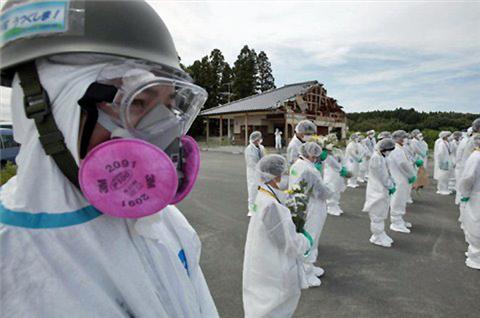
This blog provides a meditation on rthe Episcopal daily readings along with a headline from world news
2 Samuel 9:1-13
9David asked, ‘Is there still anyone left of the house of Saul to whom I may show kindness for Jonathan’s sake?’ 2Now there was a servant of the house of Saul whose name was Ziba, and he was summoned to David. The king said to him, ‘Are you Ziba?’ And he said, ‘At your service!’ 3The king said, ‘Is there anyone remaining of the house of Saul to whom I may show the kindness of God?’ Ziba said to the king, ‘There remains a son of Jonathan; he is crippled in his feet.’ 4The king said to him, ‘Where is he?’ Ziba said to the king, ‘He is in the house of Machir son of Ammiel, at Lo-debar.’ 5Then King David sent and brought him from the house of Machir son of Ammiel, at Lo-debar. 6Mephibosheth son of Jonathan son of Saul came to David, and fell on his face and did obeisance. David said, ‘Mephibosheth!’ He answered, ‘I am your servant.’ 7David said to him, ‘Do not be afraid, for I will show you kindness for the sake of your father Jonathan; I will restore to you all the land of your grandfather Saul, and you yourself shall eat at my table always.’ 8He did obeisance and said, ‘What is your servant, that you should look upon a dead dog such as I am?’
9 Then the king summoned Saul’s servant Ziba, and said to him, ‘All that belonged to Saul and to all his house I have given to your master’s grandson. 10You and your sons and your servants shall till the land for him, and shall bring in the produce, so that your master’s grandson may have food to eat; but your master’s grandson Mephibosheth shall always eat at my table.’ Now Ziba had fifteen sons and twenty servants. 11Then Ziba said to the king, ‘According to all that my lord the king commands his servant, so your servant will do.’ Mephibosheth ate at David’s table, like one of the king’s sons. 12Mephibosheth had a young son whose name was Mica. And all who lived in Ziba’s house became Mephibosheth’s servants. 13Mephibosheth lived in Jerusalem, for he always ate at the king’s table. Now he was lame in both his feet.
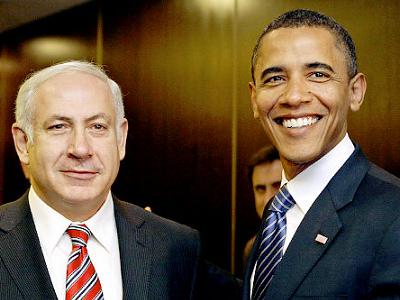
Obama and Netanyahu. The sincerity of rulers?
On the face of it this shows a kindly side of David’s character. For the sake of Jonathan his dead friend he protects his lame son and gives him a place at the royal table. But if we ask, “How should a wise king treat members of a defeated royal household?” we might reckon that a public act of generosity which places them where they can be closely observed would more effective than killing them, which might strengthen opposition amongst their supporters.
The narrative from 2 Samuel 9- I Kings 2 is held by scholars to be the work of a single story-teller who wanted to show how the succession of Solomon came about. Many more recent scholars have doubted this purpose and noted editorial elements in the stories, but still treat it as a work of genius.
A mere amateur like me can only suggest that the virtues seen by scholars in this section are already evident in the earlier sections of the books of Samuel: an ironic, balanced, humane and secular intelligence is present throughout, using the dynastic struggles of Israel to discover truth about God and justice.
The power of narrative theology has been a re-discovery of recent scholarship. We are constantly constructing narratives of our own lives, the lives of our friends and the lives of public figures. How can God feature in these narratives without disrupting the links of cause and effect? How can God be involved in history without denying human and cosmic integrity? The books of Samuel help us to answer this question. Rule number one may be: a theological story requires more rather than less scrutiny of the human motives involved in any event.
Mark 8:34-9:1
34 He called the crowd with his disciples, and said to them, ‘If any want to become my followers, let them deny themselves and take up their cross and follow me. 35For those who want to save their life will lose it, and those who lose their life for my sake, and for the sake of the gospel, will save it. 36For what will it profit them to gain the whole world and forfeit their life? 37Indeed, what can they give in return for their life? 38Those who are ashamed of me and of my words in this adulterous and sinful generation, of them the Son of Man will also be ashamed when he comes in the glory of his Father with the holy angels.’ 91And he said to them, ‘Truly I tell you, there are some standing here who will not taste death until they see that the kingdom of God has come with power.’

how to oppose earthly power?
The Son of Man means “Jesus-and his-people” that is, the Crucified and Risen Jesus and his scattered followers in the world. They are the “saints of the Most High” prophesied in Daniel, and are the presence of God’s rule on this earth. That’s the meaning of Jesus’ prophecy. The life of the kingdom is the true fulfilment of each human person but involves that person risking the cross, that is, the specifically Roman penalty for dissident foreigners and slaves. If Jesus foresaw his crucifixion that’s because although he threatened no violence, he insisted on loyalty to God’s rule above all and knew this would bring him into conflict with the rulers of the world. He assumed that his true followers would be similarly unacceptable. There are many examples of disciples who have accepted this dangerous calling, but today I want to draw attention to the persistent, quiet, radical opposition of the Quakers to the brutalities of earthly power. Their carrying of the cross has been an example to us all.
 Emmock's Blog