ITALIAN IDIOT PRAISES BREIVIK 
This blog provides a meditation on the Episcopal daily readings along with a headline from world news
2 Samuel 12:1-14
121and the Lord sent Nathan to David. He came to him, and said to him, ‘There were two men in a certain city, one rich and the other poor. 2The rich man had very many flocks and herds; 3but the poor man had nothing but one little ewe lamb, which he had bought. He brought it up, and it grew up with him and with his children; it used to eat of his meagre fare, and drink from his cup, and lie in his bosom, and it was like a daughter to him. 4Now there came a traveller to the rich man, and he was loath to take one of his own flock or herd to prepare for the wayfarer who had come to him, but he took the poor man’s lamb, and prepared that for the guest who had come to him.’ 5Then David’s anger was greatly kindled against the man. He said to Nathan, ‘As the Lord lives, the man who has done this deserves to die; 6he shall restore the lamb fourfold, because he did this thing, and because he had no pity.’
7 Nathan said to David, ‘You are the man! Thus says the Lord, the God of Israel: I anointed you king over Israel, and I rescued you from the hand of Saul; 8I gave you your master’s house, and your master’s wives into your bosom, and gave you the house of Israel and of Judah; and if that had been too little, I would have added as much more. 9Why have you despised the word of the Lord, to do what is evil in his sight? You have struck down Uriah the Hittite with the sword, and have taken his wife to be your wife, and have killed him with the sword of the Ammonites. 10Now therefore the sword shall never depart from your house, for you have despised me, and have taken the wife of Uriah the Hittite to be your wife. 11Thus says the Lord: I will raise up trouble against you from within your own house; and I will take your wives before your eyes, and give them to your neighbour, and he shall lie with your wives in the sight of this very sun. 12For you did it secretly; but I will do this thing before all Israel, and before the sun.’ 13David said to Nathan, ‘I have sinned against the Lord.’ Nathan said to David, ‘Now the Lord has put away your sin; you shall not die. 14Nevertheless, because by this deed you have utterly scorned the Lord, the child that is born to you shall die.’ 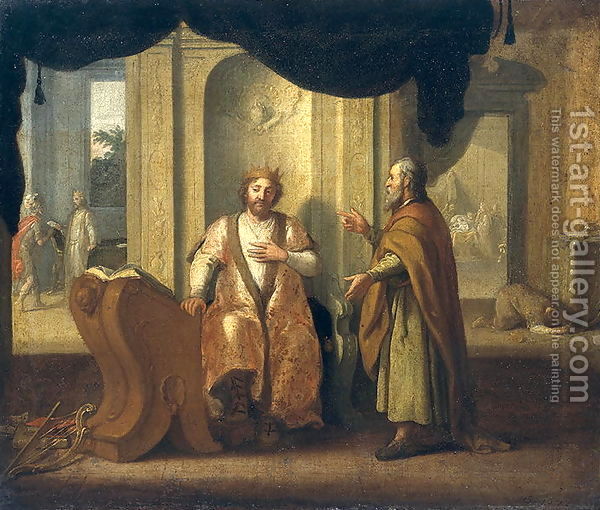
The Lord is more than justice; he is also love; but he is not less than justice. He is that pitiless process which insists that actions have consequences, that character is destiny, that unless they are made good, the sins of the fathers will be visited on the children. We flinch from this, as indeed did some of the biblical prophets, but it does us no harm to consider its meaning.
- The notion of individual sin and individual forgiveness is inadequate. Each person is embedded in family, community and nation. Their actions and inactions affect the people amongst whom they live. Parental violence, for example, can warp the character of children and children’s children. A religion which imagines that the only issue is the salvation of the individual is very shallow. Evil harms human beings just as certainly as bodily injury brings pain. This iron law is part of justice.
- Some theology insists that God never punishes; and that individuals and communities should not do so. The Bible (Old and New Testaments) is not of this opinion. Punishment forces the offender, by means of shame, deprivation or labour, to recognise that human beings are vulnerable, because the offender has blinded himself to this truth, which is the necessary basis of all goodness. People can be harmed; this causes them anguish; therefore we must not harm them. Punishment is not itself harm, although it can be confused with it: its aim is to do give the wrongdoer the dignity of being held responsible for what he’s done, by being reminded of his human vulnerability through his own hurt. This is especially necessary in the case of the rich wrongdoer. Punishment, however, is not restorative. Understanding, nurture and forgiveness are required if the wrong-doer is to be restored to his own health and to the life of his community.
Nathan’s fable gives David an instance of harm to a human being, to which he responds in anger by promising to punish that man. “You are the man” Nathan tells him, “You are the one who has done harm.” David is forced to recognise the harm he has caused and to bear as punishment the death of his child. Only then can he be restored to his relationship with the Lord and resume his life. Even then, however, he will still have to deal with the consequences of his evil in the troubled life of his household.
Mark 9:14-29
14 When they came to the disciples, they saw a great crowd around them, and some scribes arguing with them. 15When the whole crowd saw him, they were immediately overcome with awe, and they ran forward to greet him. 16He asked them, ‘What are you arguing about with them?’ 17Someone from the crowd answered him, ‘Teacher, I brought you my son; he has a spirit that makes him unable to speak; 18and whenever it seizes him, it dashes him down; and he foams and grinds his teeth and becomes rigid; and I asked your disciples to cast it out, but they could not do so.’ 19He answered them, ‘You faithless generation, how much longer must I be among you? How much longer must I put up with you? Bring him to me.’ 20And they brought the boy to him. When the spirit saw him, immediately it threw the boy into convulsions, and he fell on the ground and rolled about, foaming at the mouth. 21Jesus asked the father, ‘How long has this been happening to him?’ And he said, ‘From childhood. 22It has often cast him into the fire and into the water, to destroy him; but if you are able to do anything, have pity on us and help us.’ 23Jesus said to him, ‘If you are able!—All things can be done for the one who believes.’ 24Immediately the father of the child cried out, ‘I believe; help my unbelief!’ 25When Jesus saw that a crowd came running together, he rebuked the unclean spirit, saying to it, ‘You spirit that keep this boy from speaking and hearing, I command you, come out of him, and never enter him again!’ 26After crying out and convulsing him terribly, it came out, and the boy was like a corpse, so that most of them said, ‘He is dead.’ 27But Jesus took him by the hand and lifted him up, and he was able to stand. 28When he had entered the house, his disciples asked him privately, ‘Why could we not cast it out?’ 29He said to them, ‘This kind can come out only through prayer.’
 This is a glorious and familiar story. I want to comment on just two matters.
- The father’s prayer, “Lord I believe; help my unbelief.” In the face of the hurt and social isolation of the father and child, Jesus almost cruelly presses the father to declare his trust in the goodness of God. Healing becomes possible only when people refuse to accept disease as God’s will. The father wants to make this great refusal and can’t quite do so, but utters the great prayer for Jesus to help him in his lack of faith.
- Jesus explanation of his disciples inability: “this sort can only come out by prayer,” invites them to see both the father’s trembling faith and his own response as prayer, as a way of saying to God, “Do not bring us into hard trials but deliver us from the Evil One.”
 Emmock's Blog