CHANCELLOR TOLD BY ECONOMISTS: HELP THE RICH 
This blog provides a meditation on the daily readings of the Episcopal Church along with a headline from world news
Philippians 2:1-11
2If then there is any encouragement in Christ, any consolation from love, any sharing in the Spirit, any compassion and sympathy, 2make my joy complete: be of the same mind, having the same love, being in full accord and of one mind. 3Do nothing from selfish ambition or conceit, but in humility regard others as better than yourselves. 4Let each of you look not to your own interests, but to the interests of others. 5Let the same mind be in you that was in Christ Jesus,
6 who, though he was in the form of God,
did not regard equality with God
as something to be exploited,
7 but emptied himself,
taking the form of a slave,
being born in human likeness.
And being found in human form,
8 he humbled himself
and became obedient to the point of death—
even death on a cross.
9 Therefore God also highly exalted him
and gave him the name
that is above every name,
10 so that at the name of Jesus
every knee should bend,
in heaven and on earth and under the earth,
11 and every tongue should confess
that Jesus Christ is Lord,
to the glory of God the Father.
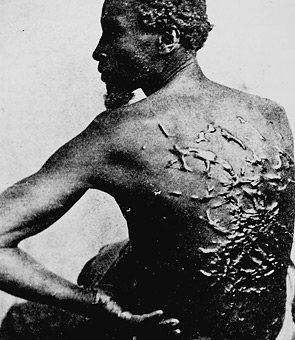
the form of a slave
In the shared life of Christ the disciples must show the humility of Christ which is celebrated in the “Christ-Hymn” which Paul quotes here. At least it’s assumed he’s quoting rather than composing because the vocabulary of the hymn is not Pauline. It’s good to note that the model for verse 6 is the biblical figure of Adam who was created in the “form of God” and yet, notoriously, did regard equality with God as something to be “exploited”-“snatched” would be a better translation- when the tempter suggested, “You will be as Gods.” The classical human sin is the arrogance that wants on human terms something which is already a gift of God, so that the genuine likeness of human beings to their creator is perverted. Jesus, the hymn says, demonstrated his God-likeness precisely by emptying himself of power, taking on the status of a slave (perhaps the “slave/servant of God of Isaiah 53) and living as a human being subject to the mortality which has afflicted all humanity since Adam. Even his death was not noble but rather the death of a despised rebel against imperial power. Because Jesus obeyed so completely and trusted so absolutely in God, he has been lifted up by God and allowed to share the name “Lord” (Greek Kyrios) which is above all names because it is the Greek translation of the Hebrew name of God.
This astonishing theology of the downward mobility of God-in-Christ remains a challenge to contemporary thought about God and about the meaning of Christian discipleship.
Matthew 2:1-12
2In the time of King Herod, after Jesus was born in Bethlehem of Judea, wise men from the East came to Jerusalem, 2asking, ‘Where is the child who has been born king of the Jews? For we observed his star at its rising, and have come to pay him homage.’ 3When King Herod heard this, he was frightened, and all Jerusalem with him; 4and calling together all the chief priests and scribes of the people, he inquired of them where the Messiah was to be born. 5They told him, ‘In Bethlehem of Judea; for so it has been written by the prophet:
6 “And you, Bethlehem, in the land of Judah,
are by no means least among the rulers of Judah;
for from you shall come a ruler
who is to shepherd my people Israel.” ’
7 Then Herod secretly called for the wise men and learned from them the exact time when the star had appeared. 8Then he sent them to Bethlehem, saying, ‘Go and search diligently for the child; and when you have found him, bring me word so that I may also go and pay him homage.’ 9When they had heard the king, they set out; and there, ahead of them, went the star that they had seen at its rising, until it stopped over the place where the child was. 10When they saw that the star had stopped, they were overwhelmed with joy. 11On entering the house, they saw the child with Mary his mother; and they knelt down and paid him homage. Then, opening their treasure-chests, they offered him gifts of gold, frankincense, and myrrh. 12And having been warned in a dream not to return to Herod, they left for their own country by another road. 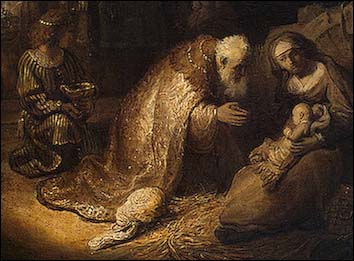
In comparison to the theological hymn about the nature of Christ, here is a theological story. Both arise from the faith and imagination of Christian people.
The story of the wise men is complex and beautiful but it makes clear statements about Jesus.
- He is called King of the Jews (Messiah) but his birth is neither expected nor recognised by them, but only by Gentiles. This prefigures his ultimate rejection by official Jewish religion and his acceptance by Gentiles.
- Nevertheless, as his birth in Bethlehem was prophesied, He is the true Messiah.
- From his birth, the Jewish political establishment feared him
- Heaven itself by means of a “royal star” announced his birth.
- He was born of a human mother but was offered mysterious gifts appropriate for a king or even a god.
No, stars don’t stop in the sky in science or history but they do in this story which tells a truth deeper than either.
 Emmock's Blog