
ROWAN WILLIAMS TO MAKE SOLIDARITY VISIT TO PERSECUTED ANGLICANS IN ZIMBABWE 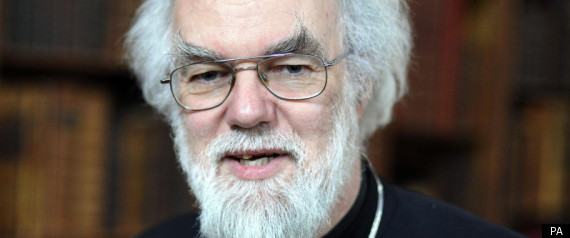
This blog provides a meditation on the Episcopal daily readings along with a headline from world news
Philippians 2:12-30
12 Therefore, my beloved, just as you have always obeyed me, not only in my presence, but much more now in my absence, work out your own salvation with fear and trembling; 13for it is God who is at work in you, enabling you both to will and to work for his good pleasure.
14 Do all things without murmuring and arguing, 15so that you may be blameless and innocent, children of God without blemish in the midst of a crooked and perverse generation, in which you shine like stars in the world. 16It is by your holding fast to the word of life that I can boast on the day of Christ that I did not run in vain or labour in vain. 17But even if I am being poured out as a libation over the sacrifice and the offering of your faith, I am glad and rejoice with all of you— 18and in the same way you also must be glad and rejoice with me.
19 I hope in the Lord Jesus to send Timothy to you soon, so that I may be cheered by news of you. 20I have no one like him who will be genuinely concerned for your welfare. 21All of them are seeking their own interests, not those of Jesus Christ. 22But Timothy’s worth you know, how like a son with a father he has served with me in the work of the gospel. 23I hope therefore to send him as soon as I see how things go with me; 24and I trust in the Lord that I will also come soon.
25 Still, I think it necessary to send to you Epaphroditus—my brother and co-worker and fellow-soldier, your messenger and minister to my need; 26for he has been longing for all of you, and has been distressed because you heard that he was ill. 27He was indeed so ill that he nearly died. But God had mercy on him, and not only on him but on me also, so that I would not have one sorrow after another. 28I am the more eager to send him, therefore, in order that you may rejoice at seeing him again, and that I may be less anxious. 29Welcome him then in the Lord with all joy, and honour such people, 30because he came close to death for the work of Christ, risking his life to make up for those services that you could not give me.
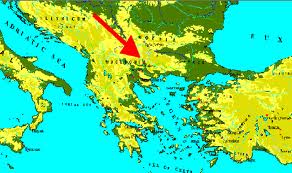
Paul writes to Philippi (arrowed) from Ephesus on the Turkish coast
The theme of the shared life, which I’ve recently noted in my blog, is evident in today’s passage also, but with a significant addition. Paul speaks of how his life may be “poured out over the sacrifice of your faith”. That is, he claims a place in the offering of faith made by his converts while they share in his imprisonment in Ephesus. Life is shared in Christ. But as Paul’s remarks about Timothy and Epaphroditus bear witness, the sharing is personal. Community is based on the mutual concern of individuals. The church is not composed of A,B,C, but of Paul, Timothy, Epahroditus. These friendships were sustained over huge distances in the ancient world and are evidence of something revolutionary in Paul: the vision of communities united across geographical, racial and political space. There is no short cut to the existence of world community. It can only be built person by person, community by community. The “world-wide-web” envisaged by Paul was enhanced by mail but was founded and renewed (“I hope to send Timothy”) in face-to-face relationship. Today’s churches find it much easier to stay in touch with each other through mobile phones, email and Skype but the shared life must still be made real in personal contact and rooted in a common participation in Christ.
Matthew 2:13-23
13 Now after they had left, an angel of the Lord appeared to Joseph in a dream and said, ‘Get up, take the child and his mother, and flee to Egypt, and remain there until I tell you; for Herod is about to search for the child, to destroy him.’ 14Then Joseph got up, took the child and his mother by night, and went to Egypt, 15and remained there until the death of Herod. This was to fulfil what had been spoken by the Lord through the prophet, ‘Out of Egypt I have called my son.’
16 When Herod saw that he had been tricked by the wise men, he was infuriated, and he sent and killed all the children in and around Bethlehem who were two years old or under, according to the time that he had learned from the wise men. 17Then was fulfilled what had been spoken through the prophet Jeremiah:
18 ‘A voice was heard in Ramah,
wailing and loud lamentation,
Rachel weeping for her children;
she refused to be consoled, because they are no more.’
19 When Herod died, an angel of the Lord suddenly appeared in a dream to Joseph in Egypt and said, 20‘Get up, take the child and his mother, and go to the land of Israel, for those who were seeking the child’s life are dead.’ 21Then Joseph got up, took the child and his mother, and went to the land of Israel. 22But when he heard that Archelaus was ruling over Judea in place of his father Herod, he was afraid to go there. And after being warned in a dream, he went away to the district of Galilee. 23There he made his home in a town called Nazareth, so that what had been spoken through the prophets might be fulfilled, ‘He will be called a Nazorean.’
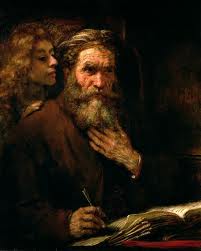
Matthew's inspiration takes him beyond the bald facts
The nature of biblical narrative can be seen by comparing the accounts of Jesus birth in Matthew and Luke. The towns of Nazareth and Bethlehem are involved in both but with completely different versions of their connection with Jesus’ family. Matthew has wise men and Luke has shepherds; Luke has a census to explain Jesus’ birth in Bethlehem; while Matthew has a massacre to explain his flight to Egypt, and so on. It seems clear that Joseph, Mary, Bethlehem and Nazareth are the only fixed points in the story and the rest has been developed by the vivid imaginations of Christian story-tellers.
This should not dismay Christian readers. Matthew and Luke communicate much more about the meaning of Jesus’ life in these accounts than any “factual history” could do.
Matthew’s account for example, links Jesus to Israel in his presence in Egypt and to Moses in his escape from a massacre of children. Like Israel, he is God’s son; like Moses he is God’s prophet. Above all, however this story puts Jesus from the start close to the vulnerable of the earth, the powerless and the refugees, who are menaced by the powerful. The basis of the “shared life” which Paul celebrates is Christ’s sharing of human life and human oppression.
 Emmock's Blog