
This blog provides a meditation on the Episcopal daily radings along with a headline from world news:
JIMMY CARTER-“NEVER DROOPED A BOMB, NEVER FIRED A BULLET, NEVER WENT TO WAR” 
1 Corinthians 3:16-23
16 Do you not know that you are God’s temple and that God’s Spirit dwells in you? 17If anyone destroys God’s temple, God will destroy that person. For God’s temple is holy, and you are that temple.
18 Do not deceive yourselves. If you think that you are wise in this age, you should become fools so that you may become wise. 19For the wisdom of this world is foolishness with God. For it is written,
‘He catches the wise in their craftiness’,
20and again,
‘The Lord knows the thoughts of the wise,
that they are futile.’
21So let no one boast about human leaders. For all things are yours, 22whether Paul or Apollos or Cephas or the world or life or death or the present or the future—all belong to you, 23and you belong to Christ, and Christ belongs to God.
 Paul means that God dwells in those who are open to his presence. “You are that temple.” All the Jewish beliefs about the Temple are transferred to the human person. The person is not sacred because “all human life is holy” but because the believing person is hallowed (made holy) by God’s spirit. I have written at length in earlier blogs about what I call “oikos theology”. Oikos (gk: house) is one of the key theological concepts of the Bible and is used both of God’s dwelling in us and our dwelling in God.
True wisdom is knowing that God in his humility has come to dwell with us so that we may dwell with Him. Other forms of wisdom are secondary or misleading. Forms of religious argument about leadership or theological niceties are much less important than the men and women in whom God dwells. Fundamental theology allows for the practical subordination of all other truths to the truth of God’s presence in us.
Is the indwelling Spirit some kind of supernatural substance, some form of hocus-pocus infusion? No, for Paul, because it is of God, it cannot be anything like a worldly substance or thing, for God is utterly different from the world. To worldly eyes or scientific investigation, God’s spirit cannot be discovered: there is nothing to see other than its “fruits”: love, joy, peace, goodness, faithfulness, kindness, gentleness, patience and self-control, and these are human qualities. Only the believer knows that these come from the eviction of the ruling spirits of this world from the human house so that God can be sole tenant.
Matthew 5:11-16
11 ‘Blessed are you when people revile you and persecute you and utter all kinds of evil against you falsely on my account. 12Rejoice and be glad, for your reward is great in heaven, for in the same way they persecuted the prophets who were before you.
13 ‘You are the salt of the earth; but if salt has lost its taste, how can its saltiness be restored? It is no longer good for anything, but is thrown out and trampled under foot.
14 ‘You are the light of the world. A city built on a hill cannot be hidden. 15No one after lighting a lamp puts it under the bushel basket, but on the lampstand, and it gives light to all in the house. 16In the same way, let your light shine before others, so that they may see your good works and give glory to your Father in heaven.
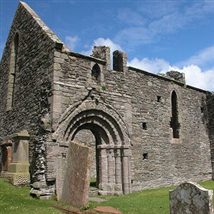
Whithorn Priory-Built over Ninian's "White House"
Those who are salt (preservative) and light for the world are those who have just been congratulated as the recipients of the kingdom (the people of the beatitudes): they do not get what they need by taking it from others or dominating them but wait to receive from God who through his son Jesus establishes his household in the world. Such people keep the world from going rotten and provide a light which shows the world its own condition. They will never be popular with those who live by worldly standards: indeed unpopularity may be one of the marks by which they are recognised. For this reason Jesus advised his disciples to expect persecution. It doesn’t sound like a market winner. Today the church remembers St. Ninian who in the late fourth century was a shining light in the south of Scotland spreading the gospel of the Romano-British Church to the Picts. His Church was called Candida Casa, the white or shining house.
 Emmock's Blog