This blog provides a meditation on the Episcopal daily readings along with a headline from world news:
FIFA BANS POPPIES AS “NATIONAL” SYMBOL 
Revelation 18:21-24
21 Then a mighty angel took up a stone like a great millstone and threw it into the sea, saying,
‘With such violence Babylon the great city
will be thrown down,
and will be found no more;
22 and the sound of harpists and minstrels and of flautists and trumpeters
will be heard in you no more;
and an artisan of any trade
will be found in you no more;
and the sound of the millstone
will be heard in you no more;
23 and the light of a lamp
will shine in you no more;
and the voice of bridegroom and bride
will be heard in you no more;
for your merchants were the magnates of the earth,
and all nations were deceived by your sorcery.
24 And in you was found the blood of prophets and of saints,
and of all who have been slaughtered on earth.
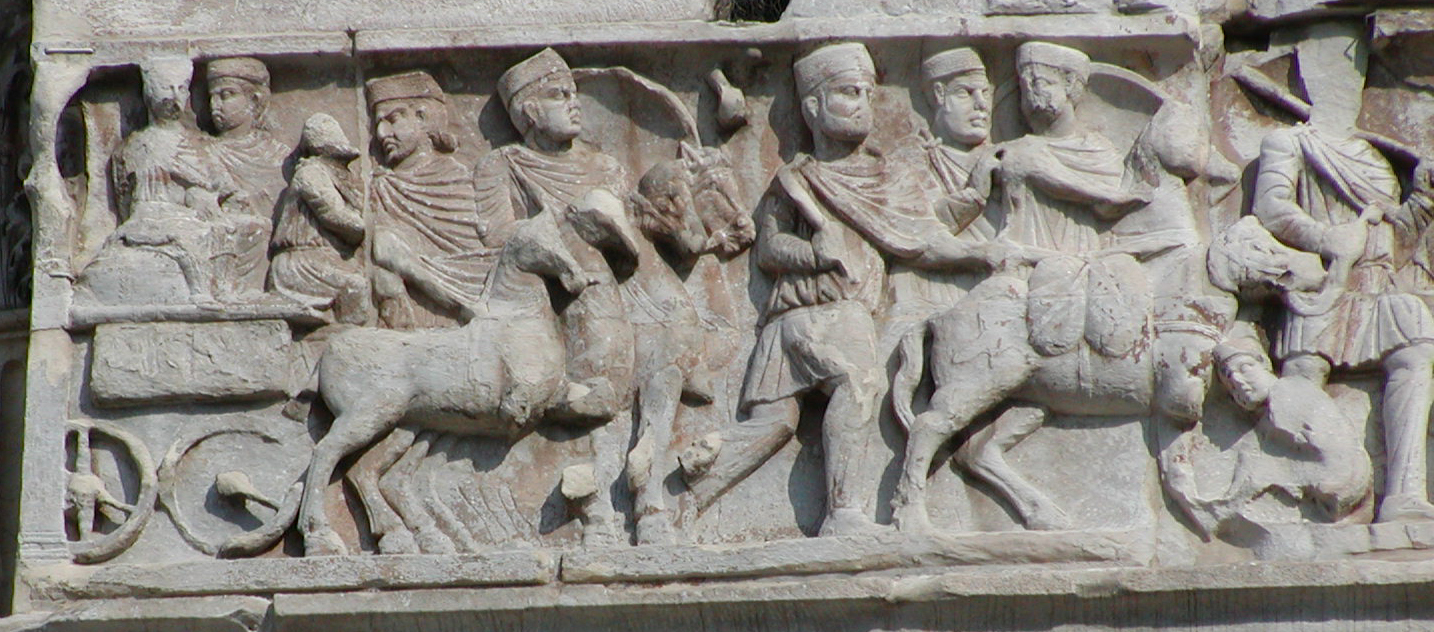
Triumph of Constantine: "in you is found the blood of the saints.."
Doubtless the prophecy of the Revelation, that the great oppressive wealthy city will be overthrown would please the anti-capitalist protesters gathered in many cities today. It sounds as if this overthrow is coming soon. We should remember however that the Roman Empire was at its greatest strength at the time of this prophecy and continued to be effective for another 300 years; the daily reality of life in the Empire was in no way changed by the prophecy: slaves were still slaves, masters still masters, wealth was still in the hands of a few. The perspective of the prophecy is that of the hidden counsel of God, which reveals the ultimate truth about the oppressive empire and is therefore depicted in terms of a heavenly vision. The day-to- day truth at the time of the prophecy is seen in verse 24, “In you was found the blood of the prophets and saints”. The sacrifice of the prophets and the saints is also the blood of the Lamb, who is in the “midst of the throne” that is, shares the authority of God. How precisely the present sacrifice is connected to the ultimate overthrow of the city is not revealed, but it is an essential connection. Human refusal of allegiance to the city and trust in the identity of the Lamb are the present form of God’s judgment on Babylon/ Rome/ Global Capitalism. The vision gives hope but the author’s view of day-to-day reality is pretty sober.
Matthew 15:29-39
29 After Jesus had left that place, he passed along the Sea of Galilee, and he went up the mountain, where he sat down. 30Great crowds came to him, bringing with them the lame, the maimed, the blind, the mute, and many others. They put them at his feet, and he cured them, 31so that the crowd was amazed when they saw the mute speaking, the maimed whole, the lame walking, and the blind seeing. And they praised the God of Israel.
32 Then Jesus called his disciples to him and said, ‘I have compassion for the crowd, because they have been with me now for three days and have nothing to eat; and I do not want to send them away hungry, for they might faint on the way.’ 33The disciples said to him, ‘Where are we to get enough bread in the desert to feed so great a crowd?’ 34Jesus asked them, ‘How many loaves have you?’ They said, ‘Seven, and a few small fish.’ 35Then ordering the crowd to sit down on the ground, 36he took the seven loaves and the fish; and after giving thanks he broke them and gave them to the disciples, and the disciples gave them to the crowds. 37And all of them ate and were filled; and they took up the broken pieces left over, seven baskets full. 38Those who had eaten were four thousand men, besides women and children. 39After sending away the crowds, he got into the boat and went to the region of Magadan.
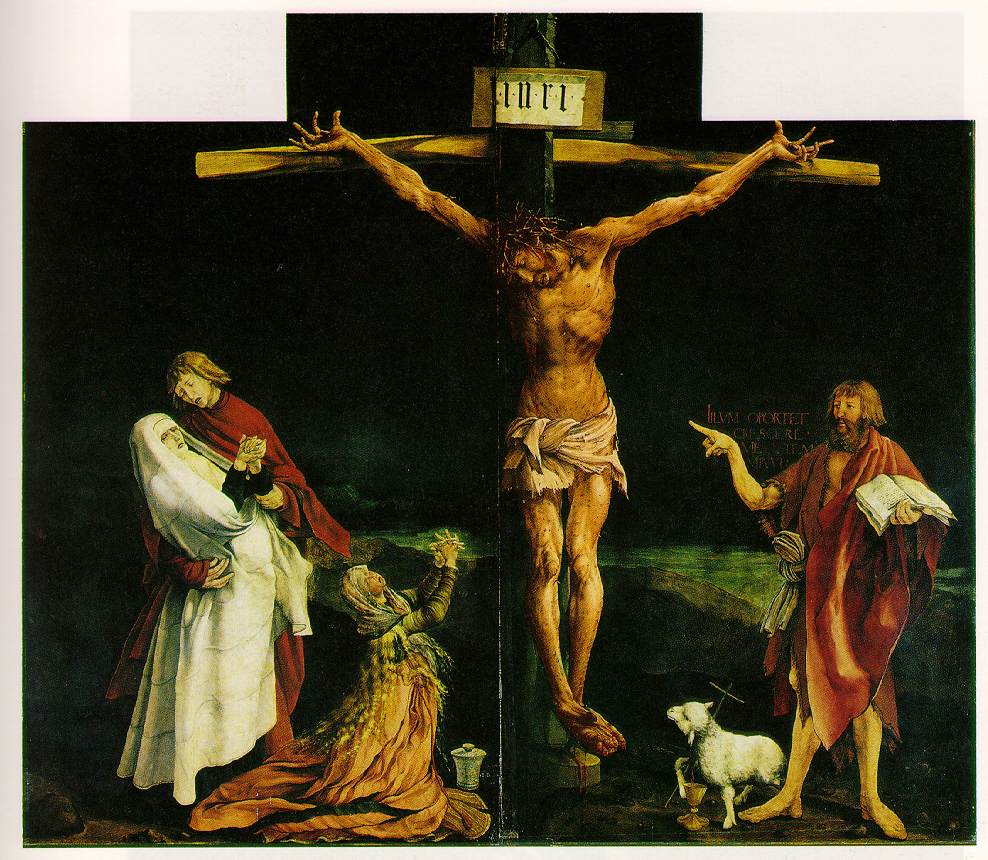
Isenheim Altarpiece: "He bore our diseases"
The two stories of feeding crowds, the one of 5000, the other of 4000 are explained by scholars as a symbolic way of showing Jesus as compassionate king of Jews (12 baskets of leftovers=12 tribes) and Gentiles (7 baskets of leftover=7 nations of Gentiles as traditionally counted). In both stories Matthew changes his source material from Mark to emphasise the compassion of Jesus and his healing ministry. The narrative has links to the Manna in the desert and to the Last Supper. For Matthew the healing ministry of Jesus is not just a demonstration of the battle against evil (as it is in Mark) but is linked to his crucifixion. Of Jesus’ healings he quotes Isaiah, “He himself carried our diseases.” In a delicate and roundabout way the stories of the “miraculous feedings” in Matthew tell the reader that King Jesus feeds his multinational people with his own life.
These two aspects of Jesus’ rule: its ecumenical humanity and its sacrificial compassion expose the vicious nationalism/sectarianism of so much contemporary politics and the self-serving carelessness of so many leaders. Christian believers however cannot simply make this judgement from the sidelines. They are committed by their own tradition to be the bearers of Jesus’ rule in this place and time. If poppies are a symbol of nationalistic remembrance, Christian should refuse to wear them. If they stand for remembrance of the war dead and maimed of all peoples, they should wear them gladly. King Jesus has no special preference for Brits.
 Emmock's Blog