
This blog provides a meditation on the Episcopal daily readings along ith a headline from world news:
ANTI-AUSTERITY PROTEST IN BRUSSELS 
AMOS 5: 1-15
Listen while I denounce you,
And hear this funeral dirge, you house of Israel!
The virgin Israel shall fall to rise no more
Deserted on her own soil, with none to lift her up.
This is what the Lord God says:
The city which goes forth a thousand strong
Will return with a mere hundred;
And the city which goes forth a hundred strong,
Will return to the house of Israel with only ten.
This is what the Lord says to the house of Israel:
Seek me and live.
Do not seek Bethel, the House of God,
Nor go to Gilgal, nor cross over to Beer-sheba.
For Gilgal shall know the gall of exile,
And the House of God will have lost its meaning.
Seek the Lord and live
Lest he break out like fire, you house of Joseph,
A fire which burns and burns, which no one at Bethel can
quench.
Listen to this, you who have made justice a bitter jest, 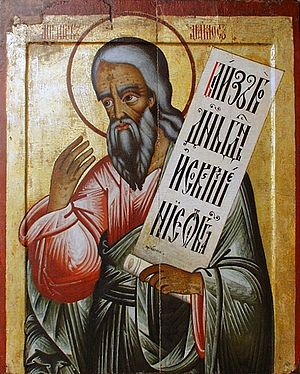
And integrity of no account!
They hate the honest witness in the court,
And loathe the man of integrity.
Therefore, because you trample on the weak,
And compel him to give you loads of grain,
You may have built stone houses,
But they will never be your home.
You have planted vineyards for your own pleasure,
But you will never drink their wine.
For I know how wilful are your crimes,
And how determined are your sins
You browbeat honest men, you take bribes,
And ignore the poor man’s claim for justice.
Therefore a wise man keeps his mouth shut,
For the days are full of menace.
Seek good and not evil
There is no life for you otherwise,
And you will never find that the Lord, the God of hosts,
Is with you, as you say he is.
Yes, loathe evil and love good,
Set justice on her feet again;
And then it may be that the Lord, the God of hosts,
Will have pity upon what remains of Joseph.
 I’m continuing to use the J.B. Phillip translation of the “Four Prophets” which retains the snap and offense of the original. Amos says that in times of gross injustice a wise man keeps his mouth shut, because any criticism may be dangerous. By his own definition he’s not a wise man as he publicly denounces the abuses of the rich, the clergy and the crown. His detailed description of the culture of an affluent society should remind modern readers of much that is already true in the cultures of Europe and the U.K, although you might have to go some where like Nigeria for a perfect fit. Even good institutions are degraded by the influence of wealth and the accumulation of power in a few hands. Individual people are corrupted and are no longer prepared to stand up for justice. Some may say that the answer is religion. Amos rejects this option. “Don’t go to the holy places and festivals,” he says, “Seek the God of goodness and justice.”
Although the Church of England let the side down over the protests at St. Paul’s, many churches today have stood firm against the prevailing culture of success and consumption and ought to be the natural allies of the anti-capitalist protesters. For some time they have characterised the economic system as evil and have been happy to use the word injustice to describe our stratified societies. They have also sponsored their own Aid Agencies which are amongst the most efficient in the world. They should be proud of what they are doing and advertise it more clearly in their mission statements. Such commitments are not adjuncts to faith: in Amos’ language, they are ways of “seeking God”, that is, they are central to the practice of faith.
Matthew 22:1-14
22Once more Jesus spoke to them in parables, saying: 2‘The kingdom of heaven may be compared to a king who gave a wedding banquet for his son. 3He sent his slaves to call those who had been invited to the wedding banquet, but they would not come. 4Again he sent other slaves, saying, “Tell those who have been invited: Look, I have prepared my dinner, my oxen and my fat calves have been slaughtered, and everything is ready; come to the wedding banquet.” 5But they made light of it and went away, one to his farm, another to his business, 6while the rest seized his slaves, maltreated them, and killed them. 7The king was enraged. He sent his troops, destroyed those murderers, and burned their city. 8Then he said to his slaves, “The wedding is ready, but those invited were not worthy. 9Go therefore into the main streets, and invite everyone you find to the wedding banquet.” 10Those slaves went out into the streets and gathered all whom they found, both good and bad; so the wedding hall was filled with guests.
11 ‘But when the king came in to see the guests, he noticed a man there who was not wearing a wedding robe, 12and he said to him, “Friend, how did you get in here without a wedding robe?” And he was speechless. 13Then the king said to the attendants, “Bind him hand and foot, and throw him into the outer darkness, where there will be weeping and gnashing of teeth.” 14For many are called, but few are chosen.’

many are called but few are chosen
This looks a bit complicated but it’s a straightforward allegory based on the idea that God’s Son, the Messiah, is the husband of the true people of God. The invitation to Israel is rejected as they have better things to do. This characterises the reaction of Israel to Jesus, and the ultimate fate of the nation, its sacking by Roman armies in AD 70, is foreshadowed here. The gospel message goes out to all and sundry, sinners as well as righteous, but even then, those who have no respect for Messiah (who have no robe) are rejected. “Many are called but few are chosen” means: God’s love is for all but few want it.
Most scholars think that this parable was produced by means of some creative editing by Matthew of his source material. He tells us that the true people of God understand the privilege of being part of the wedding of God with humanity, and respond to the divine invitation with reverence and joy. This essentially Jewish theology of divine/human marriage, is not much used in modern theology, but is a proper way of talking about Jesus with profound reverence for God and humanity.
 Emmock's Blog