
This blog provides a meditation on the Episcopal readings for the day along with a headline from world news:
EXTREME CHRISTIAN SANTORUM COMES CLOSE IN IOWA CAUCUS 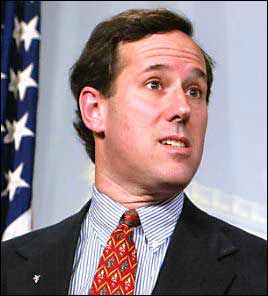
Jonah 2:2-9
2saying,
‘I called to the Lord out of my distress,
and he answered me;
out of the belly of Sheol I cried,
and you heard my voice.
3 You cast me into the deep,
into the heart of the seas,
and the flood surrounded me;
all your waves and your billows
passed over me.
4 Then I said, “I am driven away
from your sight;
how* shall I look again
upon your holy temple?”
5 The waters closed in over me;
the deep surrounded me;
weeds were wrapped around my head
6 at the roots of the mountains.
I went down to the land
whose bars closed upon me for ever;
yet you brought up my life from the Pit,
O Lord my God.
7 As my life was ebbing away,
I remembered the Lord;
and my prayer came to you,
into your holy temple.
8 Those who worship vain idols
forsake their true loyalty.
9 But I with the voice of thanksgiving
will sacrifice to you;
what I have vowed I will pay.
Deliverance belongs to the Lord!’
 The book of Jonah is a comic cracker-not a dubious piece of history but an inspired morality tale, with a historical message. Jonah refuses to carry God’s mesage to Nineveh because if they repent He’ll forgive them. He has no time for foreigners and even less for God’s mercy. For this reason he’s swallowed by a whale as a warning and spewed up to obey God’s command, which he does, only to find that yes, they repent and God forgives. He ends up sitting under a burnt- up gourd in a sulk. What about this psalm? Well, someone, maybe the author, or perhaps an editor of the book, wanting to make clear the relevance of the story to Israel, has placed it here, suggesting that Israel was swallowed up by Babylon because she was only concerned about herself and that she has only been delivered so that she can be God’s messenger to other nations. In the context of the story the traditional affirmation that God brings deliverance has to be applied to all peoples and not just to Israel. The book is a broad piece of comic writing urging Israel out of her isolation towards an evangelical view of her purpose in the world. It’s a permanent critique of the kind of self-righteous religion that wants everybody outside it to be damned. The runner-up in the Iowa Caucus for the Republican presidential nomination sounds as if he should be on the lookout for whales…
John 11:17-27,38-44
17 When Jesus arrived, he found that Lazarus* had already been in the tomb for four days. 18Now Bethany was near Jerusalem, some two miles* away, 19and many of the Jews had come to Martha and Mary to console them about their brother. 20When Martha heard that Jesus was coming, she went and met him, while Mary stayed at home. 21Martha said to Jesus, ‘Lord, if you had been here, my brother would not have died. 22But even now I know that God will give you whatever you ask of him.’ 23Jesus said to her, ‘Your brother will rise again.’ 24Martha said to him, ‘I know that he will rise again in the resurrection on the last day.’ 25Jesus said to her, ‘I am the resurrection and the life.* Those who believe in me, even though they die, will live, 26and everyone who lives and believes in me will never die. Do you believe this?’ 27She said to him, ‘Yes, Lord, I believe that you are the Messiah,* the Son of God, the one coming into the world.’ 38 Then Jesus, again greatly disturbed, came to the tomb. It was a cave, and a stone was lying against it. 39Jesus said, ‘Take away the stone.’ Martha, the sister of the dead man, said to him, ‘Lord, already there is a stench because he has been dead for four days.’ 40Jesus said to her, ‘Did I not tell you that if you believed, you would see the glory of God?’ 41So they took away the stone. And Jesus looked upwards and said, ‘Father, I thank you for having heard me. 42I knew that you always hear me, but I have said this for the sake of the crowd standing here, so that they may believe that you sent me.’ 43When he had said this, he cried with a loud voice, ‘Lazarus, come out!’ 44The dead man came out, his hands and feet bound with strips of cloth, and his face wrapped in a cloth. Jesus said to them, ‘Unbind him, and let him go.’

Jesus and Lazarus: Van Gogh "Life in the place of death"
All gospels contain stories about Jesus apparently raising the dead. In a society where medical staff do this routinely, I see no reason to doubt that Jesus could do so. The gospel traditions however, are used, edited and changed by a) those who passed them on, and b) the gospel writers themselves. John wants to record Jesus ability to conquer death in his ministry, but the way he tells the story is full of subtleties too numerous for this blog to mention. We only have space to note that Jesus comes to the aid of Lazarus his poor friend, braving the opposition of the religious leaders ( which brings him to his death); that on the way to the place of death he is involved with faithful women (as he will be at his cross); that for the sake of his friend he goes into the tomb ( as he will do for all his friends in his death) and that he does so to call his friend out into life (which is also the purpose of his death on the cross). John is using the Lazarus episode to tell his reader the means of human salvation through the death and resurrection of Jesus. Here is the one who is the true prophet and the true Israel, opening God’s deliverance to all humanity, by his readiness for God’s “waves and billows” to pass over him. This is the point where today’s readings meet and shake hands.
 Emmock's Blog