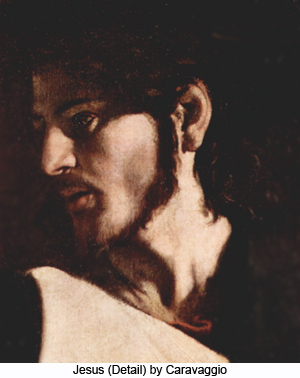
This blog provides a meditation on te Episcopal daily readings along with a headline from world news:
AN UGLY TRUTH-MARINES PISS ON DEAD TALIBAN 
Genesis 4:17-26
17 Cain knew his wife, and she conceived and bore Enoch; and he built a city, and named it Enoch after his son Enoch. 18To Enoch was born Irad; and Irad was the father of Mehujael, and Mehujael the father of Methushael, and Methushael the father of Lamech. 19Lamech took two wives; the name of one was Adah, and the name of the other Zillah. 20Adah bore Jabal; he was the ancestor of those who live in tents and have livestock. 21His brother’s name was Jubal; he was the ancestor of all those who play the lyre and pipe. 22Zillah bore Tubal-cain, who made all kinds of bronze and iron tools. The sister of Tubal-cain was Naamah.
23 Lamech said to his wives:
‘Adah and Zillah, hear my voice;
you wives of Lamech, listen to what I say:
I have killed a man for wounding me,
a young man for striking me.
24 If Cain is avenged sevenfold,
truly Lamech seventy-sevenfold.’
25 Adam knew his wife again, and she bore a son and named him Seth, for she said, ‘God has appointed for me another child instead of Abel, because Cain killed him.’ 26To Seth also a son was born, and he named him Enosh. At that time people began to invoke the name of the Lord.
From the one branch of the human family comes animal husbandry, music, and smelting, along with feuding; while from the other comes religion. The narrator does not suggest that one is better than the other. A new brand of modern atheism sees religion as the source of all human trouble but the ancient narrator sees it as one of the essential aspects of human nature. Given that three of the world’s great religions come from Semitic peoples, Jews and Arabs, it’s only just to note their extraordinary creativity in this field. Invoking the name of the Lord may be as important as farming and manufacture.
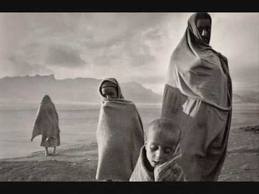
- Bedouin in desert
John 1:43-51
43 The next day Jesus decided to go toGalilee. He found Philip and said to him, ‘Follow me.’ 44Now Philip was fromBethsaida, the city ofAndrewand Peter. 45Philip found Nathanael and said to him, ‘We have found him about whom Moses in the law and also the prophets wrote, Jesus son of Joseph fromNazareth.’ 46Nathanael said to him, ‘Can anything good come out ofNazareth?’ Philip said to him, ‘Come and see.’ 47When Jesus saw Nathanael coming towards him, he said of him, ‘Here is truly an Israelite in whom there is no deceit!’ 48Nathanael asked him, ‘Where did you come to know me?’ Jesus answered, ‘I saw you under the fig tree before Philip called you.’ 49Nathanael replied, ‘Rabbi, you are the Son of God! You are the King of Israel!’ 50Jesus answered, ‘Do you believe because I told you that I saw you under the fig tree? You will see greater things than these.’ 51And he said to him, ‘Very truly, I tell you, you will see heaven opened and the angels of God ascending and descending upon the Son of Man.’
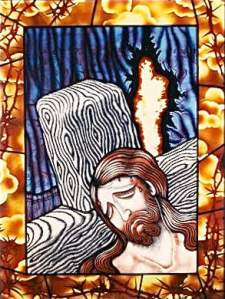
- the openness of truth: the temple veil torn apart
Philip uses Jesus’ words (see yesterday’s blog) “Come and see” to Nathaniel indicating that Jesus the Messiah is “open” to the understanding of enquirers. Perhaps the Greek word for truth, “aletheia” which means literally UN-concealment has influenced the narrator. Jesus’ remark about Nathaniel has an edge of humour: he shows no deceit or guile because he has announced his honest opinion of anyone from Nazareth; but it also picks up the story of “Israel”, originally Jacob the Trickster, in whom there had been plenty deceit. Jesus hints that those who come to him will be the start of a new Israel which lives without deceit. “Son of man” usually stands for the “corporate identity” of Jesus- “Jesus and Sons” or “Jesus and Disciples”. Jesus promises that He and his people will have access to God’s realm as well as the realm of humanity: God himself will be open and unconcealed.
John’s gospel makes continual mention of God’s Truth as the transparency of lives to each other and of reality to human understanding. There remains a mystery as to why some people prefer the darkness to the light. God’s truth needs no concealment, no deceit and no spin. To know God is to see things as they are. In a society (and sometimes a religion) drenched in lies, I welcome John’s insistence that the religion of Jesus is utterly open for inspection.
 Emmock's Blog