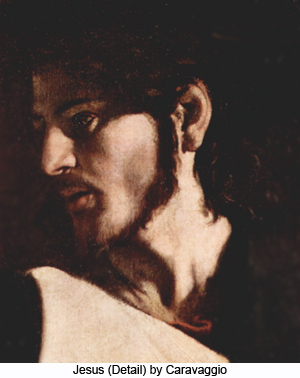
This blog povides a meditation on the Episcopal daily readings along with a headline from world news:
CANDIDATE ADMITS HE DOESN’T PAY MUCH TAX 
Genesis 9:18-29
Noah and His Sons
18 The sons of Noah who went out of the ark were Shem, Ham, and Japheth. Ham was the father of Canaan.19These three were the sons of Noah; and from these the whole earth was peopled.
20 Noah, a man of the soil, was the first to plant a vineyard.21He drank some of the wine and became drunk, and he lay uncovered in his tent.22And Ham, the father of Canaan, saw the nakedness of his father, and told his two brothers outside.23Then Shem and Japheth took a garment, laid it on both their shoulders, and walked backwards and covered the nakedness of their father; their faces were turned away, and they did not see their father’s nakedness.24When Noah awoke from his wine and knew what his youngest son had done to him,25he said,
‘Cursed be Canaan; lowest of slaves shall he be to his brothers.’
26He also said,
‘Blessed by the Lord my God be Shem; and let Canaan be his slave.
27 May God make space for* Japheth, and let him live in the tents of Shem; and let Canaan be his slave.’
28 After the flood Noah lived for three hundred and fifty years.29All the days of Noah were nine hundred and fifty years; and he died.
 So after the rainbow and the new beginning for humanity, a swift return to old ways. It reminds me of some of my own New Year resolutions: the day of promise; the day of self-indulgence; the day of hangover. All very familiar. But at least I didn’t always take out my self-disgust on others, as Noah does here, taking advantage of Ham’s mistake to institute a piece of racism which will become habitual in Israel for centuries after: first Israel (and other Semites?); second Eurasians; third, Africans; and Canaanites nowhere. (after all you need some justification for stealing a people’s land.) Naturally “God’s” approval is sought for this arrangement. An important issue is the attitude of the author who makes no comment on the whole unsavoury episode. I like to think he’s telling the reader that the Flood has changed nothing: we’re still the same old humanity.
John 3:22-36
22 After this Jesus and his disciples went into the Judean countryside, and he spent some time there with them and baptized.23John also was baptizing at Aenon near Salim because water was abundant there; and people kept coming and were being baptized—24John, of course, had not yet been thrown into prison.
25 Now a discussion about purification arose between John’s disciples and a Jew.*26They came to John and said to him, ‘Rabbi, the one who was with you across the Jordan, to whom you testified, here he is baptizing, and all are going to him.’27John answered, ‘No one can receive anything except what has been given from heaven.28You yourselves are my witnesses that I said, “I am not the Messiah,* but I have been sent ahead of him.”29He who has the bride is the bridegroom. The friend of the bridegroom, who stands and hears him, rejoices greatly at the bridegroom’s voice. For this reason my joy has been fulfilled.30He must increase, but I must decrease.’*<!– 31 –>
31 The one who comes from above is above all; the one who is of the earth belongs to the earth and speaks about earthly things. The one who comes from heaven is above all.32He testifies to what he has seen and heard, yet no one accepts his testimony.33Whoever has accepted his testimony has certified* this, that God is true.34He whom God has sent speaks the words of God, for he gives the Spirit without measure.35The Father loves the Son and has placed all things in his hands.36Whoever believes in the Son has eternal life; whoever disobeys the Son will not see life, but must endure God’s wrath.

- St.Francis: one who comes from above

It’s clear that the first Christians had a continuing argument with disciples of John the Baptist, since all the Gospels are concerned to depict John as a forerunner, and only a forerunner, of Jesus Messiah: “He must increase, I must decrease” is the probably the view of the Gospel writers rather than the veiw of John. There may of course also be hsitorical facts in the gospel stories about John. Here John identifies Jesus as the bridegroom of Israel, the Messiah. We can see from the Gospels that Jesus himself was wary of this title, because although it conferred authority on him it also cast him as national deliverer. It was a title with baggage that he didn’t want. Later in Christian usage the title became little more that a meaningless honorific. Today we should perhaps consider whether our tradition binds us to seeing Jesus as the true Messiah of the Jewish people.
John’s teaching about the One who comes from heaven is an important statement of theology. Whatever “comes from” the earth, that is from this universe, is limited by its origin, and as Genesis tels us, subject to evil and death. Whatever “comes from” above is the truth. The one “who comes from above” has not floated down from the sky, nor (in this Gospel’s estimation) been born miraculously. He is the One who whose whole life is constituted by his relation to the source of eternal goodness, who is called The Father. This One is not merely obedient to God but is identified with God in such a way that He can be called God’s son. As such He is the first of those who accordng to John 1: 13 are born “not of blood, nor of the will of a man, but of God.” Those who entrust their lives (believe in)to the Son “who comes from above ” can share this new birth.
The prevailing wisdom in western society is that there is nothing “beyond” the universe, except perhaps other universes. All values and beliefs, indeed perhaps also all facts, are invented by human beings. This assertion of the responsibility of human beings for their own knwledge has much to commend it, but if, as the Garden of Eden story and John’s Gospel suggest, it leads us to ignore what we are given, it can become a prison rather than a liberation. Those who “come from” the earth are limited to earthly understanding; those who “come from above” can draw on the source of all goodness.
 Emmock's Blog
Mike, happy New Year to you and yours, and I hope you are well at this time. Prior to this specific blog, as you wrote much about the character of God as conveyed by the author of Genesis, I had been thinking about what God was and who Jesus was in relation to God. It was therefore interesting for me to see you write about this today. I suppose my own thoughts were that there isn’t someONE present outside the universe, but possibly someTHING which may be the source of all love and creation. While at the same time I also think that this source could also be WITHIN and available to each one of us and that Jesus more than anyone in history had connected with this source of love and creation. This still leaves the question for me why Jesus had been able to make this connection more than anyone either before or after.
Steve
Happy 2012 to you Steve and all your family. Blessings!
The Christian tradition, which has its roots in Judaism has always insisted that God is personal. That doesn’t mean that God is “a person”, but rather that our experience of persons is the best image we have of how God relates to us. God is neither a person nor in my view a thing, but God is love (1John 4) and our only experience of love is personal.
This tradition is complicated by the doctrine of the Trinity, which tells us that The Father, the Son and the Spirit are all one God. At the very least this depicts God as “communal being”, that is as One who is the same in different revelations, as creator, rescuer and enlivener. The fact that God is “beyond” all universes in no way means that God is not also here and available. Rather, we believe that the personal love we meet here is not a part of our universe, as say, the force of gravity is, but transcends it altogether. Although God is not in the universe, the universe may be in God.
When we call Jesus the Son of God we mean that Jesus is God-with-us, completely human yet also completely God. The Virgin Birth story is a way of saying that if one moloecule of Jesus had been different he wouldn’t have been the Son of God. Jesus is not just a person with access to God; he can be what he is because his body including his mind is made up of just these molecules, because he grew up in just that place and time, with just those parents and just that religious tradition. You can say God was preparng the incarnation when he created the first living cell.
None of what we believe contradicts the scientific picture of the universe: it includes that picture in a bigger vision: not only Jesus is part of the life of the Trinity; any man woman or child, following Jesus in the power of the Spirit, can enter into the “communal being” of God as God’s child. Get back to me on this!
Thanks for that MIke. I’ve been reading this over a few days to try and absorb all that you say. Much to take in. My understanding of what you say about Jesus is that although we can be part of the communal being of God, no one could never be as Jesus was because he was unique in that he was created by God almost as part of original creation which came to fulfilment in Jesus.
Yes. St Paul describes Jesus as the “second Adam” who rescues humanity from the mistakes of the first. In particular, although, like Adam He is the Image and Likeness of God, he doesn’t, like Adam, try to become a God, but is content to be a man of dust, in service of God and humanity all the way to death on the cross (Philipians 2: 2ff) That is to say, only he models the serving, suffering love of God for his world. Raised to God’s glory he is given a new body, which is the community of disciples.
Obviously this way of speaking is telling a story which tries to do justice to the tradition about Jesus in the Scrpitures and our experience of Jesus in our own lives. When we remember we’re telling stories, we stay fruitful. When we think we’re dealing with an authoritative definition, we’re likely to go wrong.