This blog provides a meditation on the Episcopal daily readings along with a headline from world news:
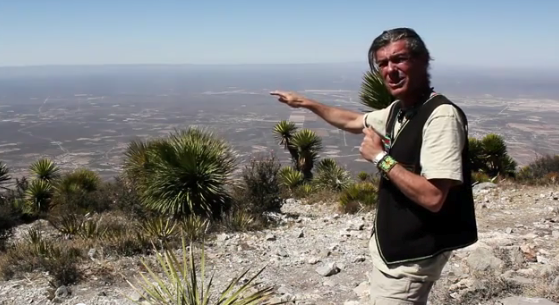
Wirrarika peoples of Mexico protect their sacred land from Mining Interests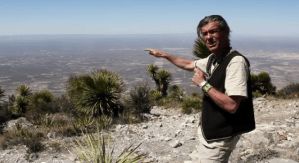
Genesis 25:19-34
The Birth and Youth of Esau and Jacob
19 These are the descendants of Isaac, Abraham’s son: Abraham was the father of Isaac,20and Isaac was forty years old when he married Rebekah, daughter of Bethuel the Aramean of Paddan-aram, sister of Laban the Aramean.21Isaac prayed to the Lord for his wife, because she was barren; and the Lord granted his prayer, and his wife Rebekah conceived.22The children struggled together within her; and she said, ‘If it is to be this way, why do I live?’* So she went to inquire of the Lord.23And the Lord said to her,
‘Two nations are in your womb, and two peoples born of you shall be divided;
one shall be stronger than the other, the elder shall serve the younger.’
24When her time to give birth was at hand, there were twins in her womb.25The first came out red, all his body like a hairy mantle; so they named him Esau.26Afterwards his brother came out, with his hand gripping Esau’s heel; so he was named Jacob.* Isaac was sixty years old when she bore them.
27 When the boys grew up, Esau was a skilful hunter, a man of the field, while Jacob was a quiet man, living in tents.28Isaac loved Esau, because he was fond of game; but Rebekah loved Jacob.<!– 29 –>
Esau Sells His Birthright
29 Once when Jacob was cooking a stew, Esau came in from the field, and he was famished.30Esau said to Jacob, ‘Let me eat some of that red stuff, for I am famished!’ (Therefore he was called Edom.*)31Jacob said, ‘First sell me your birthright.’32Esau said, ‘I am about to die; of what use is a birthright to me?’33Jacob said, ‘Swear to me first.’* So he swore to him, and sold his birthright to Jacob.34Then Jacob gave Esau bread and lentil stew, and he ate and drank, and rose and went his way. Thus Esau despised his birthright.

Jacob offers food to Esau
The storytelling motif of the twins who struggle with each other from birth is common amongst many peoples. Here it is used very skilfully to play with the reader’s reaction. At first we prefer Jacob the quieter man and not so much of a bonehead. But when we realise the cold-hearted self-interest with which Jacob drives a bargain with Esau we feel sorry for the older brother, reckoning that he will always be outwitted by the younger. Still, the storyteller wants his readers to see that, if only for selfish reasons, Jacob values the blessings involved in the birth-right of the elder brother. Esau’s life is in immediate satisfactions and relationships; Jacob’s name mans that he is the “one up” character, the trickster who is one step ahead of his opponent, but crucially this includes a shrewd estimate of the value of God’s favour. We might say that as a complete materialist, Jacob reckons God as one of the material benefits that are available to him. As the story unfolds we see that the only one who is trickier than Jacob is God who traps him into desiring blessings which are deeper and costlier than he imagines.
John 7:37-52
Rivers of Living Water
37 On the last day of the festival, the great day, while Jesus was standing there, he cried out, ‘Let anyone who is thirsty come to me,38and let the one who believes in me drink. As* the scripture has said, “Out of the believer’s heart* shall flow rivers of living water.” ’39Now he said this about the Spirit, which believers in him were to receive; for as yet there was no Spirit,* because Jesus was not yet glorified.<!– 40 –>
Division among the People
40 When they heard these words, some in the crowd said, ‘This is really the prophet.’41Others said, ‘This is the Messiah.’* But some asked, ‘Surely the Messiah* does not come from Galilee, does he?42Has not the scripture said that the Messiah* is descended from David and comes from Bethlehem, the village where David lived?’43So there was a division in the crowd because of him.44Some of them wanted to arrest him, but no one laid hands on him.
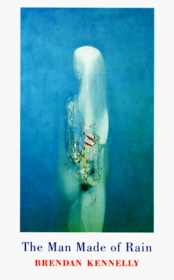
"The Man made of rain" a poem about redemption by Brendan Kennelly
The Jewish Feast of Shelters celebrated Israel’s time in the desert, living in tents and especially remembered Moses striking the rock at God’s command to let fresh water flow for the people. Jesus’ words relate to this story: just as the manna which Moses gave is nothing compared with the bread of life which Jesus gives, so the water which which Moses gave is nothing compared to the living water which Jesus will give-indeed his gift will make the believer a source as well as a recipient of this lifegiving substance, which is the Spirit. The water stands for the life that Jesus shares with God which will also be shared by those who trust in him. The emphasis is on the freshness and vitality of God’s life in Jesus which is offered to all. I am writing these words in Dundee, Scotland on a winter day of surpassing beauty-snow, sunshine, blue sky, no wind- which seems to challenge all the dullness of what I do and think. It’s like the tree that the poet Philip Larkin saw: “last year is dead, it seems to say,/ begin afresh, afresh, afresh.” John is attributing this challenging vitality to the life of Jesus and his disciples. Even more than Jacob, Jesus has a shrewd eye for where the blessings of life are to be found.
 Emmock's Blog
Thankful for the “freshness and vitality” of life in Christ… Food for thought. Thanks.
Thanks Faith. Here is a poem about beginning, that is about freshness and vitality. It’s by a great Irish poet Brendan Kennelly. I hope you like it.
“Begin again to the summoning birds
to the sight of light at the window,
begin to the roar of morning traffic
all along Pembroke Road.
Every beginning is a promise
born in light and dying in dark determination
and exaltation of springtime
flowering the way to work.
Begin to the pageant of queuing girls
the arrogant loneliness of swans in the canal
bridges linking the past and the future
old friends passing through with us still.
Begin to the loneliness that cannot end
since it perhaps is what makes us begin,
begin to wonder at unknown faces
at crying birds in the sudden rain
at branches stark in the willing sunlight
at seagulls foraging for bread
at couples sharing a sunny secret
alone together while making good.
Though we live in a world that dreams of ending
that always seems about to give in
something that will not acknowledge conclusion
insists that we forever begin.”
I do! 🙂