This blog provides a meditation on the Episcopal daily readings
Genesis 31:1-24
Jacob Flees with Family and Flocks
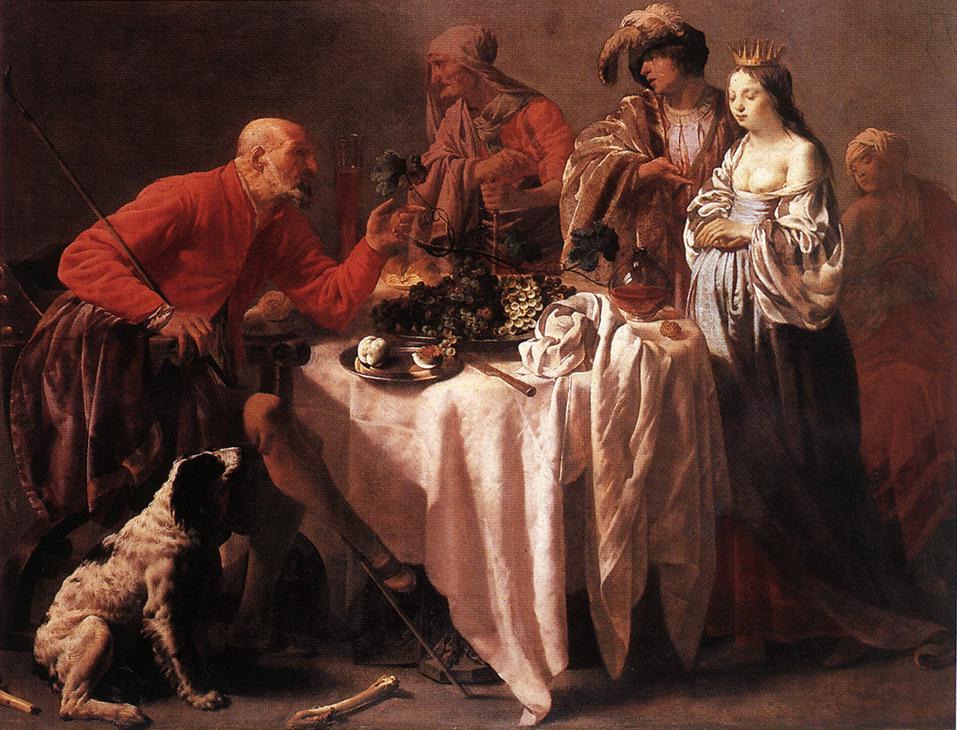
31Now Jacob heard that the sons of Laban were saying, ‘Jacob has taken all that was our father’s; he has gained all this wealth from what belonged to our father.’ 2And Jacob saw that Laban did not regard him as favourably as he did before. 3Then the Lord said to Jacob, ‘Return to the land of your ancestors and to your kindred, and I will be with you.’ 4So Jacob sent and called Rachel and Leah into the field where his flock was, 5and said to them, ‘I see that your father does not regard me as favourably as he did before. But the God of my father has been with me. 6You know that I have served your father with all my strength; 7yet your father has cheated me and changed my wages ten times, but God did not permit him to harm me. 8If he said, “The speckled shall be your wages”, then all the flock bore speckled; and if he said, “The striped shall be your wages”, then all the flock bore striped. 9Thus God has taken away the livestock of your father, and given them to me.
Jacob argues with Laban
10 During the mating of the flock I once had a dream in which I looked up and saw that the male goats that leaped upon the flock were striped, speckled, and mottled. 11Then the angel of God said to me in the dream, “Jacob,” and I said, “Here I am!” 12And he said, “Look up and see that all the goats that leap on the flock are striped, speckled, and mottled; for I have seen all that Laban is doing to you. 13I am the God of Bethel,* where you anointed a pillar and made a vow to me. Now leave this land at once and return to the land of your birth.” ’ 14Then Rachel and Leah answered him, ‘Is there any portion or inheritance left to us in our father’s house? 15Are we not regarded by him as foreigners? For he has sold us, and he has been using up the money given for us. 16All the property that God has taken away from our father belongs to us and to our children; now then, do whatever God has said to you.’
17 So Jacob arose, and set his children and his wives on camels; 18and he drove away all his livestock, all the property that he had gained, the livestock in his possession that he had acquired in Paddan-aram, to go to his father Isaac in the land of Canaan.
19 Now Laban had gone to shear his sheep, and Rachel stole her father’s household gods. 20And Jacob deceived Laban the Aramean, in that he did not tell him that he intended to flee. 21So he fled with all that he had; starting out he crossed the Euphrates,* and set his face towards the hill country of Gilead. <!– 22 –>
Laban Overtakes Jacob
22 On the third day Laban was told that Jacob had fled. 23So he took his kinsfolk with him and pursued him for seven days until he caught up with him in the hill country of Gilead. 24But God came to Laban the Aramean in a dream by night, and said to him, ‘Take heed that you say not a word to Jacob, either good or bad.’
 Emmock's Blog