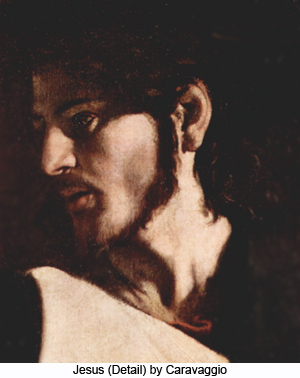
This blog provides a meditation on the Episcopal daily readings along with a headline from world news:
ARCHBISHOP OF CANTERBURY TO RESIGN 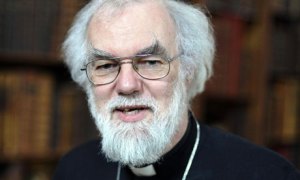
Genesis 47:27-31
The Last Days of Jacob
27 Thus Israel settled in the land of Egypt, in the region of Goshen; and they gained possessions in it, and were fruitful and multiplied exceedingly.28Jacob lived in the land of Egypt for seventeen years; so the days of Jacob, the years of his life, were one hundred and forty-seven years.
29 When the time of Israel’s death drew near, he called his son Joseph and said to him, ‘If I have found favour with you, put your hand under my thigh and promise to deal loyally and truly with me. Do not bury me in Egypt.30When I lie down with my ancestors, carry me out of Egypt and bury me in their burial place.’ He answered, ‘I will do as you have said.’31And he said, ‘Swear to me’; and he swore to him. Then Israel bowed himself on the head of his bed.
Jacob’s demand to be buried in Canaan shows his allegiance to the God of his ancestors and to their land: the future of “Israel” is not in Egypt in spite of Joseph’s triumph and present prosperity. The reader, looking back on the whole marvellous story of Joseph is asked to see it nevertheless as just one episode in the greater story of the creator God and his desire to bring justice and goodness to the rebellious peoples of his world. He will do this this through his people Israel. The Joseph story shows that this God is no tribal deity: he is the God of all the earth and its peoples including the Egyptians. Nor are the people of Israel a feeble and inturned race incapable of shining on the world stage. They can participate successfully in the great multicultural empires of the world, but are called by God to a lonelier and more difficult destiny, that of faithfulness to the holy God.
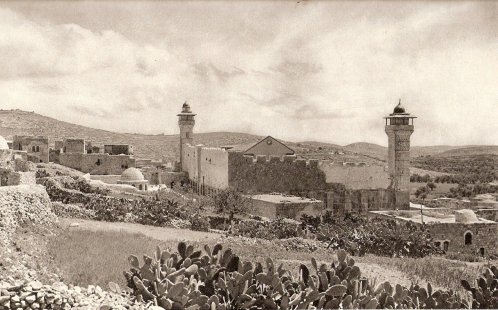
Far from the glitter of Egypt: the tomb of the Partriarchs
Mark 7:1-23
<!– 7 –>
The Tradition of the Elders
7Now when the Pharisees and some of the scribes who had come from Jerusalem gathered around him,2they noticed that some of his disciples were eating with defiled hands, that is, without washing them.3(For the Pharisees, and all the Jews, do not eat unless they thoroughly wash their hands,* thus observing the tradition of the elders;4and they do not eat anything from the market unless they wash it;* and there are also many other traditions that they observe, the washing of cups, pots, and bronze kettles.*)5So the Pharisees and the scribes asked him, ‘Why do your disciples not live* according to the tradition of the elders, but eat with defiled hands?’6He said to them, ‘Isaiah prophesied rightly about you hypocrites, as it is written,
“This people honours me with their lips, but their hearts are far from me;
7 in vain do they worship me, teaching human precepts as doctrines.”
8You abandon the commandment of God and hold to human tradition.’
9 Then he said to them, ‘You have a fine way of rejecting the commandment of God in order to keep your tradition!10For Moses said, “Honour your father and your mother”; and, “Whoever speaks evil of father or mother must surely die.”11But you say that if anyone tells father or mother, “Whatever support you might have had from me is Corban” (that is, an offering to God*)—12then you no longer permit doing anything for a father or mother,13thus making void the word of God through your tradition that you have handed on. And you do many things like this.’
14 Then he called the crowd again and said to them, ‘Listen to me, all of you, and understand:15there is nothing outside a person that by going in can defile, but the things that come out are what defile.’*
17 When he had left the crowd and entered the house, his disciples asked him about the parable.18He said to them, ‘Then do you also fail to understand? Do you not see that whatever goes into a person from outside cannot defile,19since it enters, not the heart but the stomach, and goes out into the sewer?’ (Thus he declared all foods clean.)20And he said, ‘It is what comes out of a person that defiles.21For it is from within, from the human heart, that evil intentions come: fornication, theft, murder,22adultery, avarice, wickedness, deceit, licentiousness, envy, slander, pride, folly.23All these evil things come from within, and they defile a person.’

idyllic scottish village divided by three churches of the one God
One of the ways a religion can go wrong is to become obessesed with the intricacies of its own tradition to the exclusion of the justice and goodness of God. We can see this is in the numerous bloody and barren disputes in Christianity over the use of images, the number of genuine sacraments, the correct forms of prayer, the apostolic succession-all of which have led to believers killing each other. Even less important differences, the precise relationship of church to state, the use of hymns as well as psalms, the doctrine of predestination, have split and re-split the church in my native Scotland. In all cases, bigoted people have insisted that those who disagree with them are condemned by God and cast out of his kingdom. When Jesus was faced with this kind of arrogant nonsense he spoke severely and soberly about what mattered: no religious custom however worthy makes people clean or unclean. Only the human heart and its desires can do that: therefore God demands nothing less than the heart. The rest is trivial. On the day after Rowan Williams the Archbishop of Canterbury has announced his retirment from a period of office made almost impossible by controvery over homosexual believers, I may be forgiven for stating my conviction that while the issue of whether we hug and kiss with the opposite sex or our own is trivial; the desire to bully and condemn people who disagree with us makes us unclean.
 Emmock's Blog