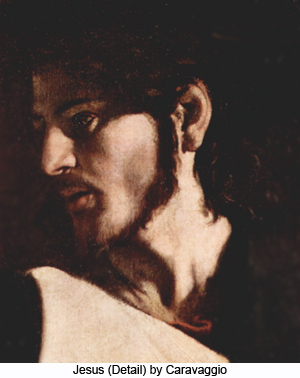
This blof provides a meditation on the Episcopal daily readings along with a headline from world news:
VATICAN AND OXFORD UNIVERSITY PUT ANCIENT TEXTS AND RARE PRINTED BOOKS ONLINE 
Exodus 13:3-10
The Festival of Unleavened Bread
3 Moses said to the people, ‘Remember this day on which you came out of Egypt, out of the house of slavery, because the Lord brought you out from there by strength of hand; no leavened bread shall be eaten.4Today, in the month of Abib, you are going out.5When the Lord brings you into the land of the Canaanites, the Hittites, the Amorites, the Hivites, and the Jebusites, which he swore to your ancestors to give you, a land flowing with milk and honey, you shall keep this observance in this month.6For seven days you shall eat unleavened bread, and on the seventh day there shall be a festival to the Lord.7Unleavened bread shall be eaten for seven days; no leavened bread shall be seen in your possession, and no leaven shall be seen among you in all your territory.8You shall tell your child on that day, “It is because of what the Lord did for me when I came out of Egypt.”9It shall serve for you as a sign on your hand and as a reminder on your forehead, so that the teaching of the Lord may be on your lips; for with a strong hand the Lord brought you out of Egypt.10You shall keep this ordinance at its proper time from year to year.
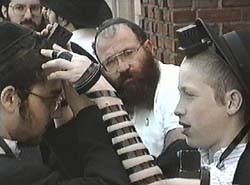
phyacteries-intimacy with God's "mighty deeds"
There is beauty here in the command to remember God’s deliverance of the people by teaching one’s child that “This is what the Lord did for ME, when he brought me out of the land of Egypt.” The intimacy of this confession keeps the Lord’s deed close to the believer, as if on his brow or attached to his hand. The custom of actually wearing containers of Torah on head and hands (phylacteries) is a later invention. Successive generations of Israel recognise the exodus as happening to them, in their time: God is forever the God who delivers his people from slavery. The “mighty deeds” of God, while taking place within secular history are not therefore obliterated by time, but are remembered as “filling up” the time in which they took place and spilling over into all future times in the faithful remembrance of believers. This is true for Christian believers of the mighty acts of God in Jesus Christ. When our children and grandchildren ask, “Why are you going to church?”-often with some incredulity-we should be able to say, “This is what God did for ME, through Jesus Christ. His deliverance of me from evil is as close to me as something bound on my hands or head.”At the risk of annoying my readers I have to ask them to note that even this beautiful testimony includes the special favour of God in stealing land from a whole list of peoples in order to give it to Israel. Is this a good thing to teach children?
Matthew 28:16-20
The Commissioning of the Disciples
16 Now the eleven disciples went to Galilee, to the mountain to which Jesus had directed them.17When they saw him, they worshipped him; but some doubted.18And Jesus came and said to them, ‘All authority in heaven and on earth has been given to me.19Go therefore and make disciples of all nations, baptizing them in the name of the Father and of the Son and of the Holy Spirit,20and teaching them to obey everything that I have commanded you. And remember, I am with you always, to the end of the age.’*
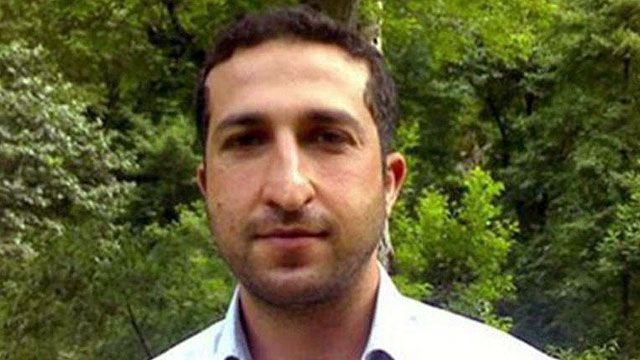
Joucef Nadarkhani-Iranian disciple of Jesus on death row for his conversion from Islam. Pray for him and follow his story on Google
Matthew’s record of the commission of the risen Jesus to his disciples is admirably brief. What is the church for?
1. It should witness to its counterfactual conviction that the crucified and risen Jesus is the One to whom God has given universal authority. Not to the great powers or their leaders, not to the wealthiest individuals and their hangers-on, not to the hugest multinational Corporations and their slaves, not to the most popular celebrities and their deluded acolytes, but to “a man of sorrows, acquainted with grief.”
2. It should make disciples of all nations. It must not be racially exclusive.
3. It should make them disciples, that is, people commited to learning how to live from Jesus Christ.
4. It should baptise these disciples in the name of God, Father, Son and Spirit, that is, they should die with Jesus (to their old life) and rise with Jesus(to their new life) discovering in the power of the Spirit who dwells within them that they are children of God the Father.
5. It should teach obedience to the commands and example of Jesus as the essential content of a new life.
6. It should rejoice in the continuing presence of Jesus who is forever faithful to his disciples.
Perhaps if the church did this -rather than the thousands of other things it does-it would be of greater benefit to the world.
 Emmock's Blog