This blog provides a meditation on the Episcopal daily readings along with with a headline from world news:
Towering over New York, the new Trade Center, renewal or arrogance 

Exodus 32:21-34
21 Moses said to Aaron, ‘What did this people do to you that you have brought so great a sin upon them?’22And Aaron said, ‘Do not let the anger of my lord burn hot; you know the people, that they are bent on evil.23They said to me, “Make us gods, who shall go before us; as for this Moses, the man who brought us up out of the land of Egypt, we do not know what has become of him.”24So I said to them, “Whoever has gold, take it off ”; so they gave it to me, and I threw it into the fire, and out came this calf!’
25 When Moses saw that the people were running wild (for Aaron had let them run wild, to the derision of their enemies),26then Moses stood in the gate of the camp, and said, ‘Who is on the Lord’s side? Come to me!’ And all the sons of Levi gathered around him.27He said to them, ‘Thus says the Lord, the God of Israel, “Put your sword on your side, each of you! Go back and forth from gate to gate throughout the camp, and each of you kill your brother, your friend, and your neighbour.” ’28The sons of Levi did as Moses commanded, and about three thousand of the people fell on that day.29Moses said, ‘Today you have ordained yourselves* for the service of the Lord, each one at the cost of a son or a brother, and so have brought a blessing on yourselves this day.’
30 On the next day Moses said to the people, ‘You have sinned a great sin. But now I will go up to the Lord; perhaps I can make atonement for your sin.’31So Moses returned to the Lord and said, ‘Alas, this people has sinned a great sin; they have made for themselves gods of gold.32But now, if you will only forgive their sin—but if not, blot me out of the book that you have written.’33But the Lord said to Moses, ‘Whoever has sinned against me I will blot out of my book.34But now go, lead the people to the place about which I have spoken to you; see, my angel shall go in front of you. Nevertheless, when the day comes for punishment, I will punish them for their sin.’
Here the focus must be on two elements: Moses’ instruction to kill; and his mediation for the people before God. The first demonstrates what we would call excessive rigor on the part of the authors of the story. Do they really approve of killing those who refuse allegiance to the true God and hold to their idolatry of the calf? Yes, it seems that they do. I do not believe that this is the way of Christ. Still, we might reflect that our toleration of those in our liberal societies who worship the golden calf, that is, those for whom conspicuous wealth has become the reason for living, has brought great suffering on millions of people, and almost certainly death to some. While we pride ourselves on our moderation, we should take the casualties of our system into account. Although Jesus did not call for any hurt to those who opposed him, he demanded that his disciples should make clear the dividing line between those who obeyed the Father’s will and those who did not, even if they were members of their own families.
The second element, Moses’ prayer to be blotted out of God’s book if only God will not forsake his people, is an indication of how God’s prophet can seem to know God’s heart better than He does Himself. The compassion of God is expressed through the words of his prophet who has dared to understand the inner character of God. It is this intimacy of Moses with God which reveals that he is truly a child of God and allows Christian 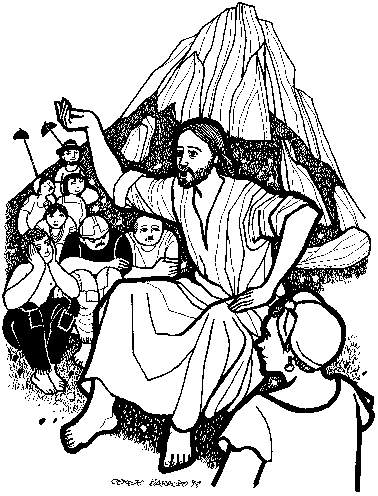 believers to compare him with Jesus.
Matthew 5:11-16
11 ‘Blessed are you when people revile you and persecute you and utter all kinds of evil against you falsely* on my account.12Rejoice and be glad, for your reward is great in heaven, for in the same way they persecuted the prophets who were before you.<!– 13 –>
Salt and Light
13 ‘You are the salt of the earth; but if salt has lost its taste, how can its saltiness be restored? It is no longer good for anything, but is thrown out and trampled under foot.
14 ‘You are the light of the world. A city built on a hill cannot be hidden.15No one after lighting a lamp puts it under the bushel basket, but on the lampstand, and it gives light to all in the house.16In the same way, let your light shine before others, so that they may see your good works and give glory to your Father in heaven.
Matthew has placed Jesus on a mountain, where he gives his teachings to his disciples. This is a deliberate comparison with Moses on Sinai and suggests that Jesus brings a new covenant to a new people of God. A notable feature of the “law of Jesus” is that it begins with blessings (see verses 1-10) rather than commandments. Those who are modest, mourning, gentle, just, merciful pure in heart, peacemakers, sufferers for goodness, are called fortunate or happy because they will enjoy the life of God’s coming kingdom. God sees their need and turns towards them. Disciples of Jesus are described as salt and light. The biblical tradition sees divine wisdom as like salt which gives taste to food and preserves it. Jesus sees the people of the kingdom as living wisdom and clear light beacuse they live courageously in the blessing of God and the opposition of the world. In case we are tempted to make too great a contrast with Moses, we must remember that Jesus’ is depicted as talking to his disciples, whom he has gathered round him (Matthew 5.1), just as Moses blessed the Levites who showed their loyalty to him. In case the church should apply the blessings with easy arrogance to itself, we must remember that the words are meant for disciples only, those modest seekers after justice, those gentle peacemakers, those pure and merciful people who are persecuted and made to mourn. If we can number ourselves amongst these, how blessed we are, what taste and preservation we can give to the daily life of the world, how clearly our lives shine for the benefit of all.
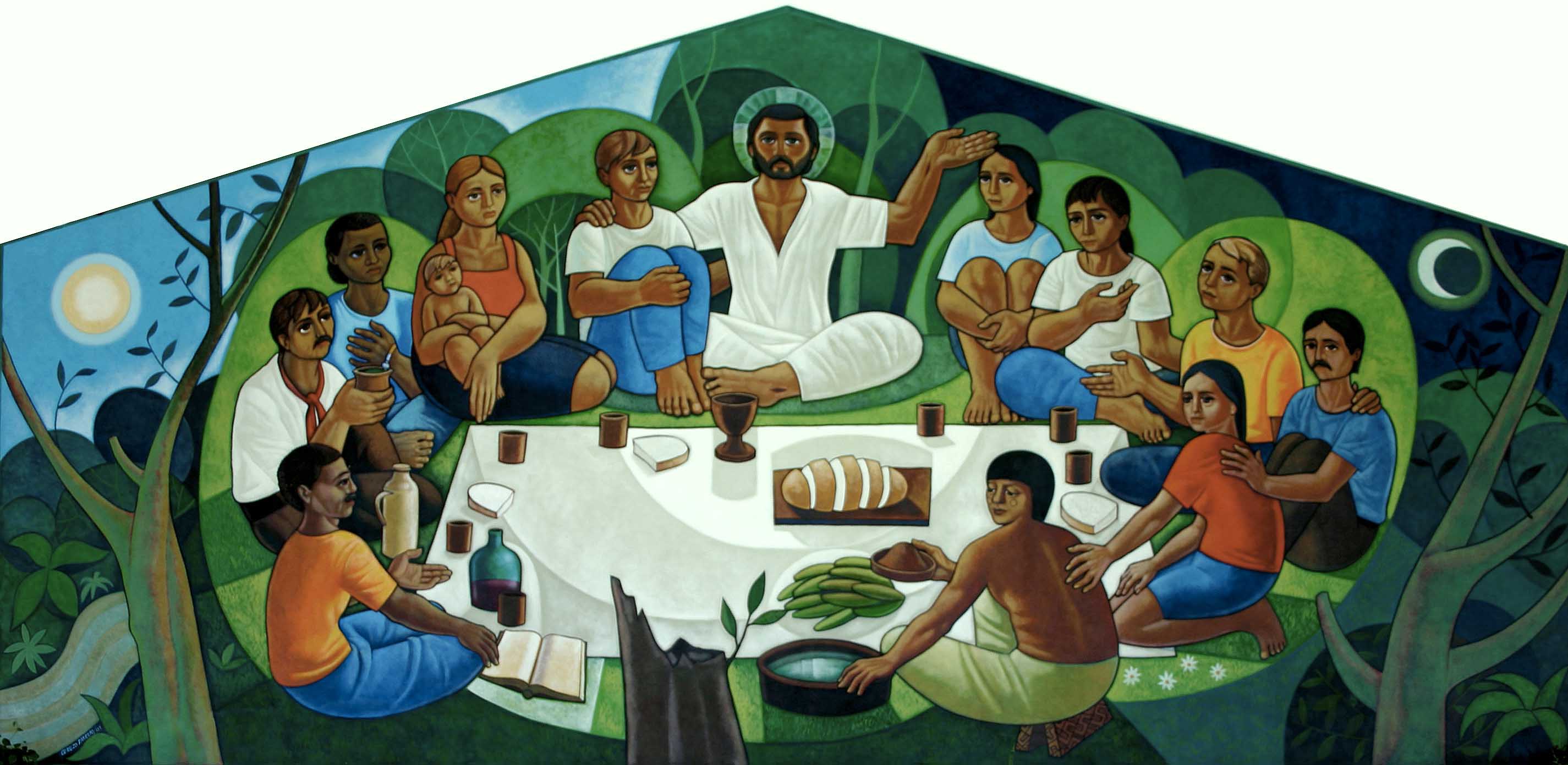
Jesus and his people
 Emmock's Blog