This blog provides a meditation on the Episcopal daily readings along with a headline from world news:
Greek Super -rich maintain their life-style through crisis
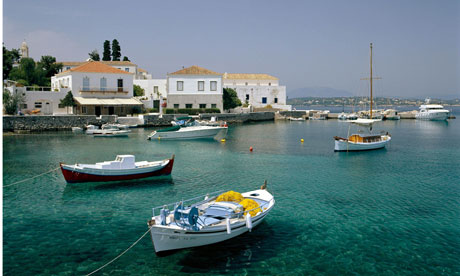
Spetses in Greece
Galatians 5:16-24
The Works of the Flesh
16 Live by the Spirit, I say, and do not gratify the desires of the flesh.17For what the flesh desires is opposed to the Spirit, and what the Spirit desires is opposed to the flesh; for these are opposed to each other, to prevent you from doing what you want.18But if you are led by the Spirit, you are not subject to the law.19Now the works of the flesh are obvious: fornication, impurity, licentiousness,20idolatry, sorcery, enmities, strife, jealousy, anger, quarrels, dissensions, factions,21envy,* drunkenness, carousing, and things like these. I am warning you, as I warned you before: those who do such things will not inherit the kingdom of God.<!– 22 –>
The Fruit of the Spirit
22 By contrast, the fruit of the Spirit is love, joy, peace, patience, kindness, generosity, faithfulness,23gentleness, and self-control. There is no law against such things.24And those who belong to Christ Jesus have crucified the flesh with its passions and desires.
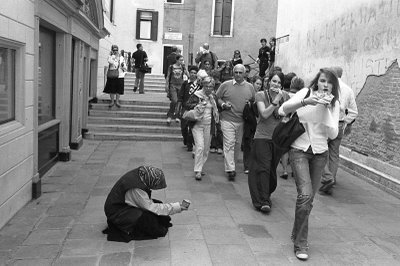
a work of the “flesh”
This is the sort of passage which makes Paul unpopular with the metropolitan culture of developed countries. Readers notice his judgement on sexual habits which are dear to the modern mind- sexual activity outside marriage is called fornication- and his distaste for what he calls “the flesh”. For Paul, the Greek word “sarx” (flesh) describes the physical nature of all creatures. It is this nature which provides for their individual survival by securing food and for the survival of their species by sexual reproduction. He sees this “sphere” of existence as natural to animals but not wholly natural to human beings who exist also in the spheres of “mind” and “spirit.” Human beings can be open to wise understanding of their universe and to living in partnership with their maker. If they choose to live “according to the flesh” they are not behaving naturally but in denial of their true nature. The one who lives according to the flesh, lives selfishly, closed to his neighbour and to God. In this way “the flesh” can become a demonic power not because it is physical but because it is selfish. When Paul wants to refer to the physical body more neutrally he uses the Greek word “soma.”

a fruit of the Spirit
The Spirit is life not determined by “sarx” but enabled by God. It inspires human beings to live beyond their biological determinants in openness to each other and to God. It leaves “sarx” behind but offers a new freedom to the body in which a man or woman can express the the greatest gift of the spirit, the giving and receiving of love. It is the presence of the creator in his creatures, the true dynamic of an evolution which will free creation from “its slavery to decay to share the glorious freedom of the children of God.” That’s tomorrow’s life; but Jesus Messiah is proof that people can live tomorrow’s life today, producing the lovely fruitful virtues of love, joy, peace, patience, kindness, generosity, faithfulness,gentleness, and self-control. Once we understand the kind of thing Paul is saying we can see its revolutionary optimism about humanity, as well as its unsparing realism.
 Emmock's Blog