
This blog provides a meditation on the Episcopal daily readings along with a headline from world news:
Guide book to Scotland tells Japanese, “Don’t call them English!”

and don’t call these, “skirts!”
ROMANS 7: 13-25
13 Did what is good, then, bring death to me? By no means! It was sin, working death in me through what is good, in order that sin might be shown to be sin, and through the commandment might become sinful beyond measure.
The Inner Conflict
14 For we know that the law is spiritual; but I am of the flesh, sold into slavery under sin.*15I do not understand my own actions. For I do not do what I want, but I do the very thing I hate.16Now if I do what I do not want, I agree that the law is good.17But in fact it is no longer I that do it, but sin that dwells within me.18For I know that nothing good dwells within me, that is, in my flesh. I can will what is right, but I cannot do it.19For I do not do the good I want, but the evil I do not want is what I do.20Now if I do what I do not want, it is no longer I that do it, but sin that dwells within me.

shame
21 So I find it to be a law that when I want to do what is good, evil lies close at hand.22For I delight in the law of God in my inmost self,23but I see in my members another law at war with the law of my mind, making me captive to the law of sin that dwells in my members.24Wretched man that I am! Who will rescue me from this body of death?25Thanks be to God through Jesus Christ our Lord!
So then, with my mind I am a slave to the law of God, but with my flesh I am a slave to the law of sin.
See blog 774, yesterday. Here Paul expands his view of the intimate relationship of the Holy Law and sin. His inner self, he calls it his nous, that is, his understanding, cherishes the Holy Law and wants to obey it; but he fnds that what his inner self wants to do is not done and what it does not want to do, is done. What’s going on? He says there’s another Unholy Law, in his members, in his embodied humanity, which overcomes his true self, and pushes him towards wrongdoing. He depicts the human being as a battefield beween the inner delight in the Holy Law and the outward compulsion to unholiness. “Who can rescue me from this body of death?” he asks, and indicates that the only answer is Jesus Messiah. He has already outlined how Jesus leads his “old self” to death and raises to life a new self in which he, Jesus Messiah, is the indwelling guest, so that Paul can say, paralleling his phrase about sin, “it is no longer I who live but Messiah who lives in me.”
Our minds have been so moulded by Paul’s thought that we can think of his analysis as nothing special. In fact, if we read the ancient philosophers on the subject of human evil we are struck by their shallowness compared with what Paul says here. He was breaking new ground in the understanding of human behaviour. We are creatures capable of reason but not always rational in our behaviour. Paul’s grasp of our dilemma is helpful.
Matthew 21:33-44
The Parable of the Wicked Tenants
33 ‘Listen to another parable. There was a landowner who planted a vineyard, put a fence around it, dug a wine press in it, and built a watch-tower. Then he leased it to tenants and went to another country.34When the harvest time had come, he sent his slaves to the tenants to collect his produce.35But the tenants seized his slaves and beat one, killed another, and stoned another.36Again he sent other slaves, more than the first; and they treated them in the same way.37Finally he sent his son to them, saying, “They will respect my son.”38But when the tenants saw the son, they said to themselves, “This is the heir; come, let us kill him and get his inheritance.”39So they seized him, threw him out of the vineyard, and killed him.40Now when the owner of the vineyard comes, what will he do to those tenants?’41They said to him, ‘He will put those wretches to a miserable death, and lease the vineyard to other tenants who will give him the produce at the harvest time.’
42 Jesus said to them, ‘Have you never read in the scriptures:
“The stone that the builders rejected has become the cornerstone;*
this was the Lord’s doing, and it is amazing in our eyes”?
43Therefore I tell you, the kingdom of God will be taken away from you and given to a people that produces the fruits of the kingdom.*44The one who falls on this stone will be broken to pieces; and it will crush anyone on whom it falls.’*
45 When the chief priests and the Pharisees heard his parables, they realized that he was speaking about them.46They wanted to arrest him, but they feared the crowds, because they regarded him as a prophet.
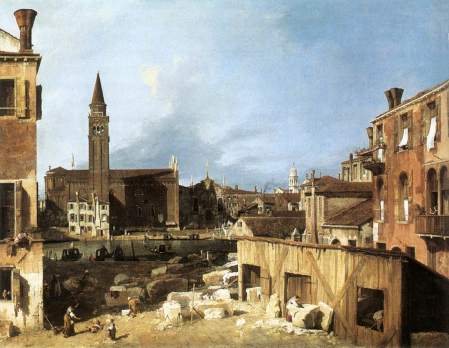
the stone the builders rejected
Jesus’ parable about the vineyard is meant to characterise the religious leaders’ response to his ministry. God has already sent messengers to the tenants of the vineyard that is to his people Israel, looking for the fruits of justice, but these prophets have been abused and rejected. Now he sends his son but the tenants see this as their chance to gain possession of the vineyard, “this is the heir”. Jesus depicts the leaders as saying, “Israel belongs to us; we rule it as we wish” It’s true that the parable fits the leaders of Jesus’ day but it also sadly fits the leaders of Israel today. And not them only. It’s really a parable of the classic human sin of imagining that the world belongs to us, there are no external restraints, we can do as we like. Those who speak God’s word, and especially the one in whom that word is incarnate, will be ruthlessly rejected.
So if we want to find God’s representative we should always look for “the stone the builders have rejected” as they construct their temple of power: the poor, the modest, the just, the honest, the loving, the rejected prophets and the abused teachers; yes, amongst them we will find the son of God.
 Emmock's Blog