This blog provides a meditation on the Episcopal daily readings along with a headline from world news:
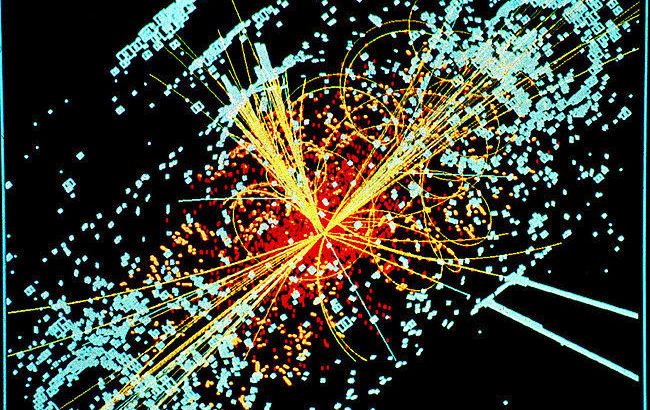
Cern scientists announce discovery of the Higg’s boson 
Romans 8:1-11
Life in the Spirit
8There is therefore now no condemnation for those who are in Christ Jesus.2For the law of the Spirit* of life in Christ Jesus has set you* free from the law of sin and of death.3For God has done what the law, weakened by the flesh, could not do: by sending his own Son in the likeness of sinful flesh, and to deal with sin,* he condemned sin in the flesh,4so that the just requirement of the law might be fulfilled in us, who walk not according to the flesh but according to the Spirit.*5For those who live according to the flesh set their minds on the things of the flesh, but those who live according to the Spirit* set their minds on the things of the Spirit.*6To set the mind on the flesh is death, but to set the mind on the Spirit* is life and peace.7For this reason the mind that is set on the flesh is hostile to God; it does not submit to God’s law—indeed it cannot,8and those who are in the flesh cannot please God. 9 But you are not in the flesh; you are in the Spirit,* since the Spirit of God dwells in you. Anyone who does not have the Spirit of Christ does not belong to him.10But if Christ is in you, though the body is dead because of sin, the Spirit* is life because of righteousness.11If the Spirit of him who raised Jesus from the dead dwells in you, he who raised Christ* from the dead will give life to your mortal bodies also through* his Spirit that dwells in you. 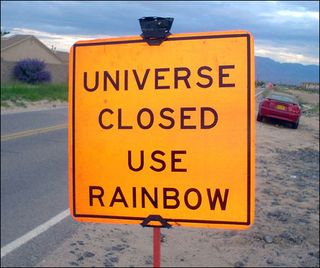
It’s very easy to misunderstand Paul in this argument. This is because of his strange use of the Greek word SARX, which is tranlsated, “flesh”. Paul recognises that human bodies are composed of “flesh” but this physical fact is not what he means by his phrases “in the flesh” and “according to the flesh”. In these phrases he is referring to the human possibility of limiting oneself to one’s individual material existence to the exclusion of God and one’s neighbour. Martin Luther describes this well in his latin phrase “cor incurvatus in se” the “heart turned in on itself.” This limitation gives rise to attitudes that we might call “emotional”, for example, arrogance and lust. In this passage Paul sets out two fundamental possibilities of human being: to live KATA SARKA as if we were limited to a merely material existence; or to live KATA PNEUMA (spirit) open to God, our neighbour and all the rich possibilities of our God-given nature.
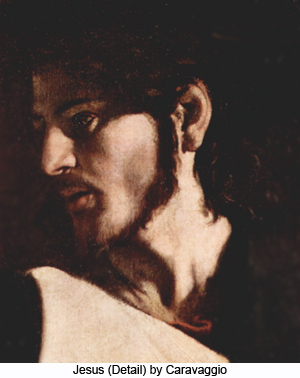
This openness is created by trust in God’s son Jesus, who is like humanity in his human flesh,but unlike in that he did not live “according to the flesh”. He conquered the power of sin in his own flesh, thus condemning it, while offering a way of conquering it to his followers: by opening himself utterly to God and humanity on the cross; and being raised to new life by God’s re-creative Spirit. Death is the ultimate closure of the closed life, whereas those who are open to the Spirit receive new life. This new life is given “to our mortal bodies” both here and beyond death.
Well, that’s what Paul says. Is it credible on the day after physicists announced the discovery of the Higg’s Boson? I think the long-awaited discovery reminds us of the capacity of the human mind, and the vast extent of human knowldege; as well as of the limitationof the human mind and the vast extent of its ignorance. Ultimately, is the universe “curved in upon itself” leading to ultimate closure in heat death, or open to the life of One who is beyond all universes? Paul would encourage us to live, and to do our science, trusting in that openness, in spite of all that seems to close us off. As the man says, “Universe closed: use rainbow.”
 Emmock's Blog