Psalm 72
<!– 1 –>
Prayer for Guidance and Support for the King
Of Solomon.
1 Give the king your justice, O God, and your righteousness to a king’s son.
2 May he judge your people with righteousness, and your poor with justice.
3 May the mountains yield prosperity for the people, and the hills, in righteousness.
4 May he defend the cause of the poor of the people, give deliverance to the needy, and crush the oppressor.
5 May he live* while the sun endures, and as long as the moon, throughout all generations.
6 May he be like rain that falls on the mown grass, like showers that water the earth.
7 In his days may righteousness flourish and peace abound, until the moon is no more.
There are more conventional good wishes for the King in this Psalm-it prays that his enemies will lick the dust before him-but the truly remarkable thing about it is that the main drift of the prayer is that the King will rule as God wants him to do, giving justice to the poor and punishment to the oppressor. Prosperity for the people is not to be purchased at the cost of injustice and oppression. I wonder if anyone currently in power in any nation, or running for election, would be pleased to have people pray for him/her in these words. Cameron might be embarrassed, Romney would think it a little leftish, Obama might use it but find it tricky to implement, even Czar Putin might not have the impertinence to put it on his banner.
It’s a good prayer, asking for what all good people want from a government.
Matthew 27:45-54<!– 45 –>
The Death of Jesus
45 From noon on, darkness came over the whole land* until three in the afternoon.46And about three o’clock Jesus cried with a loud voice, ‘Eli, Eli, lema sabachthani?’ that is, ‘My God, my God, why have you forsaken me?’47When some of the bystanders heard it, they said, ‘This man is calling for Elijah.’48At once one of them ran and got a sponge, filled it with sour wine, put it on a stick, and gave it to him to drink.49But the others said, ‘Wait, let us see whether Elijah will come to save him.’*50Then Jesus cried again with a loud voice and breathed his last.*51At that moment the curtain of the temple was torn in two, from top to bottom. The earth shook, and the rocks were split.52The tombs also were opened, and many bodies of the saints who had fallen asleep were raised.53After his resurrection they came out of the tombs and entered the holy city and appeared to many.54Now when the centurion and those with him, who were keeping watch over Jesus, saw the earthquake and what took place, they were terrified and said, ‘Truly this man was God’s Son!’*
The prophets all died, some painfully; the great teachers all died, after lifetimes of discipline; all of us will die in our time. So why the fuss baout this death?
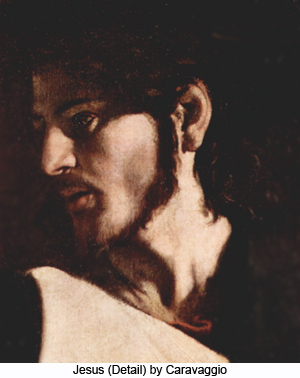
From the start of Christian faith, this death has always been told as the death of the one whom God “raised from death” and accredited as his beloved son, as the gentile centurion does here. For that reason it is always seen as both a crime which reveals the evil of humanity and as a sacrifice which reveals the love of God. As the one who shares the life of humanity, Jesus is the victim of human evil; as the one who shares the life of God, Jesus is the bearer of saving justice, which turns sinners into saints. Matthew sees the tearing of the temple veil as the end of the Jewish religion, because of its complicity in this evil, but also as the beginning of a new era in which the holiness of God will not be veiled. The tradition of Jesus’ death tells us that his identification with human vulnerability is real: he cries out in his abandonment by God and he dies in pain. It is interesting that what moves the centurion is not the impassive endurance of Jesus, but his human agony. No one suffers or dies alone: the son of God is with them.
 Emmock's Blog