
This blog provides a meditation on the Episcopal daily readings along with a headline from world news:
SOMALI COMMEDIAN WHO MOCKED EXREMISTS SHOT DEAD
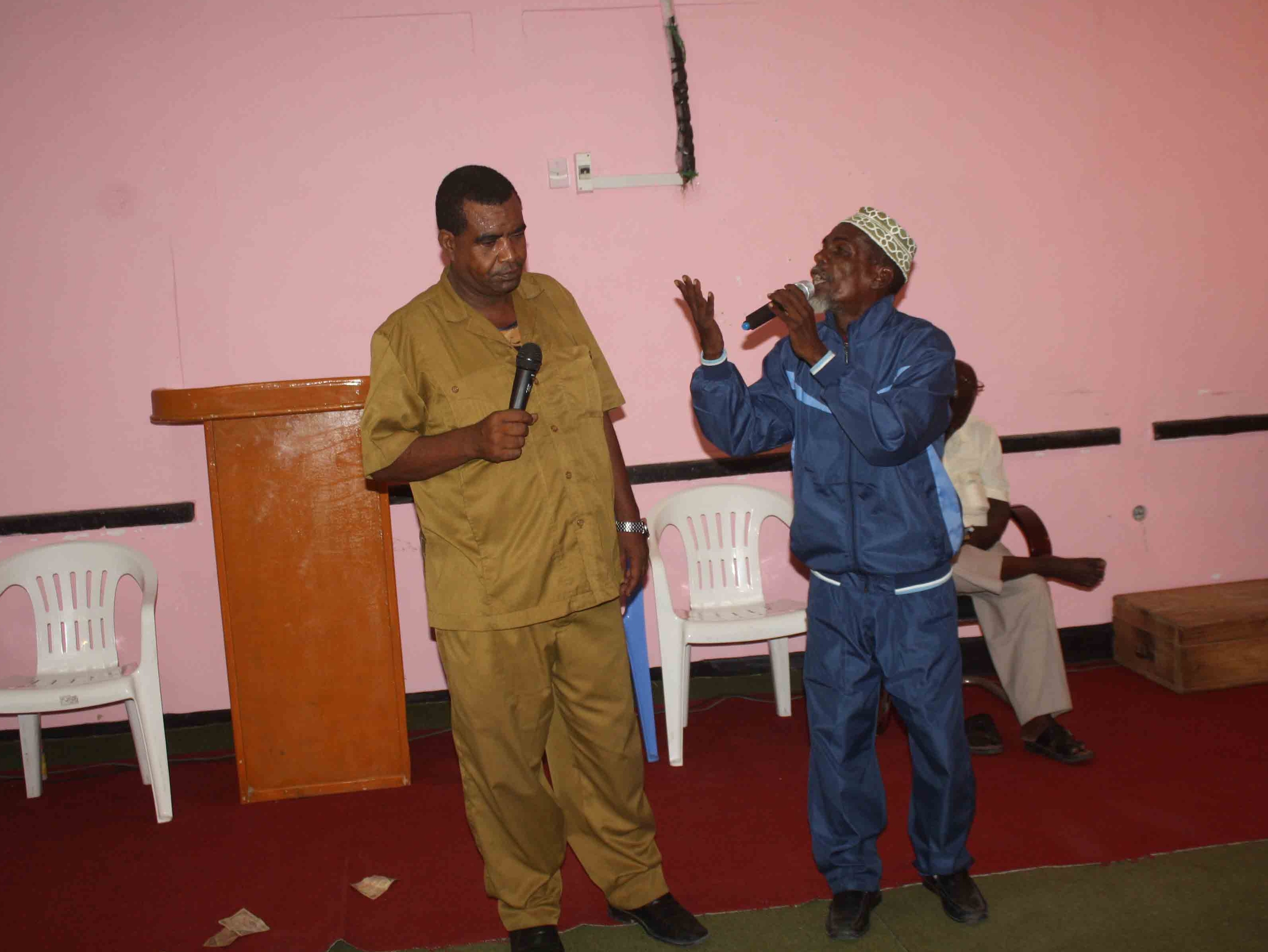
the late adbi malaq jeylani (left)
PSALM 71
17 O God, from my youth you have taught me, and I still proclaim your wondrous deeds.
18 So even to old age and grey hairs, O God, do not forsake me,
until I proclaim your might to all the generations to come.*
Your power19and your righteousness, O God, reach the high heavens.
You who have done great things, O God, who is like you?
20 You who have made me see many troubles and calamities will revive me again;
from the depths of the earth you will bring me up again.
21 You will increase my honour, and comfort me once again.
22 I will also praise you with the harp for your faithfulness, O my God;
I will sing praises to you with the lyre, O Holy One of Israel.
23 My lips will shout for joy when I sing praises to you; my soul also, which you have rescued.
24 All day long my tongue will talk of your righteous help,
for those who tried to do me harm have been put to shame, and disgraced.
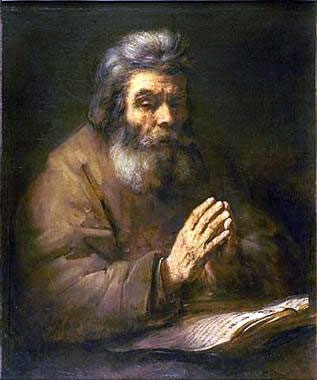
Rembrandt: old man praying
The psalm is composed for King David, with his story in mind, but it reflects the ageing experience of both individual people, and of Israel as a nation looking back on the exodus from Egypt as its youth. No life story is without its trouble. Perhaps once we imagined that God would protect us from all misfortune but as we age, we learn the truth: there is no protection from natural disaster, or from the malice of others, or from our own folly. The faithfulness of God has therefore become an intimate partnership rather than a supernatural insurance policy. In our grey hairs God is no advantgae to us, yet we we desire his company all the more. Even the promise of eternal life is not something we demand but rather a hope that the one who has stayed with us all the days will somehow “bring us again from the depths of the earth.”
Matthew 27:55-66
55 Many women were also there, looking on from a distance; they had followed Jesus from Galilee and had provided for him.56Among them were Mary Magdalene, and Mary the mother of James and Joseph, and the mother of the sons of Zebedee.<!– 57 –>
The Burial of Jesus
57 When it was evening, there came a rich man from Arimathea, named Joseph, who was also a disciple of Jesus.58He went to Pilate and asked for the body of Jesus; then Pilate ordered it to be given to him.59So Joseph took the body and wrapped it in a clean linen cloth60and laid it in his own new tomb, which he had hewn in the rock. He then rolled a great stone to the door of the tomb and went away.61Mary Magdalene and the other Mary were there, sitting opposite the tomb.<!– 62 –>
The Guard at the Tomb
62 The next day, that is, after the day of Preparation, the chief priests and the Pharisees gathered before Pilate63and said, ‘Sir, we remember what that impostor said while he was still alive, “After three days I will rise again.”64Therefore command that the tomb be made secure until the third day; otherwise his disciples may go and steal him away, and tell the people, “He has been raised from the dead”, and the last deception would be worse than the first.’65Pilate said to them, ‘You have a guard* of soldiers; go, make it as secure as you can.’*66So they went with the guard and made the tomb secure by sealing the stone. 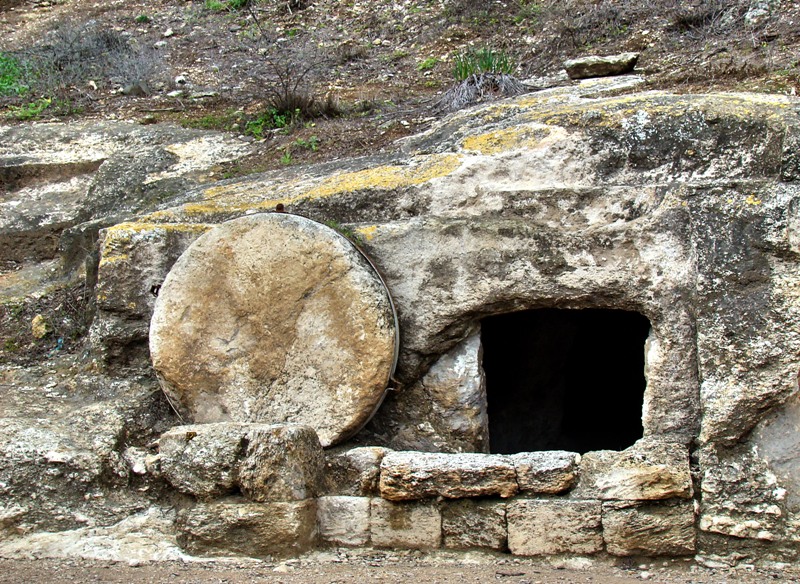
I’ve never heard the Somali commedian shot dead yesterday but I can well imagine a religious group wanting to silence a voice that laughed at them. This was also the case with those Pharisees who opposed Jesus. He had made them seem silly and that could not be allowed, just as Herr Fuehrer Putin cannot permit Pussy Riot to sing songs about him and his corrupted orthodox church. But the baddest joke of all would be if the Joker they’d crucified actually did rise from the dead. Hence the need for extra security on the tomb. The stone therefore represents not only the brute fact of execution but also the dead hand of humourless fanatics who think that tombs can corral the power of a life.
 Emmock's Blog