This blog provides a meditation on the Episcopal daily readings along with a headline from world news:
Liberian regugees in Ivory Coast Camp 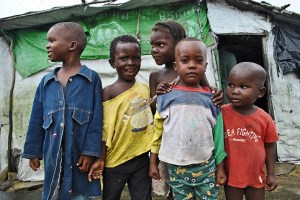

Psalm 78
God’s Goodness and Israel’s Ingratitude
A Maskil of Asaph.
1 Give ear, O my people, to my teaching; incline your ears to the words of my mouth.
2 I will open my mouth in a parable; I will utter dark sayings from of old,
3 things that we have heard and known, that our ancestors have told us.
4 We will not hide them from their children; we will tell to the coming generation
the glorious deeds of the Lord, and his might, and the wonders that he has done.
5 He established a decree in Jacob, and appointed a law in Israel,
which he commanded our ancestors to teach to their children;
6 that the next generation might know them, the children yet unborn,
and rise up and tell them to their children,
7 so that they should set their hope in God,
and not forget the works of God, but keep his commandments;
8 and that they should not be like their ancestors, a stubborn and rebellious generation,
a generation whose heart was not steadfast, whose spirit was not faithful to God.
9 The Ephraimites, armed with* the bow, turned back on the day of battle.
10 They did not keep God’s covenant, but refused to walk according to his law.
11 They forgot what he had done, and the miracles that he had shown them.
12 In the sight of their ancestors he worked marvels in the land of Egypt, in the fields of Zoan.
13 He divided the sea and let them pass through it, and made the waters stand like a heap.
14 In the daytime he led them with a cloud, and all night long with a fiery light.
15 He split rocks open in the wilderness, and gave them drink abundantly as from the deep.
16 He made streams come out of the rock, and caused waters to flow down like rivers.
17 Yet they sinned still more against him, rebelling against the Most High in the desert.
18 They tested God in their heart by demanding the food they craved.
19 They spoke against God, saying, ‘Can God spread a table in the wilderness?
20 Even though he struck the rock so that water gushed out and torrents overflowed,
can he also give bread, or provide meat for his people?’
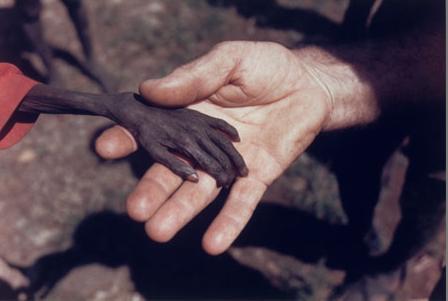
Can God spread a table in the wilderness?
This psalm is an extended reflection on the sacred history of Israel. Although it is critical of the behaviour of the ancestors-indeed it sees them as in constant rebellion aganist their faithful God-it also spells out the “official” version of that history as created by Israel’s historians after the time of Ezra. Modern historians have suggested that most of this “history” is mythical but it was at any rate the way in which the Jewish people were taught to think about their past. The psalm is interesting because it omits anything that might be to the credit of Israel in the desert and recounts only her discreditable “testing” of their God’s promises. Isreal’s children are to be taught the story of the Exodus in such a way that God is exalted for his faithful and mighty acts and their ancestors denigrated as a bunch of ungrateful rascals. Out the stubborn, rebellious hearts of the ancient Israelites however comes the haunting question:
“Can God spread a table in the wilderness?”
This is the question asked by all believing people when they find themselves in difficulty, deprivation, danger, grief or pain. God has promised to provide but how can he/she possibly provide anything in these circumstances? And even if he provides today -as with the manna in the wilderness-what about tomorrow? Can God spread a table in the wilderness?
The question is echoed and answered in various other scriptures. The 23rd Psalm declares “You have prepared a table for me, in the presence of my enemies,” and the “miraculous feeding” stories in all four gospels also declare that the answer to the question is, “yes.”; but the most profound answer is given in the stories of the last supper: where the violence of evil people and the weakness of good people combine to create a terrible wilderness, the son of God spreads a table and offers his life as nourishment.
Acts 3:1-9
Peter Heals a Crippled Beggar
3One day Peter and John were going up to the temple at the hour of prayer, at three o’clock in the afternoon.2And a man lame from birth was being carried in. People would lay him daily at the gate of the temple called the Beautiful Gate so that he could ask for alms from those entering the temple.3When he saw Peter and John about to go into the temple, he asked them for alms.4Peter looked intently at him, as did John, and said, ‘Look at us.’5And he fixed his attention on them, expecting to receive something from them.6But Peter said, ‘I have no silver or gold, but what I have I give you; in the name of Jesus Christ of Nazareth,* stand up and walk.’7And he took him by the right hand and raised him up; and immediately his feet and ankles were made strong.8Jumping up, he stood and began to walk, and he entered the temple with them, walking and leaping and praising God. 
The book of The Acts is the second volume of Luke’s Gospel and tells how the crucified and risen Jesus becomes new life for humanity. Here the narrative reminds us that no one normally sees a beggar nor does the beggar see them. People avoid catching his eye as they drop something in his cloak, while he bows his head towards the ground. It’s a bleak reality but a common one. (Can God spread a table in the wilderness?). Here God acts through the humanity of Peter and John who “see” the beggar in his humanity and demand that he “see” them, so that the disciples and the beggar become part of one shared life, the new life of Jesus Messiah of Nazareth. Alone and divided from other human beings the beggar is a poor thing. United with them and with Jesus he is a new man, walking and leaping and praising God. He becomes a potent symbol of the new humanity which Luke depicts as liberated by the risen Jesus and his community. Time and again in the book of Acts, when people choose to share the life of the believing community and its trust in Jesus, they are set free from all that has diminished them, to live with new strength and dignity.
The fact of shared life, which bears the name of Jesus and happens amongst people who trust in him, is for me the primary fact of Christian faith. Through Jesus my closed self is broken open to share the life of the created universe, the life of my brothers and sisters, the life of God. This frees me from the alternatives of begging and providing to live in community and sit at the one table. Last Sunday evening I was part of an open air service of Holy Communion at a farm in the County of Angus in Scotland. Sixty people gathered in a field to pray and sing and share bread and wine. Norrie and I accompnied the singing on our fiddles. As we played he suddenly looked at me and nodded to our left from where an unseen peewit added its whistle to our music.
.
 Emmock's Blog