This blog provides a meditation on the Episcopal daily readings along with a headline from world news:
Human excellence 2012: David Rudisha wins 800 metres

Psalm 87
Of the Korahites. A Psalm. A Song.
1 On the holy mount stands the city he founded;
2 the Lord loves the gates of Zion more than all the dwellings of Jacob.
3 Glorious things are spoken of you, O city of God.
4 “Among those who know me I mention Rahab and Babylon; Philistia too, and Tyre, with Ethiopia*— ‘This one was born there,’ they say.”
5 And of Zion it shall be said, ‘This one and that one were born in it’; for the Most High himself will establish it.
The Lord records, as he registers the peoples, ‘This one was born there.’
Singers and dancers alike say, ‘All my springs are in you.’
The psalmist takes great pride in the holy city of Jerusalem, the capital city of his people. But he belivees its real status is not as a political capital but as the city of God, where the God of all nations is honoured and all peoples can rediscover themselves as children of the one city: all nationalities are born and belong in the city of God. The psalmist places his own people alongside the others.

human excellence,6th century BCE
It’s been a good Olympics for the UK, a small nation which has won many medals, and the patriotic pride expressed by many citizens is quite justifiable. But where is the expression of the Olympic ideal that all nationalities belong to the games and contribute as equals to its celebration of human prowess? (Indeeed we might ask how “nations” came to be at the centre of the games rather than individual athletes.) Where is the pride our nation should feel in having hosted this festival of international sport and contributed to mutual understanding which goes beyond patriotism? If the Olympic games were not the plaything of immensely powerful national and commercial interests they might stand as a genuine symbol of a unity that goes beyond the Camerons and Obamas, the Mugabes and Putins and Assads, and says of their peoples, “this one and this one and this one-all were born here.”
The church is not the holy city of which all peoples are equal children: it is the community whose task it is to witness to that city, which as St Augustine taught, exists in and and through and beyond the earthly city in which we all live. As we struggle to live justly and creatively as one family in the divided world, sometimes we get glimpses of that other city to which we all belong. That’s when the singers and dancers can say, “All my springs are in you.”
John 2:13-25
Jesus Cleanses the Temple
13 The Passover of the Jews was near, and Jesus went up to Jerusalem.14In the temple he found people selling cattle, sheep, and doves, and the money-changers seated at their tables.15Making a whip of cords, he drove all of them out of the temple, both the sheep and the cattle. He also poured out the coins of the money-changers and overturned their tables.16He told those who were selling the doves, ‘Take these things out of here! Stop making my Father’s house a market-place!’17His disciples remembered that it was written, ‘Zeal for your house will consume me.’18The Jews then said to him, ‘What sign can you show us for doing this?’19Jesus answered them, ‘Destroy this temple, and in three days I will raise it up.’20The Jews then said, ‘This temple has been under construction for forty-six years, and will you raise it up in three days?’21But he was speaking of the temple of his body.22After he was raised from the dead, his disciples remembered that he had said this; and they believed the scripture and the word that Jesus had spoken.

the temple of God
23 When he was in Jerusalem during the Passover festival, many believed in his name because they saw the signs that he was doing.24But Jesus on his part would not entrust himself to them, because he knew all people25and needed no one to testify about anyone; for he himself knew what was in everyone.
The “house” of God is where all his children can worship him in spirit and in truth. It is not one place on the earth but rather the earth (the universe?) itself. On the earth however, faithful people establish places and communities which are images of God’s house, in their worship of the one, holy parent; and their inclusion of all the children. Jesus “zeal for God’s house” expresses this conviction and his anger that it has become a mere national shrine ruled by commercial interests. Only John places this incident near the beginning of Jesus’ ministry and only he records Jesus using a whip.
The biblical witness to the theme of “God’s house” is rich and complex. The Greek word for house used in the New Testament, is OIKOS, from which we derive our words “economy” (household management), ecology (the study of the earth as a home for all creatures) and “ecumenism” (recognitionof the unity of all peoples in the inhabited world). That suggests profound ways in which this theme can be explored. I have made an inadequate start to this exploration which can be found as Bible Blog Oikos March 6 2012.
With the proposal this week that “ecological assets” -like mountains or lakes or golden eagles-should be branded and priced, we can see how a perfectly useful institution of the world, the market, becomes demonic when it bids to take over the world. We need to say again and again with Jesus, “Stop making my Father’s house a market-place!”
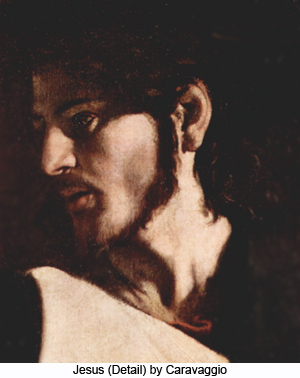
Even more challenging is Jesus’ suggestion that true house of God is his own body, his humanity: God’s presence is not some celestial spook infiltrating his creatures but is the very humanity of his Son and those who receive him, “who were born not of blood, nor of the will of the flesh, nor of the will of a man, but of God.” John 1:13)
 Emmock's Blog