This blog provides a meditation on the episcopal daily readings along with a headline from world news:
Power to the people: Egyptian leader sacks two generals

Tantawi (centre) sacked
Psalm 89
God’s Covenant with David
A Maskil of Ethan the Ezrahite.
1 I will sing of your steadfast love, O Lord,* for ever; with my mouth I will proclaim your faithfulness to all generations.
2 I declare that your steadfast love is established for ever; your faithfulness is as firm as the heavens.
3 You said, ‘I have made a covenant with my chosen one, I have sworn to my servant David:
4 “I will establish your descendants for ever, and build your throne for all generations.” ’ Selah
5 Let the heavens praise your wonders, O Lord, your faithfulness in the assembly of the holy ones.
6 For who in the skies can be compared to the Lord? Who among the heavenly beings is like the Lord,
7 a God feared in the council of the holy ones, great and awesome* above all that are around him?
 8 O Lord God of hosts, who is as mighty as you, O Lord? Your faithfulness surrounds you.
9 You rule the raging of the sea; when its waves rise, you still them.
10 You crushed Rahab like a carcass; you scattered your enemies with your mighty arm.
11 The heavens are yours, the earth also is yours; the world and all that is in it—you have founded them.
12 The north and the south*—you created them; Tabor and Hermon joyously praise your name.
13 You have a mighty arm; strong is your hand, high your right hand.
14 Righteousness and justice are the foundation of your throne; steadfast love and faithfulness go before you.
15 Happy are the people who know the festal shout, who walk, O Lord, in the light of your countenance;
16 they exult in your name all day long, and extol* your righteousness.
17 For you are the glory of their strength; by your favour our horn is exalted.
18 For our shield belongs to the Lord, our king to the Holy One of Israel.
This psalm celebrates a) the greatness and faithfuness of God; b) God’s special faithfulness to the dynasty of King David. But finally it grieves over God’s abandonment of the dynasty and of Israel and asks how long God will turn his face away in anger. Today’s passage is notable for its celebration of God as creator. There are other heavenly beings who share in the heavenly council but Israel’s God is the greatest in power and the founder of the ordered universe. It’s not so much that God called all things into being as that he has ordered the diverse and battling elements of the universe, bringing them under control. The Rahab is both a primordial montser of pride and chaos, and a symbol of Israel’s oppressor, Egypt. The justice of God, which consists in giving all the elements of creation their right place, is also evident in his dealings with Israel, his people. “Righteousness and justice are the foundation of your throne; steadfast love and faithfulness go before you.” Unlike the thrones of earthly kings, God’s throne is founded on justice and righteousness and he is preceded in royal procession not by dignitaries and warriors but by steadfast love and faithfulness. All this is beautifully imagined by the author.
As for the “festal shout”, this may refer to the joyful celebration of a pilgrim feast in Jerusalem; but the great 18th century Rabbi, the Baal Shem Tov, interpreted it as the shout of battle. He emphasised that it is the people and not just the leaders who are to share in this shout. “If a people relies on its heroes for courage in battle, it will lose; but when the whole people share in the call to courage, then it will win, then God will smile upon them.” I don’t know if this interpretation is correct, but I think it’s in tune with a psalm which ultimately says (verses 19-52) that Israel can no longer look to its royal house for victory. The sober everyday battle for goodness and justice in the world requires the courageous participation of all believers. This battle cannot be won by proxy.
John 3:1-21
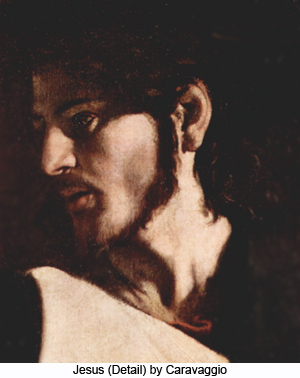
Nicodemus Visits Jesus
3Now there was a Pharisee named Nicodemus, a leader of the Jews.2He came to Jesus* by night and said to him, ‘Rabbi, we know that you are a teacher who has come from God; for no one can do these signs that you do apart from the presence of God.’3Jesus answered him, ‘Very truly, I tell you, no one can see the kingdom of God without being born from above.’*4Nicodemus said to him, ‘How can anyone be born after having grown old? Can one enter a second time into the mother’s womb and be born?’5Jesus answered, ‘Very truly, I tell you, no one can enter the kingdom of God without being born of water and Spirit.6What is born of the flesh is flesh, and what is born of the Spirit is spirit.*7Do not be astonished that I said to you, “You* must be born from above.”*8The wind* blows where it chooses, and you hear the sound of it, but you do not know where it comes from or where it goes. So it is with everyone who is born of the Spirit.’9Nicodemus said to him, ‘How can these things be?’10Jesus answered him, ‘Are you a teacher of Israel, and yet you do not understand these things?

light came into the world but people preferred darkness….
11 ‘Very truly, I tell you, we speak of what we know and testify to what we have seen; yet you* do not receive our testimony.12If I have told you about earthly things and you do not believe, how can you believe if I tell you about heavenly things?13No one has ascended into heaven except the one who descended from heaven, the Son of Man.*14And just as Moses lifted up the serpent in the wilderness, so must the Son of Man be lifted up,15that whoever believes in him may have eternal life.*
16 ‘For God so loved the world that he gave his only Son, so that everyone who believes in him may not perish but may have eternal life.
17 ‘Indeed, God did not send the Son into the world to condemn the world, but in order that the world might be saved through him.18Those who believe in him are not condemned; but those who do not believe are condemned already, because they have not believed in the name of the only Son of God.19And this is the judgement, that the light has come into the world, and people loved darkness rather than light because their deeds were evil.20For all who do evil hate the light and do not come to the light, so that their deeds may not be exposed.21But those who do what is true come to the light, so that it may be clearly seen that their deeds have been done in God.’*
This is one of the most famous passages in all scripture and deserves a closer analysis than I can give here. Instead, I’ll take two elements from it:
1. John insists that entry into God’s kingdom is not by ethnic belonging, such as being Jewish, nor indeed by any human accomplishment, but only by “being born from above”, that is being transformed by God’s spirit. This spirit is not visible because it is not “of” this universe; it can only be seen in its effects on the lives of people. It is made visible as the light of truth which shines from Jesus’ deeds and words and suffering. Those who love truth and desire goodness are drawn to this light and are born from above; those who hate truth because it exposes their evil, will hate the light and will remain in the realm of death. Although the passage emphasises the “otherness” of God, it is very down to earth in its diagnosis of humanity: people who want goodness are drawn towards God’s spirit; those who want evil, turn away from it.
2. Nevertheless God does not stand in judgement; people judge themselves by their own choices. God loves the world and gives his son so that the world may be rescued from evil. We get so used to the terms of this declaration that we no longer hear it. One of our fellow human beings is telling us that the cosmos (John’s word) is not on its own; that there is One who is not the cosmos but is responsible for its existence, whose non-human creativity (spirit) can be seen in those who receive it, especially in Jesus Christ, as unqualified love. We should not allow religious familiarity or dogmatic triviality to undervalue this astonishing declaration. The eternal One who is beyond the universe loves all that has come into being, including gays, moslems, Fidel Castro and yes, even judgemental Christians, because God does not judge but rather allows human beings to receive or refuse his eternal life.
 Emmock's Blog