This blog is one person’s daily discipline of bible reading. It uses the Episcopal Church’s list of readings for every day in the year (Lectionary) and gives a personal meditation on it, while remembering what’s going on the world with a headline reference to the news. Readers can access past blogs from the date list onscreen right or by googling emmock.com plus scripture reference or theme.
US Officer says troops on lookout for “children with hostile intent”
Isaiah 4:2-6
The Future Glory of the Survivors in Zion
2 On that day the branch of the Lord shall be beautiful and glorious, and the fruit of the land shall be the pride and glory of the survivors of Israel.3Whoever is left in Zion and remains in Jerusalem will be called holy, everyone who has been recorded for life in Jerusalem,4once the Lord has washed away the filth of the daughters of Zion and cleansed the bloodstains of Jerusalem from its midst by a spirit of judgement and by a spirit of burning.5Then the Lord will create over the whole site of Mount Zion and over its places of assembly a cloud by day and smoke and the shining of a flaming fire by night. Indeed, over all the glory there will be a canopy.6It will serve as a pavilion, a shade by day from the heat, and a refuge and a shelter from the storm and rain.
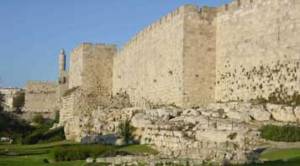 Zion is on the one hand a symbol of all earthly cities, and on the other, of all religious communities.
As a symbol of earthly cities Zion means the greed, injustice ,idolatry and violence which must face God’s fiery judgment. Every city must be subject to the “spirit of judgment and burning”, that is, it must recognise and purge its common life of everything which inhibits true community and trust in the one God. The prophets such as Isaiah are those whose task it is to call the citizens to this recognition; but beyond their witness there is the promise of God that one day, by divine goodness, the city will fulfill all its potential.
As a symbol of the religious community Zion is of course the promise of its perfection, but also a warning that it too can be corrupted by idolatry and injustice. Churches, synagogues, mosques, ashrams and all religious groups are just as much subject to the cleansing judgment of God as human cities.
The imagery of perfection is meaningful. The signs of exodus from the place of slavery and oppression, the cloud and the pillar of fire, will stand above the places of assembly, because the people will have accepted God’s judgment and turned to the God of justice. The sheltering canopy of God’s goodness will be over all.
In the words of the prophets of Israel there is a preponderance of denunciation which can be easily re-applied to our contemporary evils. But there are also as in this extract, beautiful words of promise, which catch at the heart and mind of even the most sceptical observer of human follies (including his own), and tease him with a glimpse of salvation.
Luke 21:5-8
The Destruction of the Temple Foretold 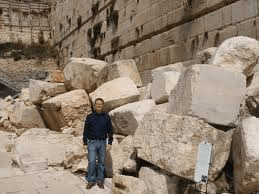
5 When some were speaking about the temple, how it was adorned with beautiful stones and gifts dedicated to God, he said,6‘As for these things that you see, the days will come when not one stone will be left upon another; all will be thrown down.’
Signs and Persecutions
7 They asked him, ‘Teacher, when will this be, and what will be the sign that this is about to take place?’8And he said, ‘Beware that you are not led astray; for many will come in my name and say, “I am he!”* and, “The time is near!”* Do not go after them.
Jesus prophesied that the temple on mount Zion would be destroyed as a judgment of God on the corruption of its religious establishment. In this he followed the teaching of the prophets before him. The holy symbol which had been used by the religious elite to boost their power would be destroyed. Jesus knew only too well how religion could be a source of power and privilege, how the name of God could be attached to oppressive institutions. His words about the Jerusalem temple are a warning to his churches.
There are other dangers that Jesus warned against, that political or religious demagogues may appropriate the name of Messiah to gain authority. They must be resisted.
Richard Baxter, a Reformed clergyman and teacher of the 17th century, whom the Episcopal church remembers today, lived through the civil war in England when different branches of the church claimed God’s favour for their own confession and asserted their right to kill in his name. He opposed all this sectarian arrogance and tried, without much success at the time. to foster mutual understanding and submission to the teaching of Jesus. He knew that often what was claimed to be “the temple of God”, was nothing of the kind. His voice is still relevant.
 Emmock's Blog