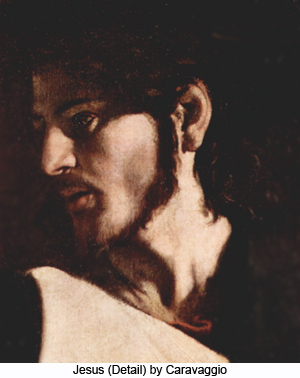
Writing on the wall for Morsi’s absolute power?
This blog is one person’s daily discipline of bible reading. It uses the Episcopal Church’s list of readings for every day in the year (Lectionary) and gives a personal meditation on it, while remembering what’s going on the world with a headline reference to the news. Readers can access past blogs from the date list onscreen right or by googling emmock.com plus scripture reference or theme.

graffiti on Presidential palace
Thessalonians 5:1-11
5Now concerning the times and the seasons, brothers and sisters,* you do not need to have anything written to you.2For you yourselves know very well that the day of the Lord will come like a thief in the night.3When they say, ‘There is peace and security’, then sudden destruction will come upon them, as labour pains come upon a pregnant woman, and there will be no escape!4But you, beloved,* are not in darkness, for that day to surprise you like a thief;5for you are all children of light and children of the day; we are not of the night or of darkness.6So then, let us not fall asleep as others do, but let us keep awake and be sober;7for those who sleep sleep at night, and those who are drunk get drunk at night.8But since we belong to the day, let us be sober, and put on the breastplate of faith and love, and for a helmet the hope of salvation.9For God has destined us not for wrath but for obtaining salvation through our Lord Jesus Christ,10who died for us, so that whether we are awake or asleep we may live with him.11Therefore encourage one another and build up each other, as indeed you are doing.
The expectation of “the day of the Lord” by which God would complete the salvation which he began in Christ was a powerful element in the faith of the first Christians. Indeed, the main difference between mainstream Christianity then and today is the absence of this element today except amongst people viewed as nutters. Some have raised the question as to whether a faith without the horizon of hope in the “day of the Lord” can claim to be fully Christian.
Let me try to be honest. I regard the faith of the first Christians in a speedy arrival of the “day of the Lord” as mistaken. Of course it’s hard to decode the langauge in which this belief is expressed – it may not mean exactly what it says – but I think they did hope for a speedy decisive intervention by God that would put an end to ordinary history.
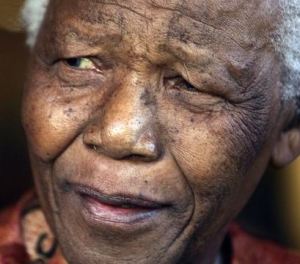
Mandela ill. Living in the light.
I don’t. I think we’re here for the long haul. When I look at the Paul’s words I can see that he uses this element of faith to encourage disciples of Jesus to stay awake, as indeed Jesus himself did in the garden of Gethsemane, and in his own prophecy about the end-time. Disciples are to live as if complete deliverance may arrive at any time, as well as complete destruction for God’s enemies. They are not to remain detached from the world and its evils but actively engaged in spiritual combat with it. I can identify with that, as of course, for me as an individual, the world may end at any time: my own deliverance is always at hand. Living in the clear light of day, facing the evils and the sufferings of worldly life with open eyes, trusting in God’s victory, is the way of the saints.
Luke 21:20-28
The Destruction of Jerusalem Foretold
20 ‘When you see Jerusalem surrounded by armies, then know that its desolation has come near.*21Then those in Judea must flee to the mountains, and those inside the city must leave it, and those out in the country must not enter it;22for these are days of vengeance, as a fulfilment of all that is written.23Woe to those who are pregnant and to those who are nursing infants in those days! For there will be great distress on the earth and wrath against this people;24they will fall by the edge of the sword and be taken away as captives among all nations; and Jerusalem will be trampled on by the Gentiles, until the times of the Gentiles are fulfilled.
The Coming of the Son of Man
25 ‘There will be signs in the sun, the moon, and the stars, and on the earth distress among nations confused by the roaring of the sea and the waves.26People will faint from fear and foreboding of what is coming upon the world, for the powers of the heavens will be shaken.27Then they will see “the Son of Man coming in a cloud” with power and great glory.28Now when these things begin to take place, stand up and raise your heads, because your redemption is drawing near.’
There are two elements in Jesus’ prophecy here: one regarding the fate of Jerusalem and the other regarding the coming of the Son of Man. The first had already happened by the time Luke was writing. In AD 70 the temple had been destroyed by the Roman armies. Naturally Jesus’ original words, perhaps no more than prophetic warning that this symbol of official religion would not last, were skewed to reflect the known outcome. We know that Jesus denounced the religious establishment and the cult of the temple, but with sorrow rather than anger. He wept over the fate of Jerusalem. Some of that sorrow is evident in the words about the great distress of his people. Jesus shares with Jeremiah the bitterness of the prophet who must foretell the destruction of his own people.
The words about the “Son of Man” are more mysterious. The gospels report that Jesus identified with this figure from the book of Daniel (Ch. 7), who stands for the rule of God’s saints in the world. Perhaps he saw himself as their leader or representative. In any case he saw himself and his followers sharing in God’s victory over oppression and violence, when the earth would be ruled by God’s people according to God’s will. The “cosmic” elements of this prophecy are not so much indicators of the end of the world as of the end of the evil powers which have ruled the earth. They will be shaken out of heaven so that the “Son of Man” may rule.
This encourages me to hope that the great powers which currently oppress the earth and its inhabitants will not last forever, and that the patient, suffering martyrs for justice and peace will one day share the rule of God. Yes, this is picture language, and no, it cannot be spelled out in blueprints or programmes. But for me, certainly, it is a vital element in the meaning of Jesus.
 Emmock's Blog