
This is a blog which reflects on the Episcopal daily readings along with a headline from world news:
Priest who helped kill Bishop Juan Gerardi released early
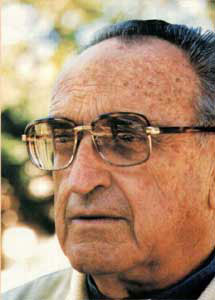
Bishop Juan Gerardi 1922-1998 Guatamalan martyr for justice
Joshua 1:1-9
After the death of Moses the servant of the Lord, the Lord spoke to Joshua son of Nun, Moses’ assistant, saying,2‘My servant Moses is dead. Now proceed to cross the Jordan, you and all this people, into the land that I am giving to them, to the Israelites.3Every place that the sole of your foot will tread upon I have given to you, as I promised to Moses.4From the wilderness and the Lebanon as far as the great river, the river Euphrates, all the land of the Hittites, to the Great Sea in the west shall be your territory.5No one shall be able to stand against you all the days of your life. As I was with Moses, so I will be with you; I will not fail you or forsake you.6Be strong and courageous; for you shall put this people in possession of the land that I swore to their ancestors to give them.7Only be strong and very courageous, being careful to act in accordance with all the law that my servant Moses commanded you; do not turn from it to the right hand or to the left, so that you may be successful wherever you go.8This book of the law shall not depart out of your mouth; you shall meditate on it day and night, so that you may be careful to act in accordance with all that is written in it. For then you shall make your way prosperous, and then you shall be successful.9I hereby command you: Be strong and courageous; do not be frightened or dismayed, for the Lord your God is with you wherever you go.’

all the peoples God didn’t care for
The reader will notice that Joshua is supposed by God to have a book of the law. This clearly takes the composition of this story into a time when a “book” was a common article, probably the time after Israel’s return from exile when there was new emphasis on the written Torah. That is significant because it means the composition of this story comes from a small weak people trying to establish itself after exile, rather than a strong people waiting to invade an inhabited land. This may explain but not excuse the emphasis which becomes particularly obvious in the book of Joshua on the conquest of Canaan, which God will facilitate for his people. This injustice is of course built into “the promise of the land” from the start. How can God promise to his people a land that belongs to others? It may be that this promise ultimately goes back to a time when the God of Israel was the war God of a group of wild semi-nomadic clans, but it defined the attitude of the nation to their land in ancient and sadly, in modern times also. The God of Israel justifies the theft of land that belongs to others. Indeed, the God of Israel is reported to order ethnic cleansing (Joshua 7) and is enraged when it is not carried out properly. What are the authors of this book trying to say?
Hebrews 11:32-12:2
32 And what more should I say? For time would fail me to tell of Gideon, Barak, Samson, Jephthah, of David and Samuel and the prophets—33who through faith conquered kingdoms, administered justice, obtained promises, shut the mouths of lions,34quenched raging fire, escaped the edge of the sword, won strength out of weakness, became mighty in war, put foreign armies to flight.35Women received their dead by resurrection. Others were tortured, refusing to accept release, in order to obtain a better resurrection.36Others suffered mocking and flogging, and even chains and imprisonment.37They were stoned to death, they were sawn in two,* they were killed by the sword; they went about in skins of sheep and goats, destitute, persecuted, tormented—38of whom the world was not worthy. They wandered in deserts and mountains, and in caves and holes in the ground.
39 Yet all these, though they were commended for their faith, did not receive what was promised,40since God had provided something better so that they would not, without us, be made perfect. <!– 12 –>
The Example of Jesus
12Therefore, since we are surrounded by so great a cloud of witnesses, let us also lay aside every weight and the sin that clings so closely,* and let us run with perseverance the race that is set before us,2looking to Jesus the pioneer and perfecter of our faith, who for the sake of* the joy that was set before him endured the cross, disregarding its shame, and has taken his seat at the right hand of the throne of God.
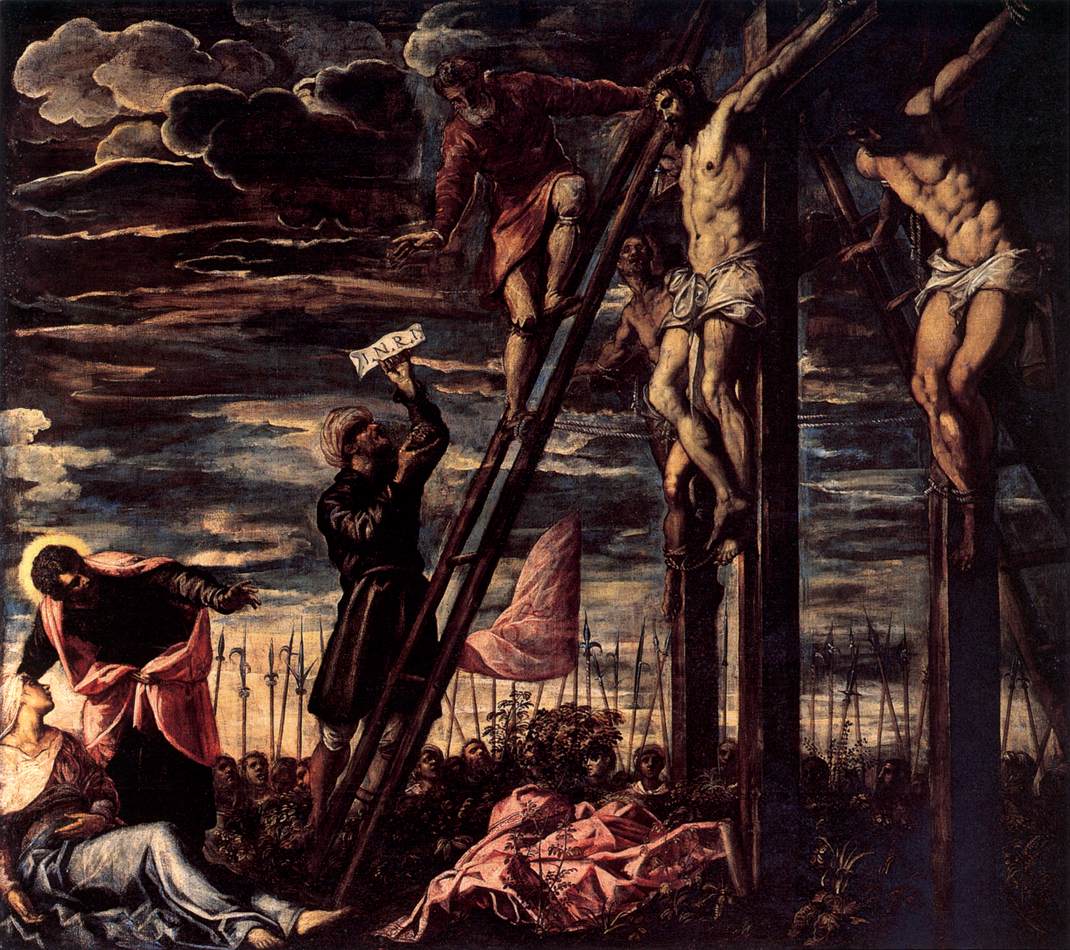
The pioneer and perfecter of faith
We remember that the author of Hebrews has already allowed the crucified Jesus to bust the myth of the promised land, not by dismissing it altogether but rather by interpreting it as the city of justice and peace which God has prepared for those who want it, especially for those great saints who want it so much that they become pilgrims and strangers on the earth. He can still speak conventionally about those who conquered kingdoms but his real focus is on those who for the sake of their true homeland suffered the worst that people could do to them, “of whom the world was not worthy”, that is, who exposed the evil of the world as unworthy of its best inhabitants. As was the case with Bishop Juan Gerardi, murdered in 1998 for exposing the violence of the Guatamalan Army. It is in the light of Jesus, the pioneer, that the author can see this truth. By His sacrificial life and death He has revealed the true meaning of the “land of promise”, freeing it from national and racial distortions; and shines the light on the real heroes and heroines of faith.
Jesus is described as pioneer and perfecter: pioneer in that he makes the hard journey into the heart of evil, not grimly but willingly, looking towards God’s city of justice and joy; perfecter because he goes the whole distance with evil and leads his people into God’s goodness. I grew up with John Bunyan’s “Pilgrim’s Progress” and have always been attracted by its sober heroism:
Hobgoblin nor foul fiend
Can daunt his spirit;
He knows he at the end
Shall life inherit.
Then fancies fly away,
He’ll fear not what men say,
He’ll labour night and day
To be a pilgrim.
St Paul asks somewhere, “Which of us is really up for all this?” In face of the cloud of witnesses mentioned by the author of Hebrews, I’d have to answer, “Well, not me, really,” but that doesn’t mean the vision is irrelevant.
 Emmock's Blog