
Day by day this blog follows the daily bible readings of the Episcopal Church, usually adding a headline from world news:
Justin Welby, New Archbihop of Canterbury, hails local jobs scheme for young people
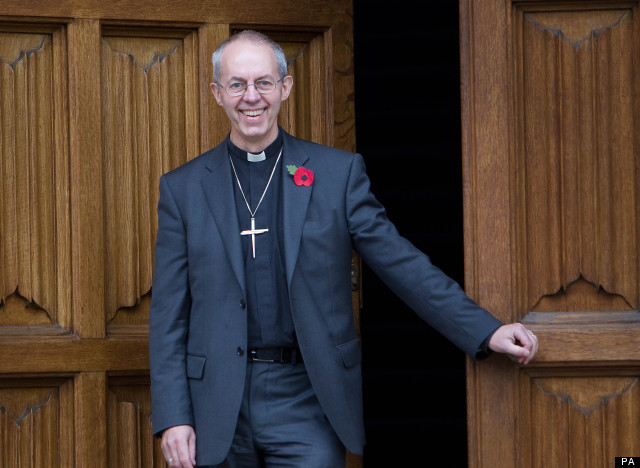
scheme led to 100 apprecticeships
Isaiah 66:1-2,
66Thus says the Lord:
Heaven is my throne and the earth is my footstool;
what is the house that you would build for me, and what is my resting-place?
2 All these things my hand has made, and so all these things are mine, *
says the Lord.
But this is the one to whom I will look, to the humble and contrite in spirit, who trembles at my word.
Here the scepticism of the prophets about Temple worship finds its way into the mouth of God but in a beautiful and positive way. The creator God needs no dwelling place built by human beings – all creation belongs to God. But the one place he desires to dwell is with the man or woman of “a humble and contrite spirit, who trembles at my word.” This humility, it is to be noted, is “before God” not before other people. Some of the proudest and most ebullient people have humbled themselves before God. The great Jewish teacher of the 18th century, the Baal Shem Tov, (The master of the good name), who was reportedly a man of terrifying presence, trembled so much before God that when he was reading Torah the folds of his clothes were seen to shake. And the 17th century Englishman George Fox, so convinced of his own worth that he would not use the polite forms of language to his “betters”, founded the Society of Friends whose members were so known for trembling before God that they were nicknamed “Quakers.”

George Fox, founder of the Society of Friends
The notion of a mystery so holy that people tremble before it, is foreign to the shallow secularism of the society in which I live. If you find yourself in awe of the poor creatures who demean themselves on “celebrity shows” you are unlikely to be impressed by the Creator God; and if you are casual about right and wrong you may not be much interested in the source of goodness.
Worship, prayer and meditation, if done with meaning and dignity, can lift us to greater heights or immerse us in greater depths of experience than popular culture is able to do, and help us to become the humble and contrite people in whom God loves to dwell. (I don’t mean that elements of popular culture, for example, popular styles of music, cannot be used in worship. It’s not a question of style but of intensity and meaning.)
Jesus’ parable of the strict and self-righteous Pharisee who boasted before God; and the guilt-stricken collaborator who cried out for mercy is also very relevant. No amount of outward display however dignified, is a substitute for knowing our own sins. Well, that’s what makes me tremble,usually.
John 9:1-12,35-38
A Man Born Blind Receives Sight
9As he walked along, he saw a man blind from birth.2His disciples asked him, ‘Rabbi, who sinned, this man or his parents, that he was born blind?’3Jesus answered, ‘Neither this man nor his parents sinned; he was born blind so that God’s works might be revealed in him.4We* must work the works of him who sent me* while it is day; night is coming when no one can work.5As long as I am in the world, I am the light of the world.’6When he had said this, he spat on the ground and made mud with the saliva and spread the mud on the man’s eyes,7saying to him, ‘Go, wash in the pool of Siloam’ (which means Sent). Then he went and washed and came back able to see.8The neighbours and those who had seen him before as a beggar began to ask, ‘Is this not the man who used to sit and beg?’9Some were saying, ‘It is he.’ Others were saying, ‘No, but it is someone like him.’ He kept saying, ‘I am the man.’10But they kept asking him, ‘Then how were your eyes opened?’11He answered, ‘The man called Jesus made mud, spread it on my eyes, and said to me, “Go to Siloam and wash.” Then I went and washed and received my sight.’12They said to him, ‘Where is he?’ He said, ‘I do not know.’
35 Jesus heard that they had driven him out, and when he found him, he said, ‘Do you believe in the Son of Man?’*36He answered, ‘And who is he, sir?* Tell me, so that I may believe in him.’37Jesus said to him, ‘You have seen him, and the one speaking with you is he.’38He said, ‘Lord,* I believe.’ And he worshipped him. 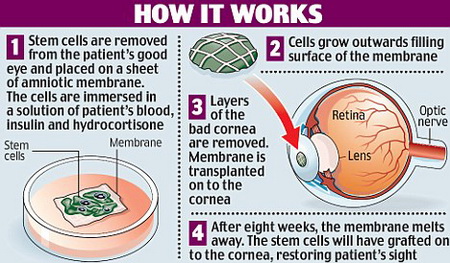
The popular religious view of Jesus time was that congenital disability was a punishment for parental sin. Jesus dismisses this nonsense out of hand. We do not know why these disabilities happen, Jesus says, but we do know why they are permitted by God, namely so that they can be healed. God’s glory is evident in the human capacity to heal.
I’ve heard this story challenged by a blind believer who said he’d difficulty with the assumption that there was something wrong with blind people. I think he missed the point: there’s nothing wrong with blind people but their lives can be enhanced by recovery of sight, as many patients who have received the latest kinds bio-engineering treatments have discovered.
It’s almost a sleight of hand the way Jesus deals with the issue.
“What is illness for?” is the question. “For us to heal it.” is the answer. Jesus is not interested in a theological discussion about the place of illness in the Creator’s plan; he is interested in human health, physical and spiritual. In this story the healed man gains spiritual insight as well as the ability to see, and he decides to become a disciple of Jesus.
Modern medical care, available to all in society, is one of the great demonstrations of the glory of God.
 Emmock's Blog