This Monday’s blog provides a meditation on the Episcopal daily readings along with a headline from world news:
Pope Benedict announces retirement
(Not a good institution, I believe, but a good man)
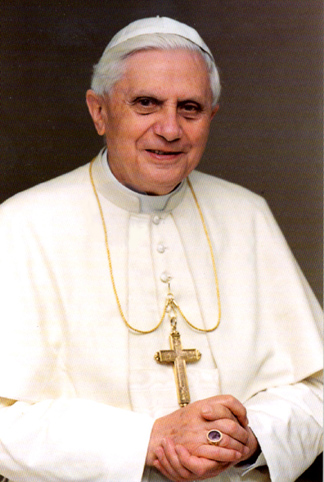
First Pope to retire since 1515
Hebrews 1:1-14
God Has Spoken by His Son
1Long ago God spoke to our ancestors in many and various ways by the prophets,2but in these last days he has spoken to us by a Son,* whom he appointed heir of all things, through whom he also created the worlds.3He is the reflection of God’s glory and the exact imprint of God’s very being, and he sustains* all things by his powerful word. When he had made purification for sins, he sat down at the right hand of the Majesty on high,4having become as much superior to angels as the name he has inherited is more excellent than theirs.
The Son Is Superior to Angels
5 For to which of the angels did God ever say,
‘You are my Son; today I have begotten you’?
Or again,
‘I will be his Father, and he will be my Son’?
6And again, when he brings the firstborn into the world, he says,
‘Let all God’s angels worship him.’
7Of the angels he says,
‘He makes his angels winds, and his servants flames of fire.’
8But of the Son he says,
‘Your throne, O God, is* for ever and ever, and the righteous sceptre is the sceptre of your* kingdom.
9 You have loved righteousness and hated wickedness;
therefore God, your God, has anointed you with the oil of gladness beyond your companions.’
service, sent to serve for the sake of those who are to inherit salvation?
The writer of Hebrews seems to be dealing with with pseudo – Christian teaching which gave special reverence to angels and perhaps described Jesus as an angel. He/She begins by making it absolutely clear that angels are secondary messengers of God whereas Jesus is God’s unique son. If this teaching seems outdated you probably haven’t attended a Mind/ Body Fair, or looked at the spirituality section of your local book shop. In both places along with the usual smells bells and crystals, you’ll find books on “Finding your angel, Tuning into your angel, Talking to your angel, Dancing with angels (I made that one up, but not the others!)” As long as this sentimental gloop is offered as mind-food, the strong theology of Hebrews offers an effective antidote.
Without any explanation Jesus is introduced as the reflection of God’s glory (“Glory” is a technical term meaning God’s presence with humanity), and the exact imprint of his being (the image is from clay and seals). Jesus, the writer says, is the one in whom God is present to humanity, and through whom God shows his character. That sounds a reasonable way to talk about Jesus. But when the writer adds that Jesus upholds all things by his word, that sounds a bit over the top to a modern reader. Surely God the Creator does that. Some Jewish Rabbis used similar langauge about the Torah, the Law of God given in scripture. In its wisdom, it upheld the universe. The writer to Hebrews is claiming that Jesus’ teaching and example is nothing less than the eternal wisdom which upholds the universe. The creative power of God in the creation of the universe and in the “purification” of humanity, are one and the same.

Gloop!
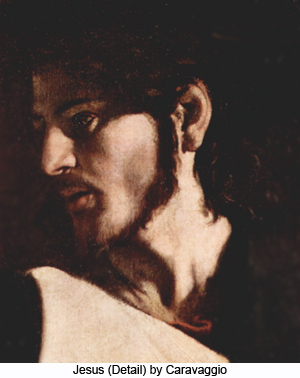
The crucial difference between Jesus the son and the angels, is that Jesus is identifiable: he lived at a specific time and place; gave definite teachings; died on a cross and rose again. You can make angels into what you like. Jesus, because of his historical existence, resists any kind of makeover. Yes, it’s true that Christians have managed to be Nazis, practitioners of Apartheid, members of the Ku Klux Clan and so on, but they had to ignore Jesus in order to be so. The memory of Jesus, recorded in the Bible, has been a permanent corrective for Christian faith and a critique of sentimental substitutes.
John 1:1-18
The Word Became Flesh
In the beginning was the Word, and the Word was with God, and the Word was God.2He was in the beginning with God.3All things came into being through him, and without him not one thing came into being. What has come into being4in him was life,* and the life was the light of all people.5The light shines in the darkness, and the darkness did not overcome it.
6 There was a man sent from God, whose name was John.7He came as a witness to testify to the light, so that all might believe through him.8He himself was not the light, but he came to testify to the light.9The true light, which enlightens everyone, was coming into the world.*
10 He was in the world, and the world came into being through him; yet the world did not know him.11He came to what was his own,* and his own people did not accept him.12But to all who received him, who believed in his name, he gave power to become children of God,13who were born, not of blood or of the will of the flesh or of the will of man, but of God.
14 And the Word became flesh and lived among us, and we have seen his glory, the glory as of a father’s only son,* full of grace and truth.15(John testified to him and cried out, ‘This was he of whom I said, “He who comes after me ranks ahead of me because he was before me.” ’)16From his fullness we have all received, grace upon grace.17The law indeed was given through Moses; grace and truth came through Jesus Christ.18No one has ever seen God. It is God the only Son,* who is close to the Father’s heart,* who has made him known.
Although John’s thinking is different from that of the author of Hebrews, he also identifies Jesus as God’s creative word. But John makes sure that there can be no separation between Jesus the human being and Jesus the word, by his phrase “the word became flesh.” Some modern translations render this as “the word became a human being,” but that’s wrong. “Flesh” is shared by all living things. Jesus became part of life on earth, a product of evolution, just as much as me or my dog.

Jesus not a super-being
The language of being “God’s only Son” or “The word made flesh” does not point to some super – being, but someone as human as you and me. Look at the words, “who were born, not of blood or of the will of the flesh, or of the will of man, but of God.” These words which speak of a divine origin are written of Christian believers known to the author. It’s true that Jesus is characterised as the unique son of God and that human beings become children of God through him: God wants us to share his identity; but this does not diminish the astonishing paradox of God becoming human. In a poem about Christmas John Betjeman says that none of trappings or ceremonies of Christmas “can with this single truth compare:/ that God was Man in Palestine/ and lives today in bread and wine.” Not being as ardent a sacramentalist as the poet, I might want to revise, “that God was Man in Galilee/ and lives today in you and me.”
 Emmock's Blog